Aluminum Oxide Grit Sizes Explained for Industrial Blasting
Choosing the wrong aluminum oxide grit size turns a precision blasting job into a costly rework. This guide maps mesh numbers to surface profiles so cabinet bla...
Published
26 Aug 2018
Category
Abrasives
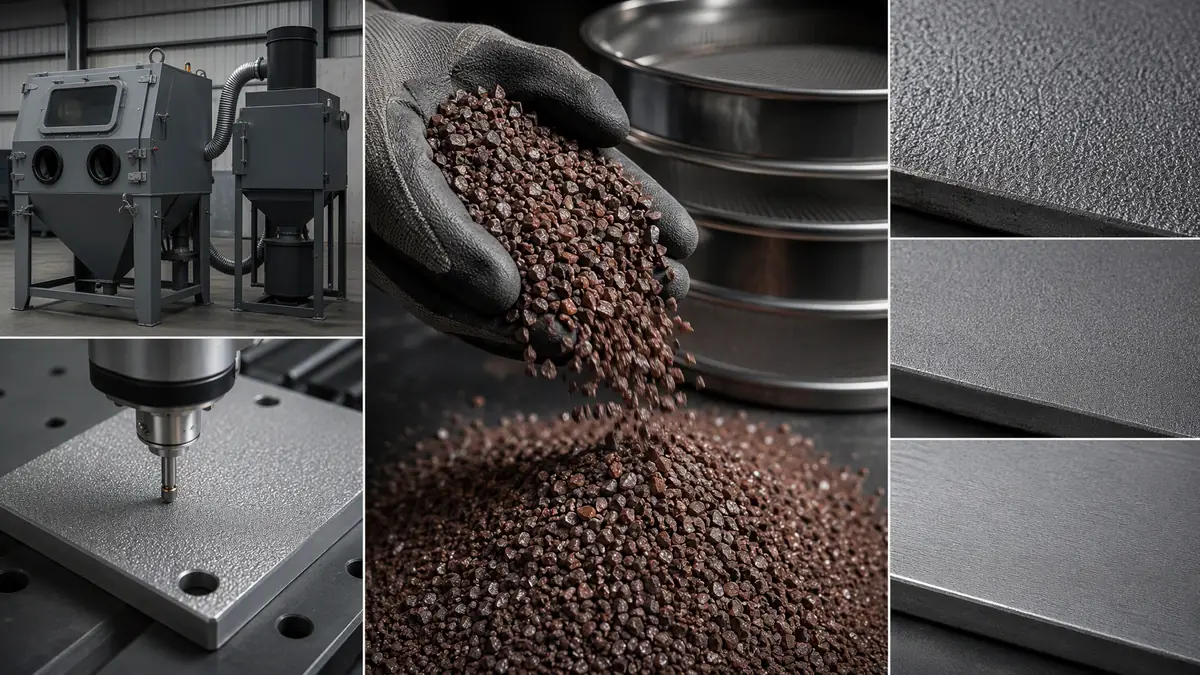
FIG. 01From mesh classification to finished ancho...
Professional multi-section editorial image for an industrial abrasive blasting article. Shows angular aluminum oxide grit with sieves, a cabinet blaster in a workshop, profilometer measuring blasted steel surface profile, and a comparison of coarse, medium, and fine grit finishes on metal plates. Il
01 Introduction
Choosing the wrong aluminum oxide grit size turns a precision blasting job into a costly rework. This guide maps mesh numbers to surface profiles so cabinet blast shops can match the abrasive to the specification the first time.
02 Introduction
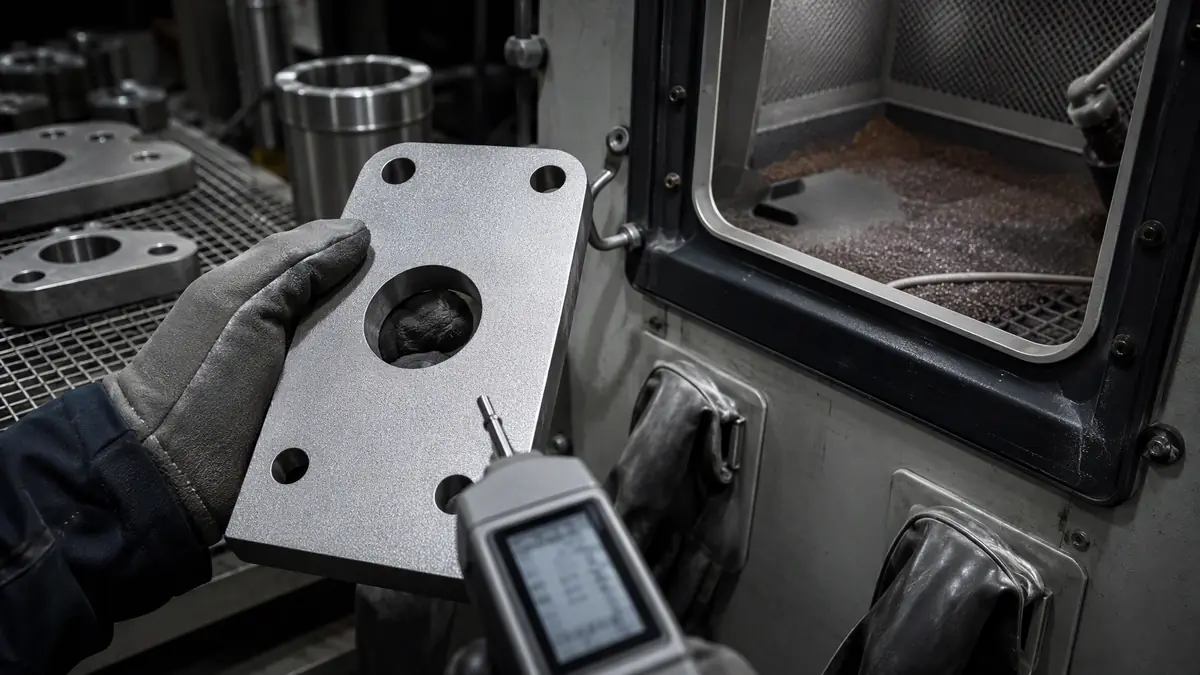
The critical moment of truth: verifying that the aluminum oxide grit size delivered the specified anchor pattern.
Close-up industrial scene of a quality control inspection in a cabinet blast shop. A gloved hand holds a blasted steel workpiece under inspection light while a digital profilometer measures the surface profile. A cabinet blaster with open viewport sits in the background, emphasizing the precision re
Every operator who has loaded a cabinet blaster knows the moment: the workpiece comes out, the inspector runs a profilometer across it, and the reading falls outside the band. The coating supplier blames the blast profile. The blast shop blames the abrasive. Often the real culprit is a mismatch between the mesh size loaded in the hopper and the anchor pattern the job demands.
Aluminum oxide is the workhorse angular media in precision finishing—hard, friable, reusable. But its performance hinges on one variable more than any other: grit size. This article explains what aluminum oxide grit sizes mean, how mesh classification works, which sizes produce which surface profiles, and how to avoid the common mistakes that lead to rejected parts. It is written for cabinet blast shops that need practical, repeatable guidance, not a catalog of every abrasive on the market.
03 What Is Aluminum Oxide Grit?
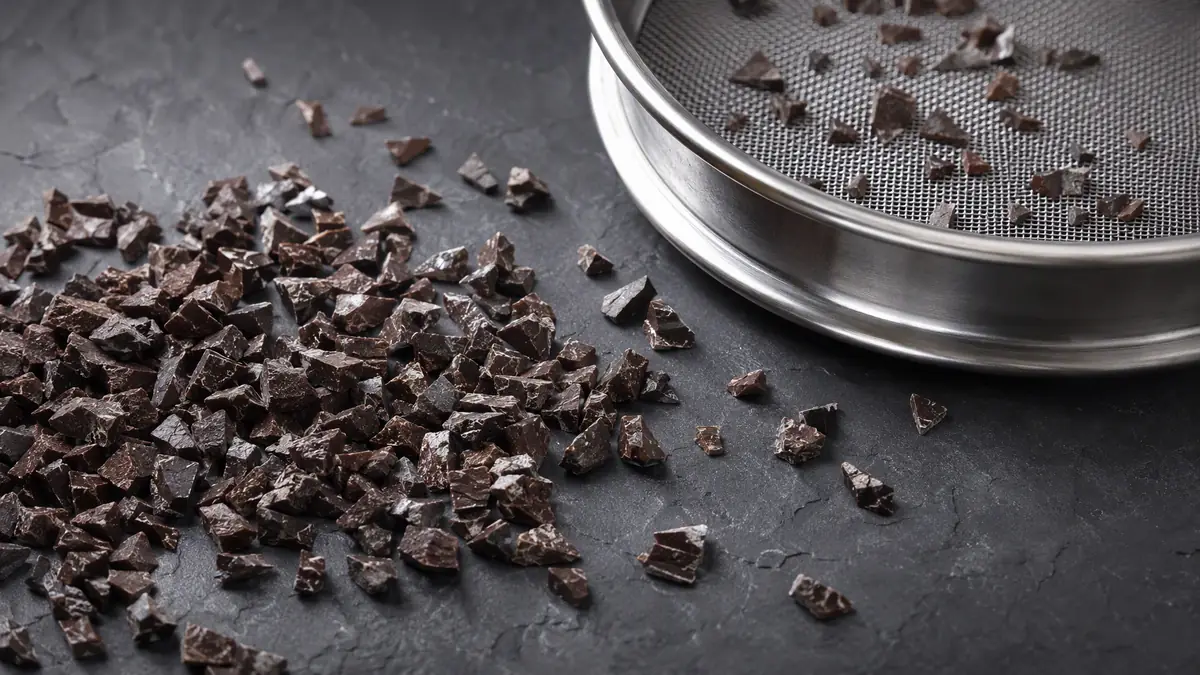
Brown fused aluminum oxide particles showing the sharp, angular fracture that makes this synthetic mineral a workhorse in precision blasting.
Extreme close-up macro photograph of brown aluminum oxide abrasive grit particles scattered on a dark slate surface. The particles display sharp angular edges and crystalline fracture surfaces characteristic of fused alumina. A stainless steel laboratory test sieve with fine mesh sits in the composi
Aluminum oxide (Al₂O₃) is a synthetic mineral abrasive produced by fusing bauxite in an electric arc furnace. The resulting ingot is crushed, sieved, and graded into controlled particle size ranges. On the Mohs scale of mineral hardness, aluminum oxide sits at 9—second only to diamond and silicon carbide among common industrial abrasives.
The term "grit size" refers to the particle size distribution of the abrasive. In blasting, grit size is almost always expressed as a mesh number, a system inherited from sieving standards. A mesh number tells you how many openings per linear inch a sieve screen has: a 60-mesh screen has 60 openings per inch, a 120-mesh screen has 120. Higher mesh numbers mean smaller particles.
Aluminum oxide particles are angular and blocky with sharp cutting edges. Unlike spherical media such as glass bead, angular media cut a profile into the substrate rather than peening the surface. This makes grit size the primary lever for controlling surface roughness.
04 Why Grit Size Matters in Cabinet Blasting
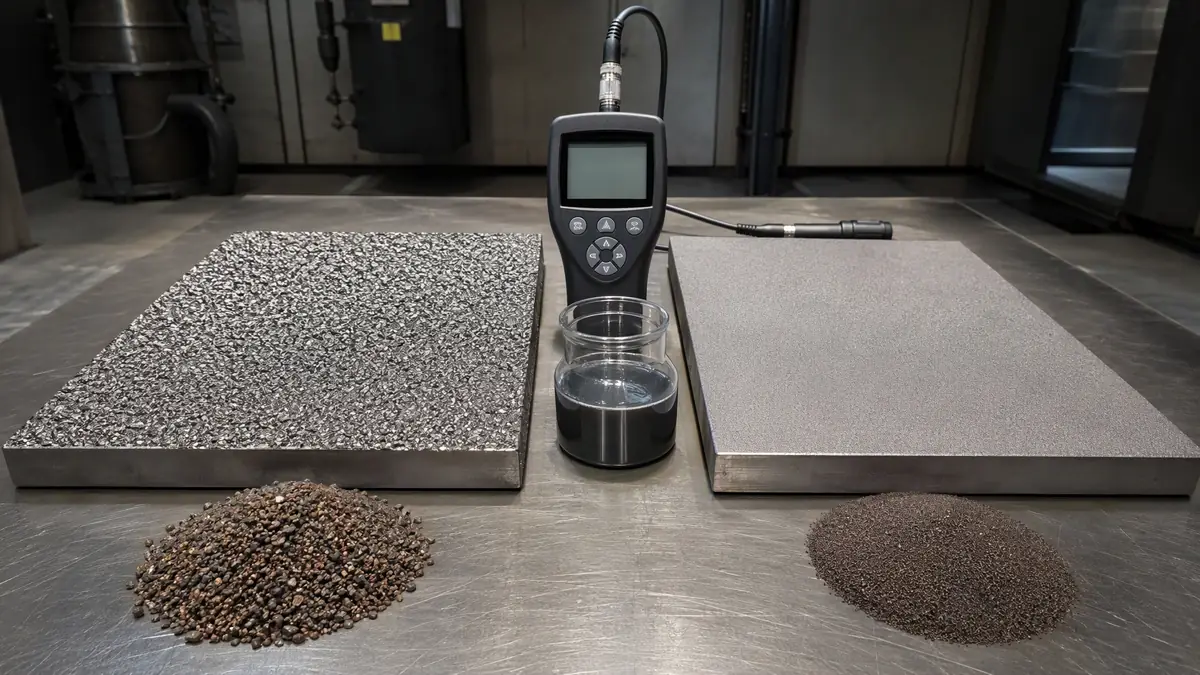
Grit size dictates the anchor pattern: coarse 24-mesh (left) for thick epoxy bond coats versus fine 180-mesh (right) for thin-film finishes.
Industrial split-comparison photograph showing two blasted steel plates on a fabrication workbench. The left plate displays a deep aggressive anchor pattern from coarse aluminum oxide grit under raking light. The right plate shows a fine uniform satin texture from fine grit blasting. A coating thick
Surface profile—the peak-to-valley roughness of a blasted substrate—determines whether a coating bonds or fails. Coatings lock into the anchor pattern mechanically. Too shallow a profile and the coating lacks grip. Too deep and peaks protrude through the film, creating pinpoint rust sites.
Grit size directly controls that profile depth. A coarse 24-mesh aluminum oxide cuts a deep, aggressive anchor pattern suitable for thick epoxy or thermal spray bond coats. A fine 180-mesh grit produces a shallow, uniform texture for thin-film coatings or cosmetic finishing.
Beyond profile, grit size affects:
Coverage rate: Coarser grits remove material faster but leave a rougher finish.
Media consumption: Finer grits break down more quickly in high-pressure blasting.
Dust generation: Fractured fine particles contribute to dust loading in the cabinet.
Nozzle and hose wear: Larger, heavier particles accelerate wear on blast consumables.
For cabinet shops running repeat jobs, consistent grit size means consistent profiles—and fewer rejected parts.
05 How Mesh Classification Works
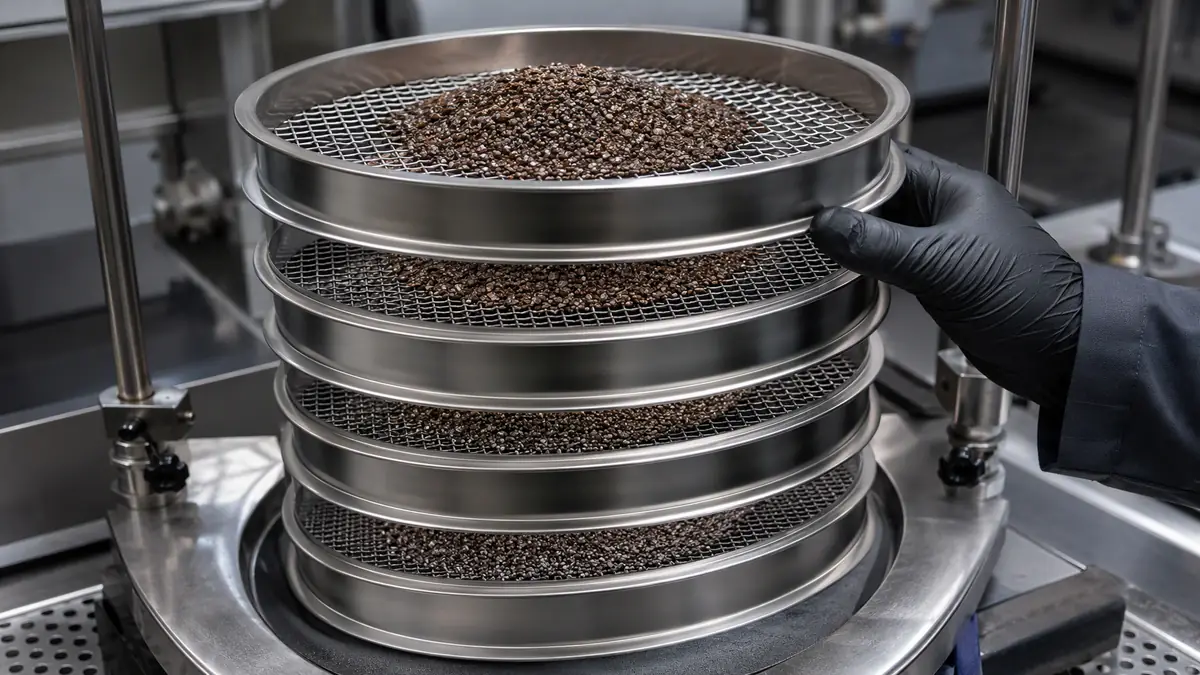
Mesh classification in action: aluminum oxide particles are separated through a stack of ASTM-compliant sieves to ensure precise grit size distribution.
Close-up industrial photograph of a stack of stainless steel laboratory test sieves on a vibration table in a quality control lab. Brown aluminum oxide grit sits on the top coarse-mesh sieve, with progressively finer particles visible through the mesh openings at each lower level. A gloved technicia
Industrial aluminum oxide is graded according to screening standards, most commonly those derived from ASTM E-11 or ISO 565. Manufacturers pass crushed material through a stack of sieves with progressively smaller openings. The fraction retained between two screens defines the grit size.
A designation like "60/80 mesh" means the abrasive passes through a 60-mesh screen but is retained on an 80-mesh screen. In practice, most commercial aluminum oxide is sold with a single mesh number (e.g., "80 grit") that represents the nominal or average particle size, with a tolerance band around it.
Key points for the blast shop:
Mesh is inverse to particle size: 24 mesh = large particles (~700 microns). 240 mesh = fine particles (~50 microns).
Tighter distributions cost more: A closely graded 80-mesh abrasive produces a more uniform finish than a wide-distribution economy grade.
"Fines" matter: Excess undersized particles in a batch increase dust and reduce cutting speed without contributing to the profile.
06 Mesh-to-Profile Guidance for Aluminum Oxide
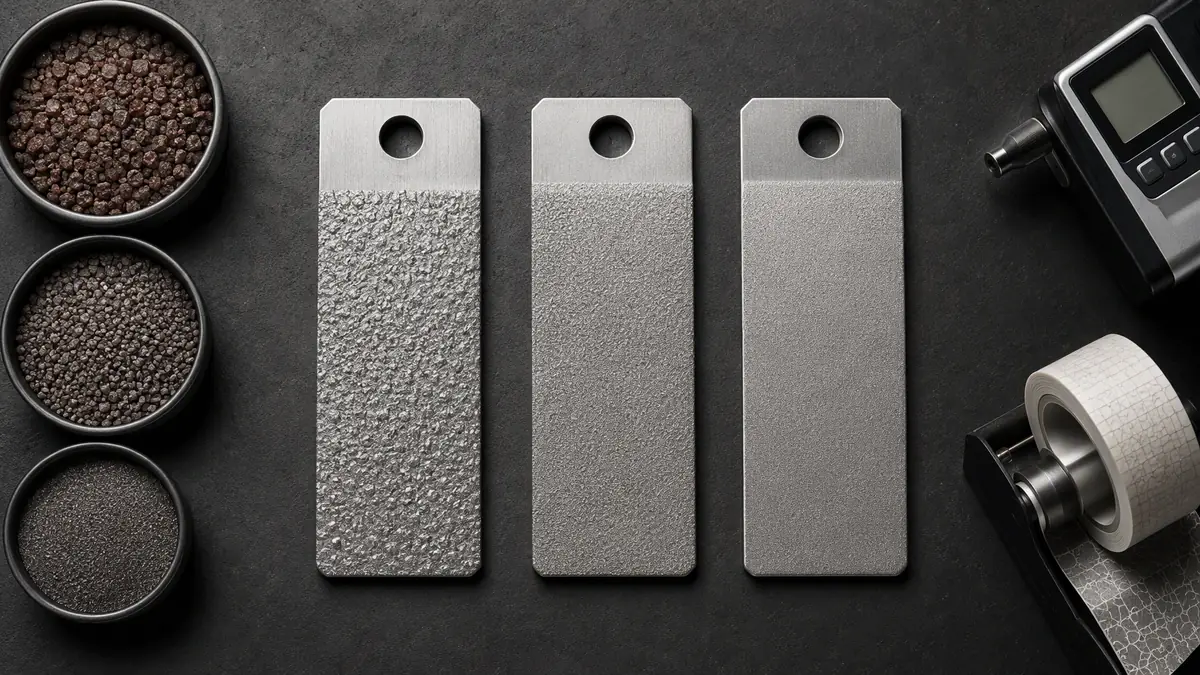
Visual reference: three steel coupons blasted with 24, 80, and 180 mesh aluminum oxide, demonstrating the direct relationship between grit size and surface prof
Top-down flat-lay industrial photograph on a matte black work surface. Three identical steel test coupons are arranged in a row, each displaying a different surface profile from blasting with coarse (24 mesh), medium (80 mesh), and fine (180 mesh) aluminum oxide grit. Directional lighting emphasizes
The following table provides typical surface profile ranges for common aluminum oxide mesh sizes when blasted at 80–100 PSI onto mild steel in a cabinet system. These are approximate values; actual results depend on pressure, standoff distance, nozzle type, and substrate hardness. Always verify with a profilometer or replica tape against the job specification.
Mesh Size
Nominal Particle Size (microns)
Typical Profile on Steel (mils)
Common Applications
24
700–850
3.5–5.0
Heavy corrosion removal, thermal spray prep, thick epoxy bond coats
36
500–600
3.0–4.0
Mill scale removal, structural steel, zinc-rich primer prep
54
300–355
2.0–3.0
General industrial coating prep, weld cleaning
60
250–300
1.5–2.5
Standard anchor profile for liquid coatings, automotive components
Light deburring, cosmetic finishing, soft metal prep
120
100–125
0.5–1.0
Fine satin finish, plating prep, delicate parts
180
63–75
0.3–0.7
Final finish before anodizing, minimal stock removal
220
45–53
0.2–0.5
Ultra-fine cleaning, polishing prep
Important caveats: These profile ranges assume new, sharp abrasive at typical cabinet pressures. As aluminum oxide fractures and rounds with reuse, the same mesh size will produce a progressively shallower profile. A 60-mesh grit on its tenth cycle does not cut like fresh 60-mesh. Profile also decreases on harder substrates such as hardened tool steel or carbide.
07 How to Select the Right Grit Size
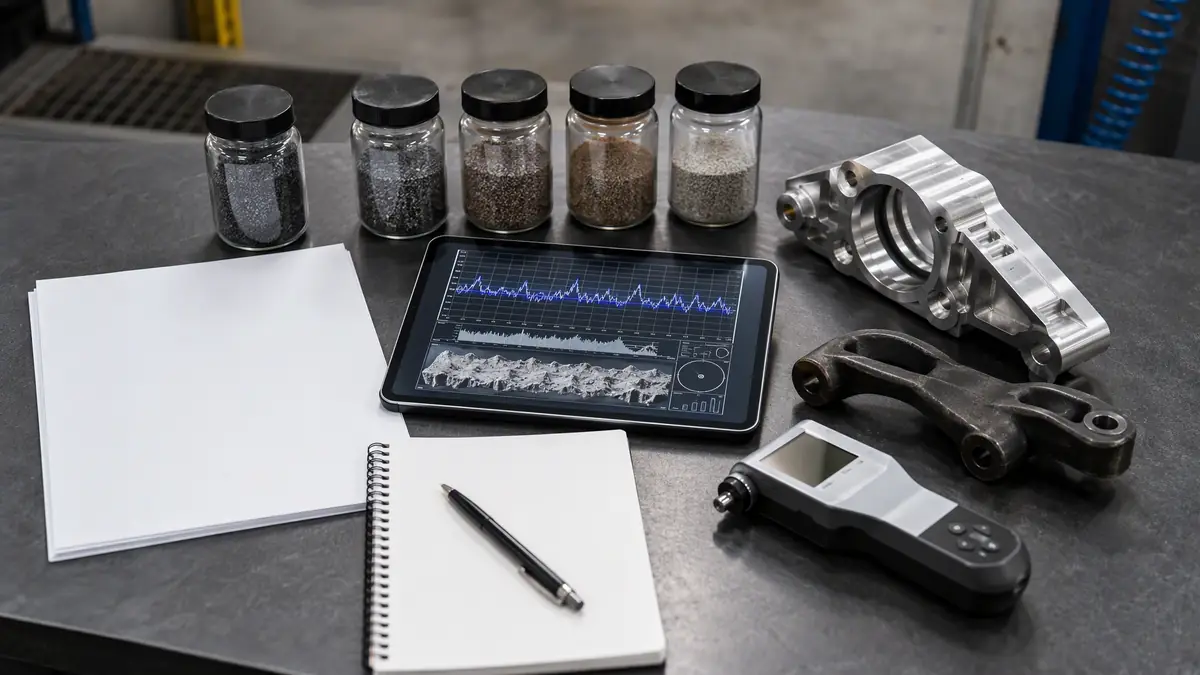
The grit selection workflow: match the coating specification to the mesh size, then verify against the substrate material before loading the hopper.
Clean industrial workbench scene in a blast shop office showing the grit size selection process. A coating technical data sheet and tablet display sit beside a row of aluminum oxide grit sample jars in various mesh sizes. An aluminum component and a hardened steel part represent different substrate
Start with the coating specification. The coating manufacturer's technical data sheet will state the required surface profile range—typically in mils or microns. Work backward from that number.
Step-by-step selection process:
Identify the target profile from the coating spec or customer requirement.
Select a mesh size that produces a profile in that range based on the table above. When in doubt, choose the finer grit that still meets the minimum profile—it will produce a more uniform finish.
Consider the substrate: Softer metals (aluminum, brass) require finer grits to avoid excessive stock removal. Hardened steels can tolerate coarser grits without embedding.
Factor in reuse: If the abrasive will be recycled multiple times, start one mesh size coarser than the table suggests to compensate for particle rounding.
Run a test coupon: Blast a sample piece of the actual substrate and measure the profile before committing to a production run.
When to avoid coarse grits:
Thin sheet metal that may warp under aggressive blasting
Parts with tight dimensional tolerances
Soft non-ferrous substrates where grit embedding is a risk
Applications requiring a cosmetic, low-roughness finish
When to avoid fine grits:
Heavy rust or mill scale that requires significant stock removal
Thick, high-build coatings that demand a deep anchor pattern
High-production environments where fine grit breakdown increases dust and media cost
08 Common Mistakes and How to Avoid Them
Mistake 1: Assuming all 80-grit aluminum oxide cuts the same profile.
Not all 80-mesh abrasives are equal. Economy grades may contain a wider particle size distribution, including fines that reduce cutting efficiency. Virgin fused aluminum oxide cuts differently than recycled material. Verify the specification from your supplier and qualify each new batch with a test coupon.
Mistake 2: Ignoring the effect of abrasive wear on profile.
As aluminum oxide fractures in the cabinet, particles become smaller and more rounded. A profile that measured 2.5 mils with fresh 60-mesh may drop to 1.5 mils after several cycles. Monitor profile periodically during long production runs and top up with fresh abrasive to maintain consistency.
Mistake 3: Using the same grit for every job.
A cabinet shop that runs one "general purpose" grit for every workpiece will inevitably produce profiles outside specification on some jobs. Maintain at least two or three mesh sizes—coarse for structural prep, medium for general coating work, and fine for precision finishing.
Mistake 5: Contaminating fine grit with coarse carryover.
When switching from a coarse grit to a fine grit in the same cabinet, residual coarse particles left in the hopper, hose, or recovery system will contaminate the fine batch and produce an inconsistent finish. Clean the system thoroughly between grit changes.
09 Implementation Best Practices for Cabinet Shops
Media storage: Store aluminum oxide in sealed containers in a dry area. Moisture causes clumping and inconsistent feed through the metering valve. Damp abrasive also increases dust in the cabinet.
Screening and classification: If your cabinet has a media recovery and classification system, verify that the air-wash separator is tuned correctly. A poorly adjusted separator will either discard usable abrasive or return spent fines to the hopper, degrading cut performance.
Pressure and standoff: For consistent profiles, standardize your blasting parameters. Document the pressure, nozzle size, standoff distance, and grit size for each job. When a profile drifts, you can isolate the variable.
Profile verification: Use replica tape (Testex or equivalent) or a digital profilometer to measure the anchor pattern. Do not rely on visual comparison alone—two surfaces that look identical can differ by a mil or more in peak height.
Safety note: Aluminum oxide blasting generates fine dust that may contain substrate particles. Operate cabinets with functional dust collection, maintain negative pressure, and wear appropriate respiratory protection when servicing collectors or opening the cabinet.
10 Conclusion
Aluminum oxide grit size is the single most controllable variable in achieving a specified surface profile. Mesh number determines particle size; particle size determines the depth and character of the anchor pattern. For cabinet blast shops, the difference between a passed inspection and a rejected part often comes down to loading the right grit for the job.
The practical takeaway: know your target profile, select the mesh size that delivers it, verify with a test coupon, and monitor as the abrasive wears. Keep fresh stock of at least two or three mesh grades to cover the range of work that passes through your shop. When the specification is tight, do not guess—measure.
11 Frequently Asked Questions
What does the mesh number on aluminum oxide grit actually mean?
The mesh number indicates the particle size based on sieving standards. It refers to the number of openings per linear inch in a sieve screen. A higher mesh number, like 120, means smaller particles that pass through finer screens, while a lower number, like 24, represents much larger, coarser particles.
How do I choose the right grit size for a specific coating specification?
Start by checking the coating's technical data sheet for the required surface profile range in mils or microns. Then, use a mesh-to-profile chart to select a grit size that achieves that range on your substrate. Always verify your selection by blasting a test coupon and measuring the profile with a profilometer or replica tape before starting the full job.
Why is my 80-grit aluminum oxide not producing a consistent profile anymore?
Aluminum oxide is friable and fractures with each use, becoming smaller and more rounded. This wear reduces its cutting aggression and produces a shallower profile over time. To maintain consistency, monitor the profile during long runs and periodically top up the cabinet with fresh abrasive to compensate for particle breakdown.
Can I use the same aluminum oxide grit for both steel and aluminum parts?
It is not recommended. Softer metals like aluminum require a finer grit to prevent excessive stock removal and avoid the risk of abrasive embedding in the surface. Using a coarse grit designed for structural steel on aluminum would likely damage the part and create an unacceptable finish.
What is the difference between a 60-mesh and a 60/80-mesh abrasive?
A '60-mesh' designation typically represents a nominal average particle size with a tolerance band. A '60/80-mesh' designation is a tighter specification, meaning the particles pass through a 60-mesh screen but are retained on an 80-mesh screen. The 60/80-mesh grade has a narrower particle size distribution, producing a more uniform surface finish, and is generally more expensive.
What are the most common mistakes when switching between different grit sizes in a blast cabinet?
The most critical mistake is cross-contamination. Residual coarse particles left in the hopper, hose, or recovery system will mix with a finer grit, causing an inconsistent and scratched finish. Always thoroughly clean the entire blast system, including the recovery and dust collector, when changing to a different grit size.
How does air pressure affect the profile produced by a given grit size?
Grit size and air pressure work together to create the anchor profile. If your profile is too low with the correct grit, check your air pressure first. Dropping pressure from 100 PSI to 60 PSI can reduce the profile depth by a mil or more, even with the same abrasive, because the particles impact the surface with less energy.
12 Solution
Use the mesh-to-profile guidance in this article to shortlist the aluminum oxide grit sizes that match your typical job requirements. For technical specifications, batch consistency data, or a quotation on bulk abrasive orders, explore the Abrasives product pages or contact SPA2Z to confirm compatibility with your blasting setup and coating specifications.
13 Get a quote
Get a quote
Tell us what you need. We reply within one business day.
Recommended products
Catalogue products matched to this article. Ask for grade, quantity and destination.