Steel Shot vs Steel Grit: Which Media Fits Your Blast Wheel
Choosing between steel shot and steel grit directly affects your blast cleaning rate, surface profile, and abrasive consumption. For foundry and wheel-blast ope...
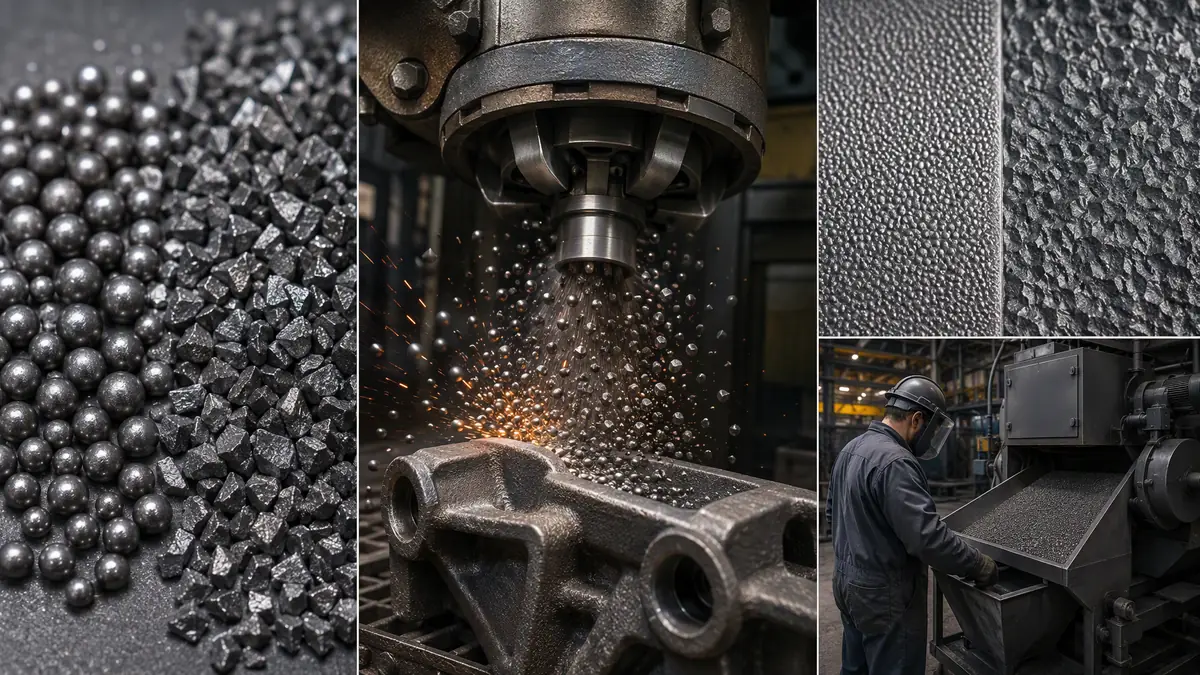
Professional editorial collage for a B2B industrial machinery blog. The image features a dominant view of a blast wheel in operation, macro comparisons of spherical shot versus angular grit particles, a split-surface texture comparison showing peened versus etched profiles, and an operator checking
01 Introduction
Choosing between steel shot and steel grit directly affects your blast cleaning rate, surface profile, and abrasive consumption. For foundry and wheel-blast operators, the wrong choice leads to rework, excessive machine wear, or a surface finish tha…
02 Introduction
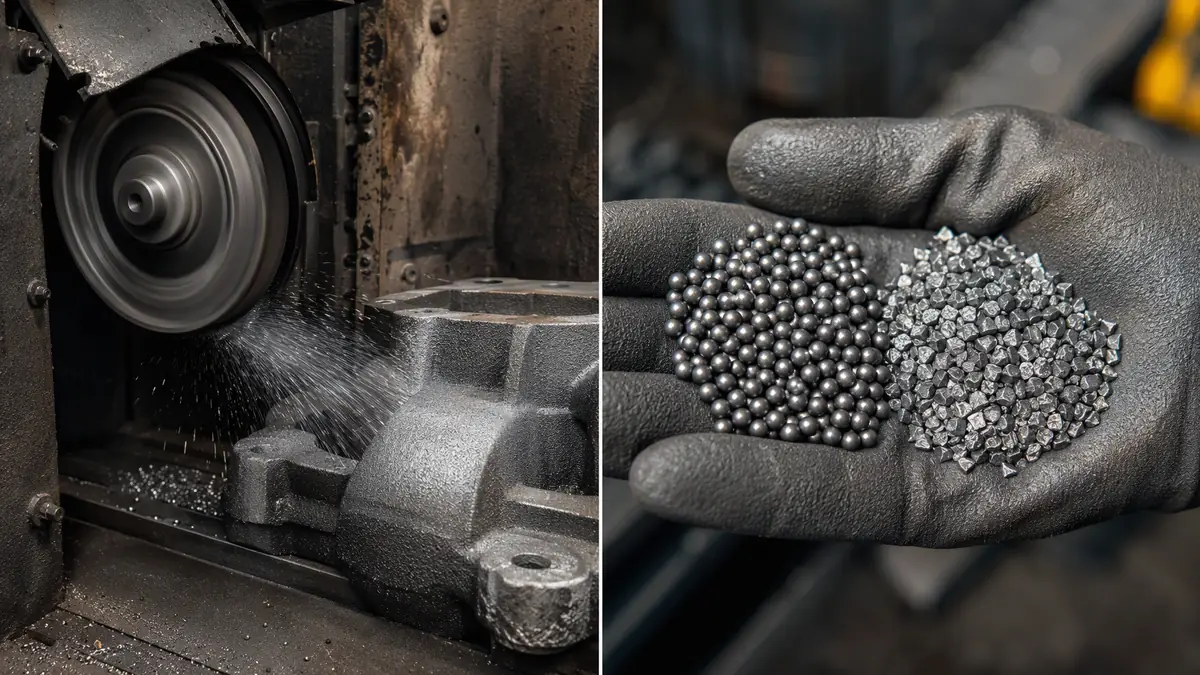
The fundamental choice for wheel-blast operators: spherical shot for peening or angular grit for etching, shown in a foundry context.
A photorealistic image illustrating the core dilemma of the article. A blast wheel operates on a casting on one side, while a hand presents the two media choices—spherical steel shot and angular steel grit—on the other, emphasizing the practical decision operators face.
Every wheel-blast operator eventually faces the same question: should I load steel shot or steel grit into the hopper? Both are high-carbon steel abrasives that recycle well in wheel machines, but they produce fundamentally different surface outcomes. Steel shot creates a peened, dimpled profile that retains lubricants and resists fatigue. Steel grit cuts an angular etch that coatings grip aggressively. The decision hinges on what the part needs next — paint adhesion, stress relief, or simply a clean surface — and on how your blast wheel handles each media shape. This comparison walks through the practical differences, selection criteria, and common mistakes that cost foundries and fabricators time and money.
03 What Are Steel Shot and Steel Grit?
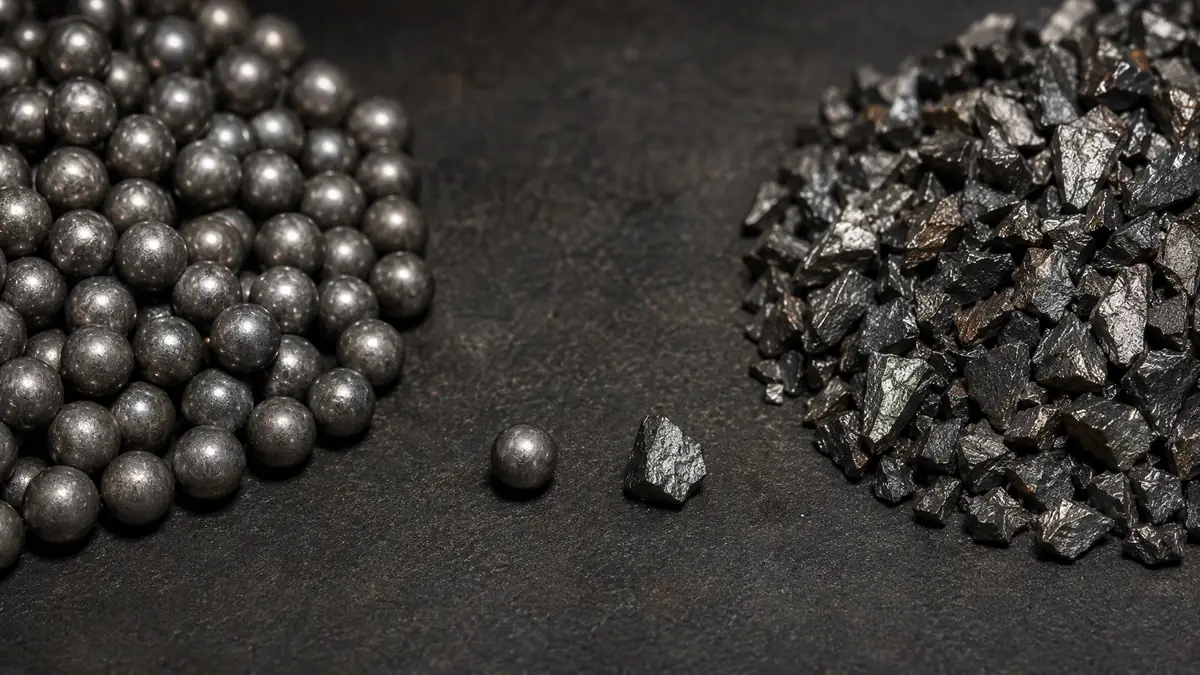
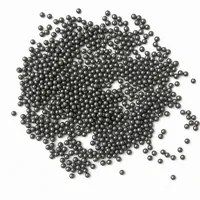
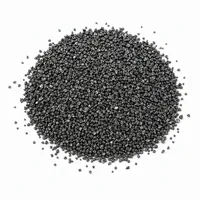
Steel shot is atomized into spheres for peening; steel grit is crushed into angular particles for aggressive cutting and etching.
A detailed macro photograph showing the fundamental physical difference between the two abrasives. Spherical steel shot particles are contrasted with angular, crushed steel grit particles, highlighting the shape that dictates their peening versus cutting performance in wheel-blast machines.
Both abrasives start from molten high-carbon steel, typically hardened to a range of 40–65 HRC depending on the grade. The difference lies in how the molten metal is formed and processed.
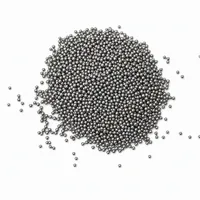
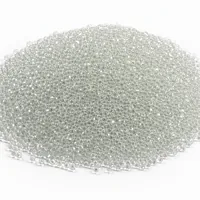
Steel shot is produced by atomizing molten steel into near-spherical particles, then quenching and tempering them. The resulting round shape delivers impact energy over a small contact area, producing a peening effect — a compressive stress layer that improves fatigue life. Shot is graded by diameter (often designated as S-70 through S-780 or similar sizing systems). In a blast wheel, round shot accelerates efficiently and resists fracture, giving it high recyclability.
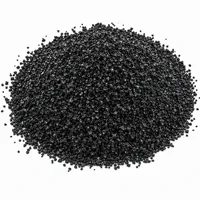
Steel grit is formed by crushing hardened steel shot into angular particles with sharp edges. These edges cut and etch the substrate rather than peen it. Grit is graded by mesh size (G-10 through G-120 and finer), with coarser grits removing heavy scale and finer grits producing controlled anchor profiles. Because grit fractures progressively in service, the working mix in a wheel machine gradually shifts toward smaller, less angular particles — a factor operators must manage.
04 Why the Difference Matters in a Wheel-Blast Machine
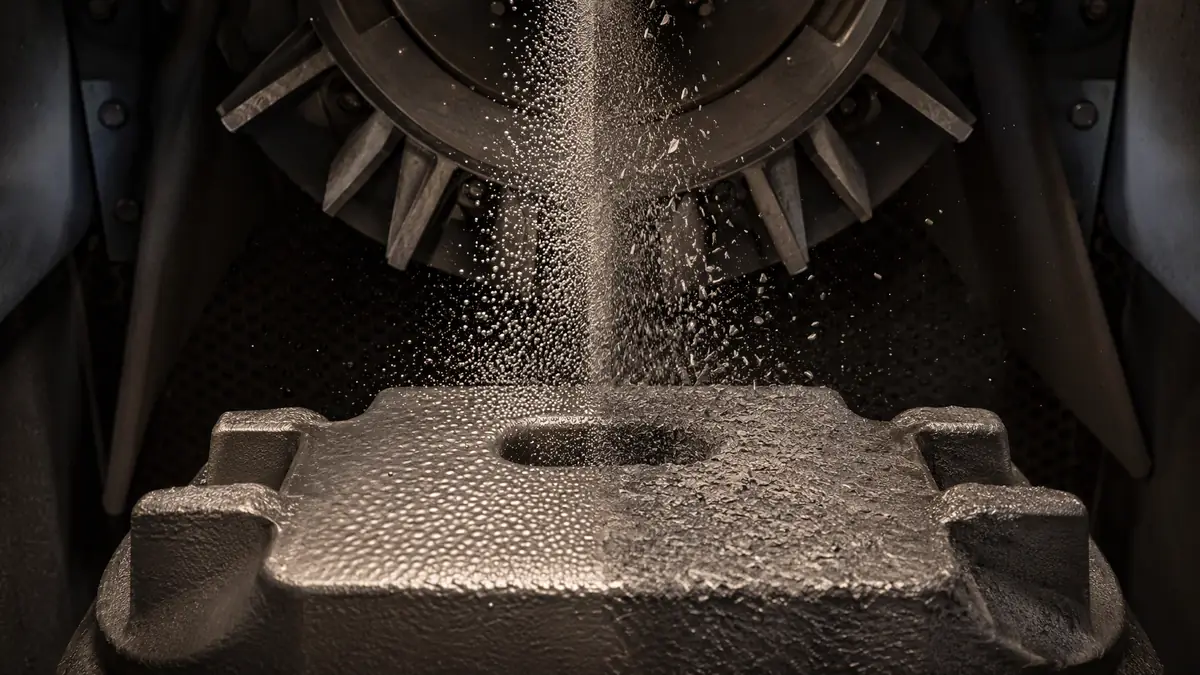
In a blast wheel, spherical shot peens a uniform dimpled profile, while angular grit cuts an aggressive etched anchor profile.
A high-speed industrial photograph capturing the moment of impact in a wheel-blast machine. The image visually demonstrates how the shape of the media dictates the surface outcome, with a clear split between the peening effect of steel shot and the cutting action of steel grit on a metal casting.
Centrifugal blast wheels throw abrasive at high velocity — typically 60–80 metres per second — using a rotating impeller and set of blades. The wheel does not distinguish between shot and grit; it accelerates both. But the media shape determines what happens at the workpiece surface.
Steel shot in a wheel blast operation:
- Produces a uniform, peened surface with low surface profile (typically 25–75 microns Rz, depending on shot size and hardness).
- Removes light rust, mill scale, and sand from castings without significantly changing part dimensions.
- Generates less dust than grit because it does not micro-fracture as aggressively.
- Works well for descaling heat-treated components, cleaning castings prior to inspection, and shot peening for fatigue resistance.
Steel grit in a wheel blast operation:
- Creates an angular anchor profile (commonly 50–100+ microns) that coating inspectors measure with replica tape or stylus instruments.
- Strips heavy rust, thick mill scale, and tenacious coatings faster than shot.
- Etches the surface, providing the mechanical key required for high-performance paint and thermal spray coatings.
- Wears blast wheel components — blades, impellers, control cages — faster than shot of equivalent hardness because angular particles abrade rather than glance off.
The recyclability story also differs. Steel shot can recirculate hundreds of cycles in a well-maintained wheel machine before it work-hardens and spalls. Steel grit fractures with each impact; the working mix must be replenished regularly with fresh grit to maintain the required etch. Operators who neglect replenishment end up with a mix dominated by fines that cut slowly and generate excess dust.
05 Shot vs Grit Blasting: Matching Media to the Job
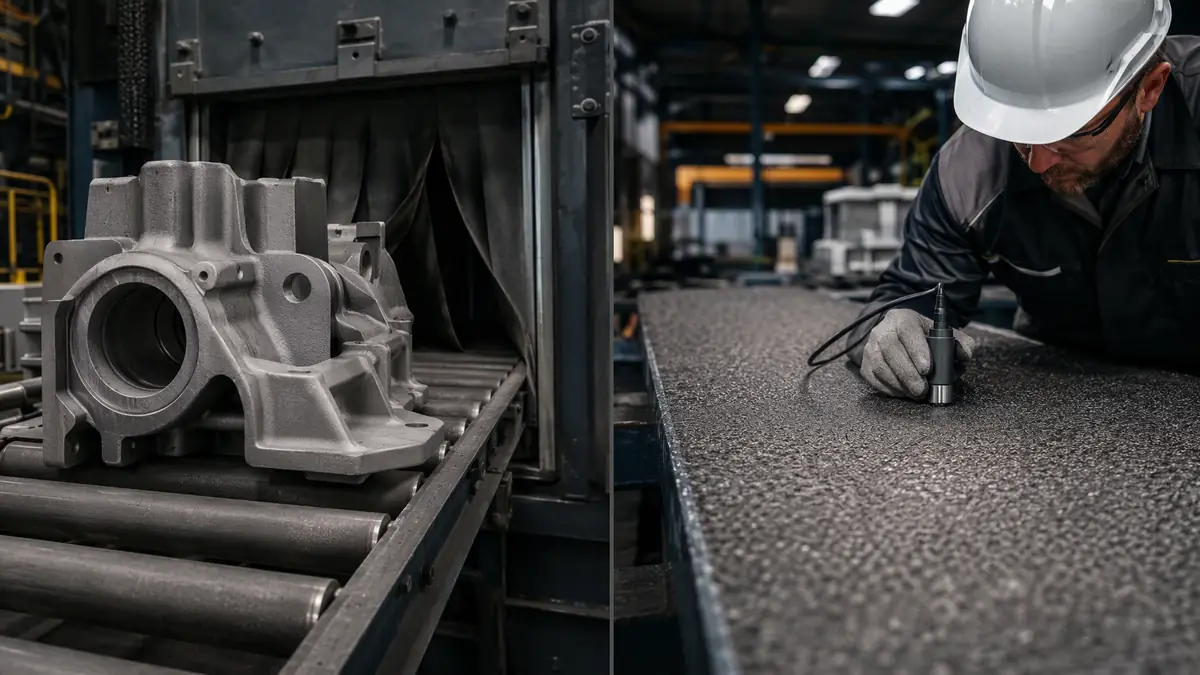
Steel shot cleans and peens castings for inspection; steel grit etches an anchor profile for strong coating adhesion.
A split-screen industrial photograph illustrating the practical applications of the two media. One side shows a peened casting for general cleaning, while the other shows a steel plate being etched with grit for coating preparation, with a worker verifying the surface profile to ensure it meets spec
The choice between shot and grit is not about which abrasive is "better." It is about which one delivers the surface condition the next process step demands.
When Steel Shot Is the Right Choice
Foundry cleaning and descaling: Removing sand, scale, and light oxidation from cast iron or steel castings without altering dimensional tolerances.
Shot peening: Inducing compressive stress on gears, springs, connecting rods, and other fatigue-critical components. Only spherical shot produces the controlled peening intensity measured by Almen strip testing.
General surface cleaning prior to inspection: When the goal is a clean, bright surface rather than a specific anchor profile.
Non-coated finished parts: Components that will be assembled or put into service without painting — the peened finish resists crack initiation better than an etched surface.
Pre-coating surface preparation: Achieving the anchor profile specified for protective coatings — typically 50–75 microns for standard industrial paints, 75–100 microns for high-build epoxies and thermal spray.
Heavy rust and scale removal: Structural steel, ship plates, and storage tanks where mill scale or corrosion is thick and shot would merely peen over it.
Surface roughening for bonding: Preparing substrates for rubber lining, concrete overlay, or metallization where a sharp profile is mandatory.
Etching for visual or functional texture: Non-slip surfaces, architectural finishes, or any application requiring a matte, angular texture.
When Neither Is Ideal
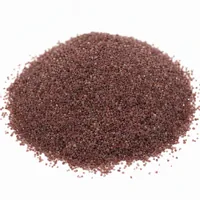
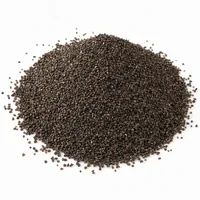
Steel shot and grit are ferrous abrasives. They should not be used on stainless steel or non-ferrous metals where iron contamination can cause galvanic corrosion or discoloration. For those applications, consider non-metallic alternatives such as aluminum oxide grit or garnet, or stainless steel cut wire shot. Also, in air-blast cabinets operating at lower velocities, the performance trade-offs differ — this discussion is specific to wheel-blast machines.
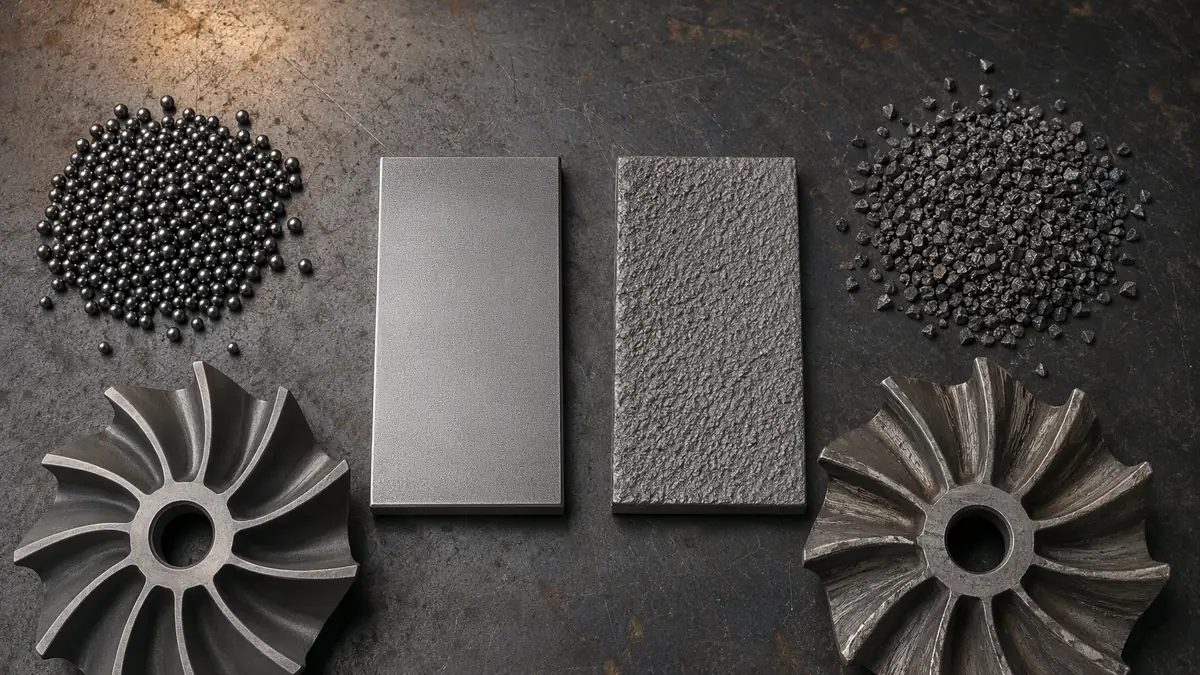
A practical comparison of media shape, resulting surface profile, and impact on machine component wear for steel shot versus steel grit.
A detailed flat-lay photograph providing a visual summary of key selection factors. It contrasts the media particles, the surface profiles they create on metal coupons, and the relative wear they cause on blast wheel components, aiding operators in making an informed choice.
When evaluating steel shot versus steel grit for a specific wheel-blast line, weigh these practical criteria:
Factor
Steel Shot
Steel Grit
Particle shape
Spherical
Angular, crushed
Primary effect
Peening, cleaning
Cutting, etching
Surface profile
Low (25–75 µm typical)
Medium to high (50–100+ µm)
Material removal
Minimal
Moderate to aggressive
Dust generation
Lower
Higher as grit fractures
Wheel component wear
Lower
Higher at equivalent hardness
Recyclability
Excellent (hundreds of cycles)
Good, but requires regular replenishment
Hardness range (HRC)
40–50 typical; up to 55–62 for peening grades
50–65 typical
Typical sizing systems
S-70 to S-780 (diameter)
G-10 to G-120 (mesh)
Best for
Cleaning, peening, descaling
Coating prep, etch profile, heavy rust
Hardness deserves special attention. A harder abrasive (55+ HRC) fractures less in shot form but may still break down faster in grit form. Softer grades wear more quickly but are gentler on machine components. The sweet spot for general wheel-blast cleaning is often 45–52 HRC shot or 50–58 HRC grit, but always confirm against your blast wheel manufacturer's recommendation and the surface specification you must meet.
07 Common Mistakes When Choosing Between Steel Shot and Steel Grit
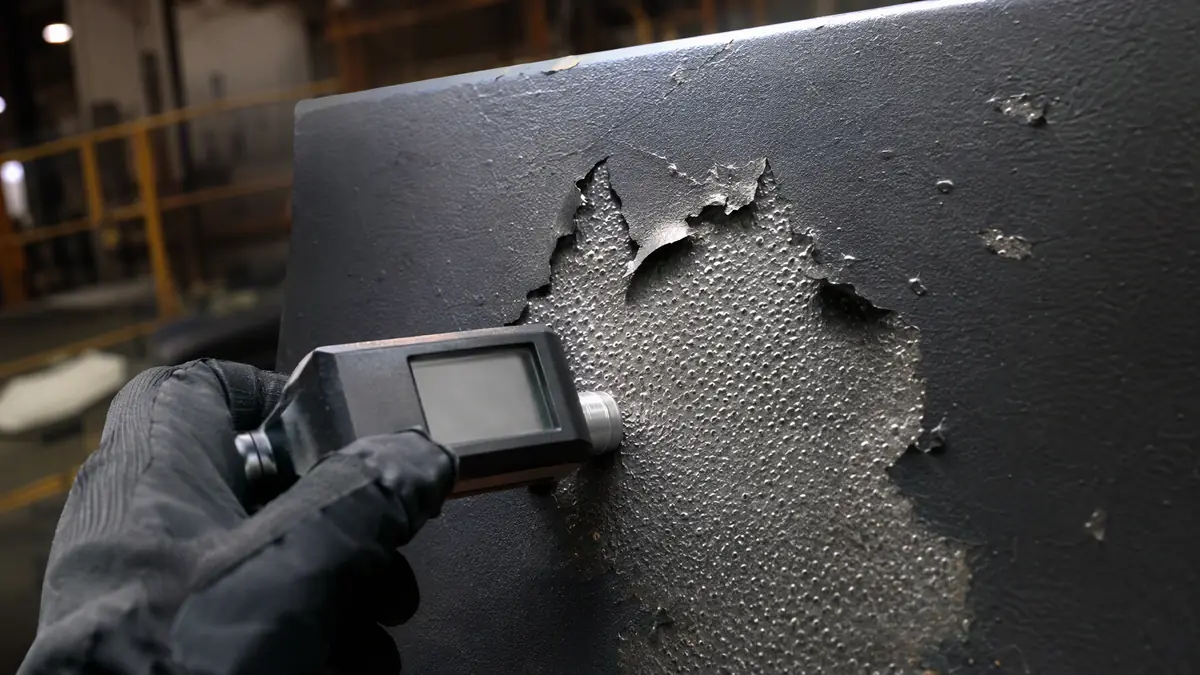
A common error: using steel shot when the specification demands an anchor profile, leading to premature coating failure and costly rework.
A detailed industrial photograph showing a critical mistake in media selection. A coating is peeling from a metal surface that was peened with steel shot instead of being etched with grit, demonstrating the lack of mechanical adhesion. A coating inspector's gauge is present for context.
1. Using shot when the specification demands an anchor profile.
A coating inspector measuring surface profile will reject a peened surface that lacks the required angular roughness. The coating may peel prematurely because there is no mechanical key. If the job spec calls for a profile of 50 microns or more, grit is almost certainly required.
2. Running grit without a replenishment plan.
Operators sometimes fill the hopper with fresh grit and assume it will perform consistently for weeks. In reality, grit fractures with every impact. Within hours, the working mix shifts toward rounded fines that cut slowly and generate dust. Establish a regular top-up schedule — adding a measured quantity of fresh grit per shift or per ton of work processed — to maintain the specified etch rate and profile.
3. Mixing shot and grit unintentionally.
Some shops try to "get the best of both worlds" by blending shot and grit. In a wheel machine, the angular grit abrades the round shot, accelerating breakdown of both. The result is an unpredictable surface finish and higher abrasive consumption. If you need both cleaning and profiling, consider a two-step process: shot blast first to clean, then a lighter grit blast to establish the profile — or use a single abrasive that meets the dominant requirement.
4. Ignoring wheel component wear patterns.
Switching from shot to grit without adjusting maintenance intervals can lead to premature blade and impeller failure. Grit wears hot spots on blades faster. Monitor blade thickness more frequently after a media change and keep spare blast wheel blades and manganese tiles on hand.
5. Selecting hardness based on price alone.
A cheaper, softer abrasive may seem economical until you calculate consumption per ton of work processed. Softer media wears out faster, requires more frequent replenishment, and may not achieve the required cleaning rate. Evaluate total cost per square metre or per ton of finished work, not just the purchase price per kilogram.
08 Practical Implementation Notes for Wheel-Blast Operators
Check your separator setting. The air-wash separator on a wheel-blast machine removes fines and dust from the recirculating abrasive. When switching between shot and grit, the separator may need adjustment because the bulk density and particle size distribution differ. An incorrectly set separator can discard good abrasive or recirculate spent fines.
Verify abrasive valve and feed rate. Angular grit may flow differently through the abrasive valve than spherical shot. Observe the blast pattern on the workpiece and adjust the feed rate to maintain full wheel loading without choking.
Monitor amperage on the wheel motor. A properly loaded wheel draws a predictable current. A drop in amperage suggests under-feeding; a spike may indicate over-feeding or a mechanical issue. This is a practical proxy for consistent abrasive flow.
Test surface profile regularly. Use replica tape or a stylus profilometer to confirm the profile meets specification, especially after replenishing grit or changing shot size. Do not rely on visual appearance alone — a surface can look clean but lack the required anchor profile.
Keep records. Track abrasive consumption per shift, wheel blade change intervals, and surface profile measurements. Patterns in this data help you optimise media selection and predict maintenance needs.
09 Conclusion
Steel shot peens; steel grit etches. That single distinction should guide your media selection in any wheel-blast application. If the work piece needs a clean, fatigue-resistant surface with minimal dimensional change, load steel shot. If the next process step is coating, lining, or bonding — and the specification calls for a measurable anchor profile — load steel grit. The blast wheel itself will handle either, but your maintenance schedule, abrasive replenishment plan, and quality checks must adapt to the media you choose. Getting the match right reduces rework, extends coating life, and keeps abrasive consumption under control.
10 Frequently Asked Questions
What is the fundamental difference between steel shot and steel grit?
The difference is particle shape. Steel shot consists of spherical particles that peen and dimple a surface, creating a compressive stress layer. Steel grit is crushed into angular particles with sharp edges that cut and etch the substrate to create an anchor profile for coatings.
How do I know if my job requires steel shot or steel grit?
Match the media to the next process step. If the part needs shot peening for fatigue resistance, descaling without dimensional change, or a clean surface for inspection, choose steel shot. If the specification demands a measured anchor profile for paint adhesion, heavy rust removal, or a rough surface for bonding, steel grit is required.
Can I mix steel shot and steel grit in my blast wheel to get both cleaning and profiling?
Mixing them is not recommended. The angular grit will abrade the round shot, accelerating the breakdown of both media types. This leads to an unpredictable surface finish and higher abrasive consumption. A two-step process or selecting a single abrasive for the dominant requirement is a better approach.
Why does my steel grit working mix lose its etch rate so quickly?
Steel grit fractures with every impact. Without a regular replenishment plan, the working mix quickly becomes dominated by rounded, worn fines that cut slowly and generate dust. You must add a measured quantity of fresh grit per shift or per ton of work processed to maintain the angular profile and specified etch rate.
Does steel grit wear out my blast wheel components faster than steel shot?
Yes. Angular grit particles abrade blades, impellers, and control cages more aggressively than spherical shot of equivalent hardness, which tends to glance off. When switching from shot to grit, you should increase the frequency of blade thickness inspections and adjust your maintenance intervals accordingly.
Can I use steel shot or grit on stainless steel parts?
No, you should not. Steel shot and grit are ferrous abrasives that can embed iron particles in the surface of stainless steel or non-ferrous metals. This contamination can cause galvanic corrosion or unsightly discoloration. Use non-metallic alternatives like aluminum oxide, garnet, or stainless steel cut wire shot for these applications.
How does the recyclability of steel shot compare to steel grit in a wheel machine?
Steel shot has excellent recyclability and can recirculate for hundreds of cycles before work-hardening and spalling. Steel grit also recycles well but fractures progressively, requiring regular replenishment with fresh, angular media to maintain its cutting performance and prevent the mix from becoming dominated by fines.
11 Solution
Selecting the right abrasive is only part of the equation — having a reliable supply of quality media and compatible wheel-blast spares keeps your line running. Explore the Abrasives category on SPA2Z to compare steel shot and steel grit options, or enquire with our team about specifications, hardness grades, and bulk availability for your wheel-blast operation.
12 Get a quote
Get a quote
Tell us what you need. We reply within one business day.
Recommended products
Catalogue products matched to this article. Ask for grade, quantity and destination.