Copper Slag vs Coal Slag Abrasives: Cost and Performance
Choosing between copper slag and coal slag often comes down to upfront price, but the cheapest option per kilogram can become the most expensive choice on the j...
Published
30 Jun 2017
Category
Abrasives
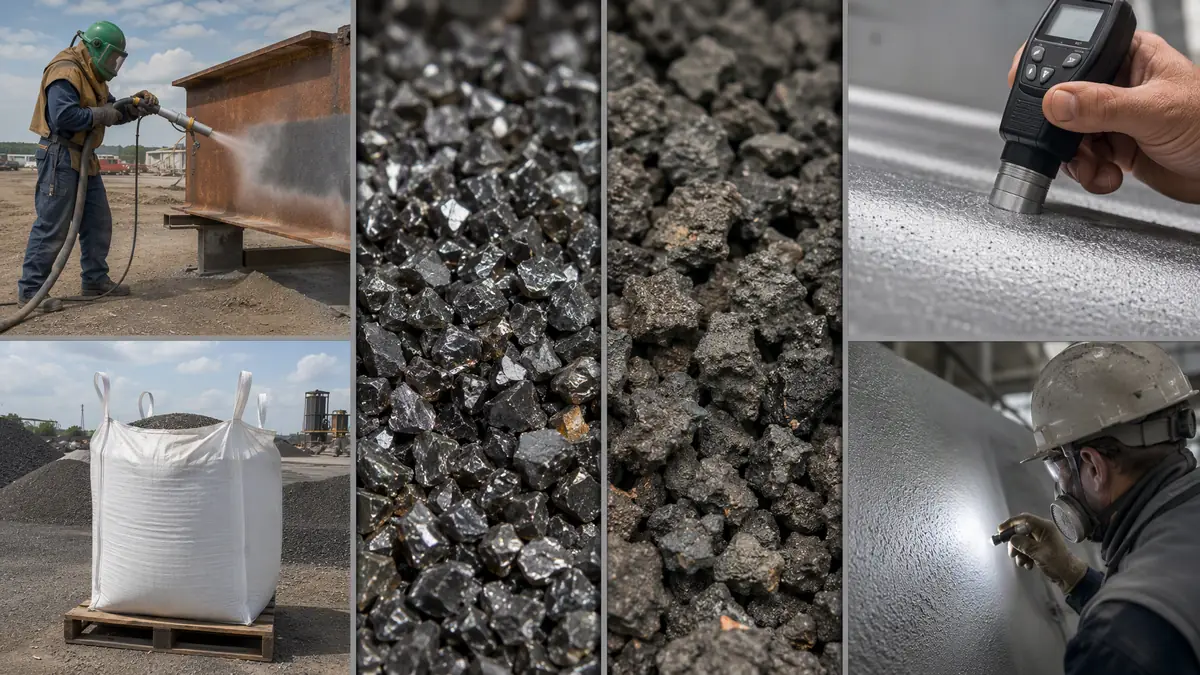
FIG. 01Side-by-side visual comparison of copper s...
A professional multi-panel editorial image for an article comparing copper slag and coal slag abrasives. The central panel shows a macro split-screen of the two media types. Surrounding panels depict an open-air blasting contractor in action, a surface profile gauge on blasted steel, a bulk abrasive
01 Introduction
Choosing between copper slag and coal slag often comes down to upfront price, but the cheapest option per kilogram can become the most expensive choice on the jobsite. For open-air blasting contractors, productivity, dust control, and disposal logis…
02 Introduction
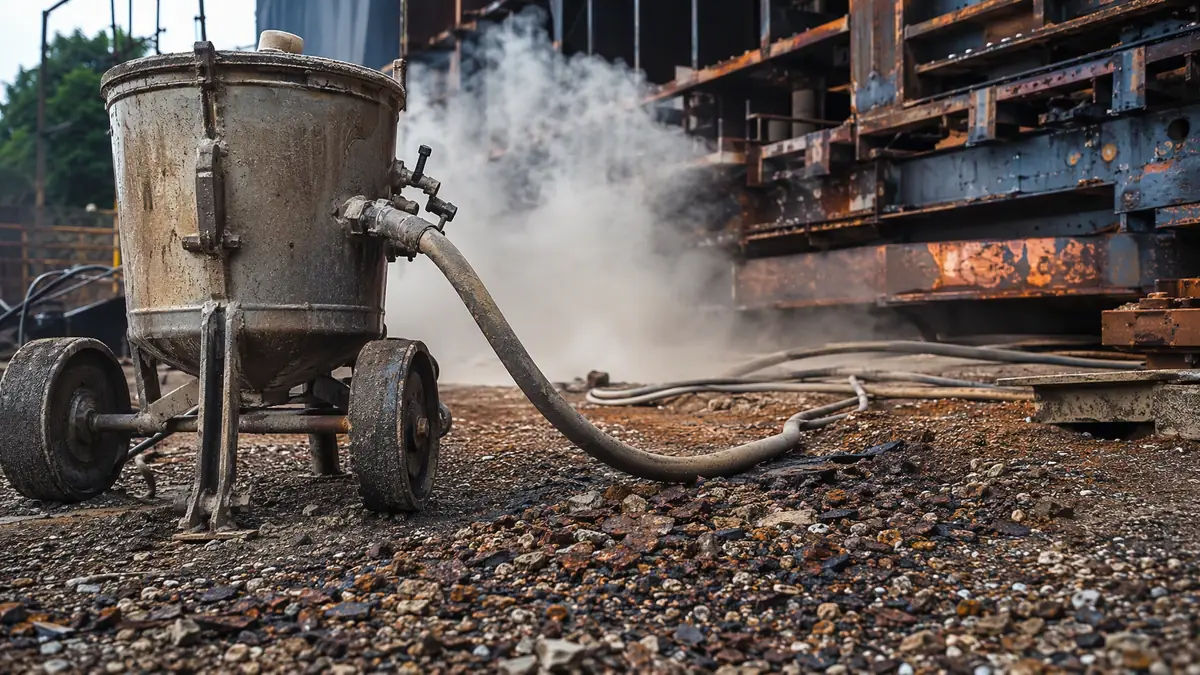
The reality of open-air blasting: spent abrasive and debris on the ground highlight the importance of choosing the right expendable media for the job.
A photorealistic image showing the gritty reality of an open-air blasting site. A blast pot and hose are visible in the foreground, with spent abrasive, rust, and debris on the ground, setting the scene for a discussion on choosing between copper slag and coal slag abrasives.
When a contract specifies a surface cleanliness standard and a target anchor profile, the abrasive you load into the blast pot determines whether you hit that spec in one pass or three. Both copper slag and coal slag are widely available expendable blast media used in open-air blasting operations. They look similar, they are priced competitively, and they are often used on the same types of jobs. But they are not interchangeable without consequence.
This article is written for blasting contractors, surface preparation supervisors, and procurement teams who need to decide which slag abrasive to buy for the next project. We will examine what each material is, how they perform side by side, where each one excels, what can go wrong with the wrong choice, and how to think about total cost rather than just the price on the invoice.
03 What Are Slag Abrasives?
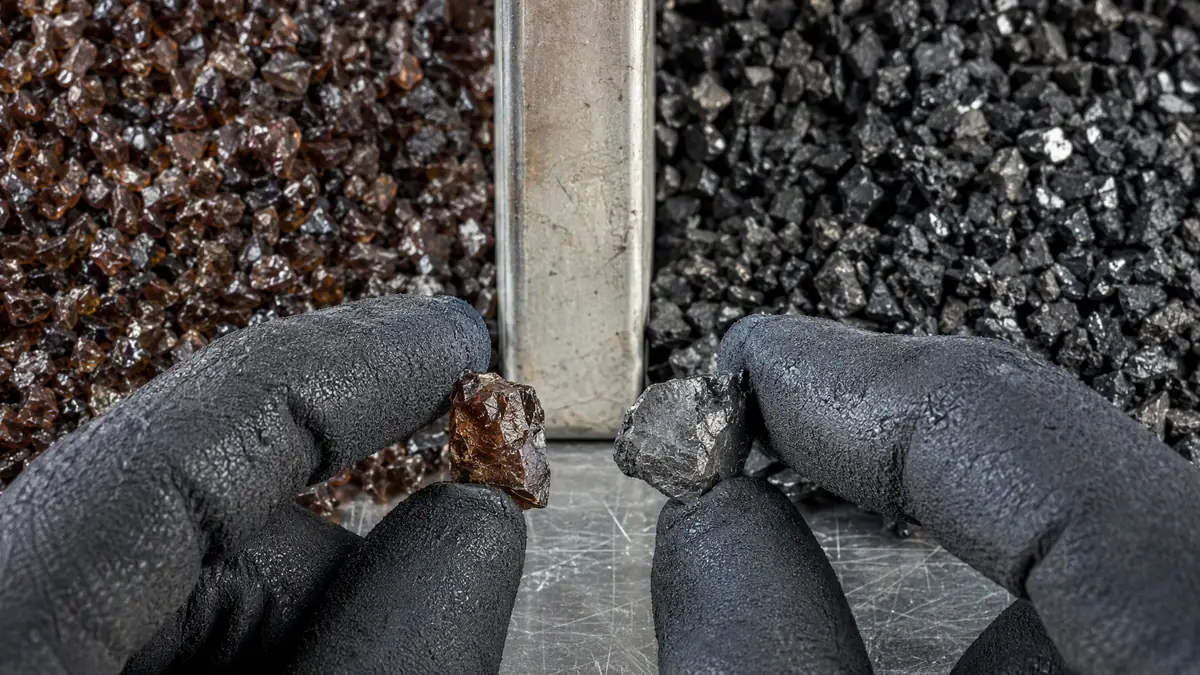
Copper slag (left) and coal slag (right) particles compared side-by-side, showing the glassy versus friable angular textures of these expendable blast media.
A detailed macro photograph comparing the physical characteristics of copper slag and coal slag abrasives. A gloved hand holds up a particle of each, highlighting the dense, glassy texture of copper slag versus the more friable, angular nature of coal slag on a clean industrial workbench.
Slag abrasives are byproducts of industrial smelting and power generation processes. They are crushed, screened, and graded into angular particles suitable for high-pressure blasting. Because they are expendable — used once and then disposed of — they dominate the open-air blasting market where recovery and recycling are impractical.
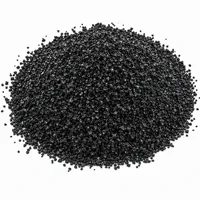
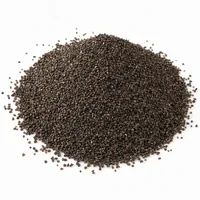
Copper slag is a byproduct of copper smelting. After molten copper is extracted, the remaining silicate material is quenched in water, producing a hard, dense, angular granule. It is then dried, crushed, and screened into commercial grit sizes. Copper slag is typically dark brown to black with a glassy, sharp-edged particle shape.
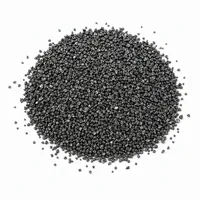
Coal slag is a byproduct of coal-fired power generation. The molten bottom ash from burning coal is quenched and processed into angular blasting grit. Coal slag is generally black and somewhat less dense than copper slag, with a particle shape that is angular but can be more friable depending on the source.
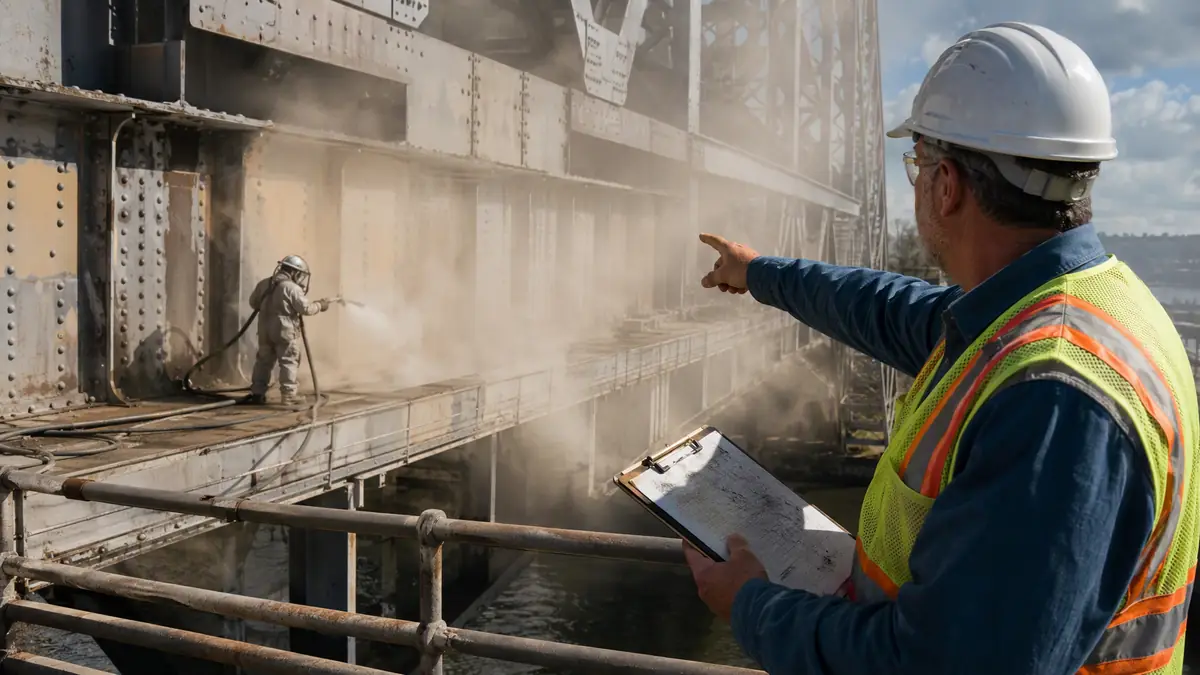
Heavy dust from blasting media on a bridge project can slow production and increase cleanup costs, making the choice of abrasive critical.
A photorealistic image of a bridge maintenance project showing a contractor blasting a steel girder, generating a significant dust cloud. A supervisor in the foreground observes, illustrating the real-world impact of abrasive choice on productivity, dust control, and total project cost.
For a contractor running multiple blast pots on a bridge repainting or tank lining project, media consumption directly affects three things: how fast the job gets done, how much dust is generated, and how much waste leaves the site. A media that breaks down too quickly slows production and increases dust. A media that is too aggressive can over-profile the substrate or embed in the surface. A media that costs less per tonne but generates higher disposal volumes can erase the initial savings.
The core question is not which slag is cheaper to buy. It is which slag delivers the required surface preparation outcome at the lowest total cost per square metre blasted.
05 Copper Slag vs Coal Slag: Head-to-Head Comparison
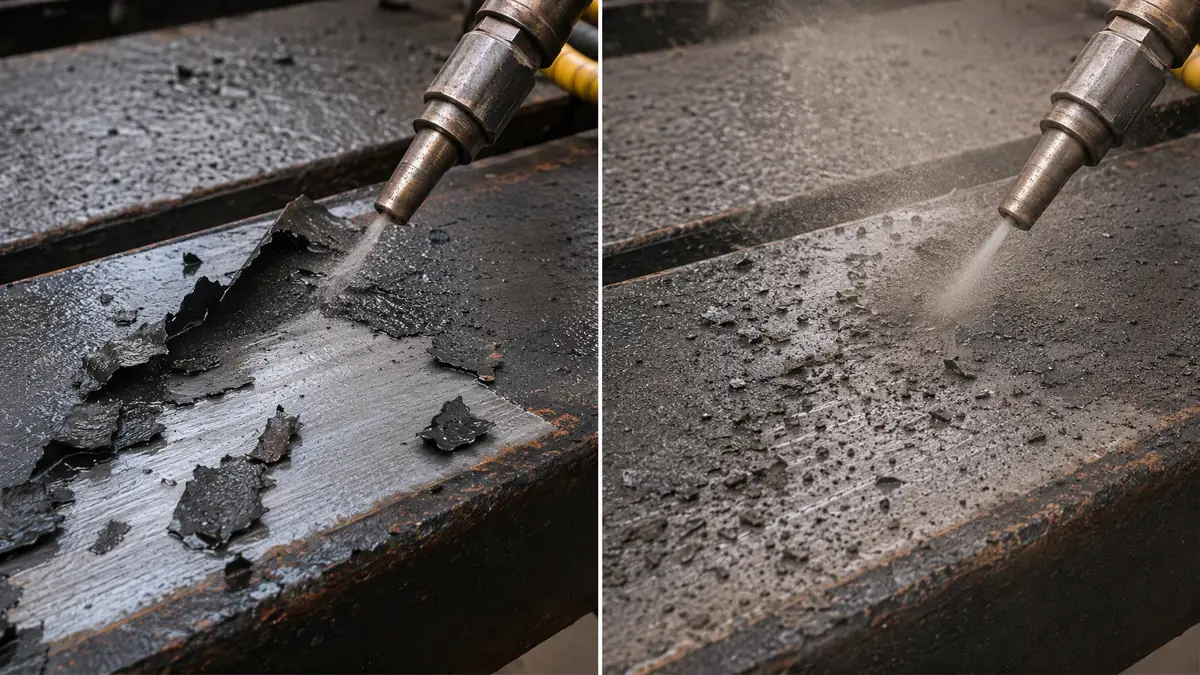
A direct visual comparison: copper slag (left) strips heavy coating faster with less dust than coal slag (right), demonstrating the density and friability trade
A photorealistic split-screen image providing a head-to-head comparison of copper slag and coal slag blasting performance. The left panel shows efficient coating removal with copper slag, while the right panel shows slower removal and more dust with coal slag, visually representing the productivity
Physical Properties
Property
Copper Slag
Coal Slag
Typical bulk density
Higher; approximately 1.8–2.0 g/cm³ (confirm with supplier specification)
Lower; approximately 1.3–1.6 g/cm³ (varies by source)
Mohs hardness
~6 to 7
~6 to 7
Particle shape
Angular, blocky, glassy
Angular, more friable
Free silica content
Typically less than 1% (confirm against the mill certificate)
Typically less than 1% in modern processed grades (verify with supplier)
Chloride content
May contain trace chlorides; confirm if blasting stainless steel or for marine coating applications
Generally low chloride; verify against specification
Higher bulk density in copper slag means more mass is thrown per unit volume through the nozzle. This translates to higher impact energy per particle, which can improve cutting speed on tough coatings and heavy rust. The tradeoff is that denser media requires stable air pressure and properly sized metering valves to feed consistently.
Blasting Performance
Cutting speed and productivity. Copper slag typically cuts faster on thick coatings, mill scale, and heavy corrosion because of its higher density and particle mass. Contractors often report fewer passes to achieve the specified cleanliness level. Coal slag can achieve comparable results on lighter rust and thin coatings, but may require more media consumption to do the same work on heavily scaled steel.
Surface profile and anchor pattern. Both slags produce an angular anchor pattern suitable for coating adhesion. The actual profile depth depends more on grit size and blast pressure than on slag type. However, because copper slag particles maintain their cutting edges longer before fracturing, they can produce a more consistent profile over extended blasting runs. Coal slag, being more friable, generates a higher proportion of fines as it breaks down, which can reduce profile consistency if the dust extraction system is not keeping up.
Dust generation. This is one of the most significant operational differences. Coal slag is more friable and breaks down into finer particles on impact, producing more visible airborne dust. In open blasting, this can reduce operator visibility, increase the load on any dust suppression measures, and create compliance challenges if local regulations enforce strict fugitive dust limits. Copper slag, being tougher and less friable, generally produces less dust per tonne consumed, though it still generates dust and requires appropriate controls.
Health, Safety, and Environmental Considerations
Both materials require standard blasting safety protocols: blast hoods with positive-pressure respirators, containment where required, and worker monitoring for respirable crystalline silica even when free silica content is low.
The key difference in practice is dust volume. Higher dust from coal slag can increase the risk of visibility-related incidents and may require additional water suppression or more frequent work stoppages in windy conditions. Neither material is classified as hazardous waste in most jurisdictions when spent, but disposal requirements depend on the coating being removed. Spent abrasive mixed with lead-based paint or other toxic coatings must be tested and disposed of accordingly, regardless of whether the original media was copper or coal slag.
Disposal and Waste Volume
Copper slag's higher density and lower breakdown rate generally result in less waste volume per square metre blasted. Coal slag, because it fractures more and generates more fines, can produce a larger volume of spent material for the same area cleaned. This matters when disposal is charged by weight or volume, and when site logistics limit how much waste can be stored before removal.
Contractors should estimate spent abrasive volume based on the media consumption rate and the coating removal thickness, not just the purchase tonnage. A media that costs 15% less per tonne but generates 25% more waste volume may not be the cheaper option after disposal costs are included.
Cost Structure
The purchase price of coal slag is often lower per tonne than copper slag, particularly in regions close to coal-fired power plants. However, the purchase price is only one component of the total blasting cost. A realistic cost comparison includes:
Media consumption rate: Kilograms of abrasive consumed per square metre blasted to achieve the specified cleanliness and profile.
Labour productivity: Time on the nozzle to complete the job. Faster cutting reduces labour hours.
Dust control measures: Additional water suppression, containment, or work stoppages due to dust.
Disposal costs: Volume and classification of spent abrasive leaving the site.
Equipment wear: More friable media that breaks down into fine dust can accelerate wear on blast nozzles, hoses, and dust collector filters, though this effect is secondary to the main cost drivers.
A contractor should calculate the cost per square metre, not the cost per kilogram, when comparing these two abrasives for a specific project.
06 When to Choose Copper Slag
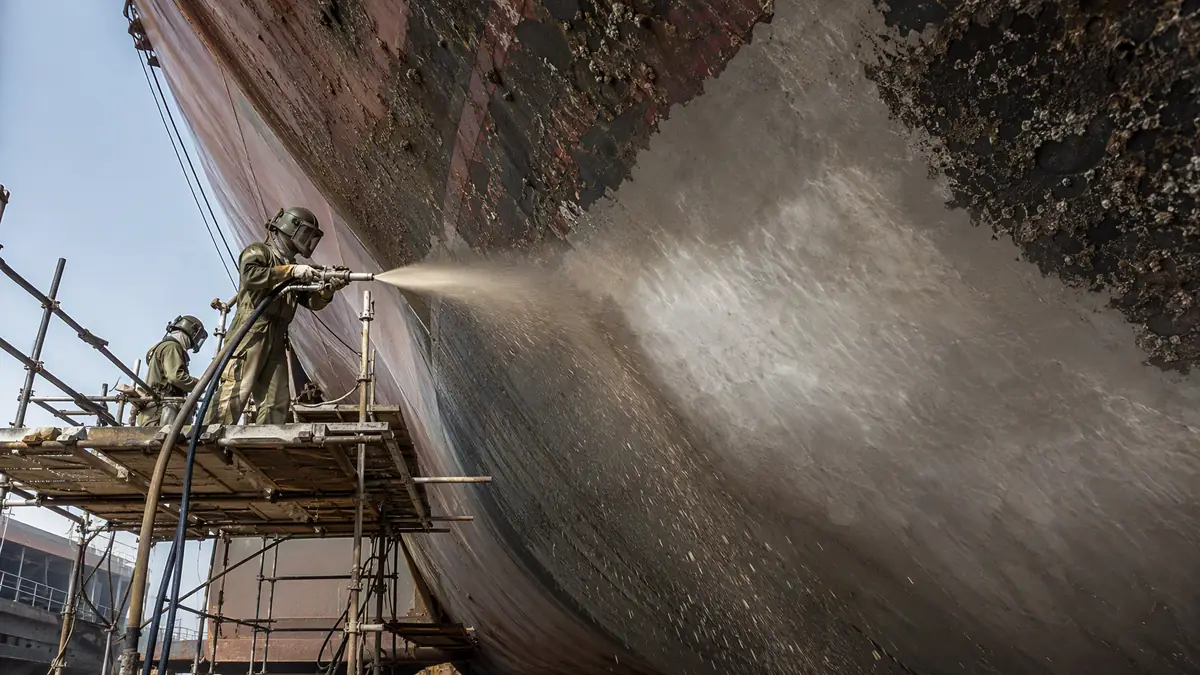
Copper slag is the preferred choice for high-productivity blasting on large-scale projects like ship hulls, where its density rapidly removes heavy coatings.
A photorealistic image showcasing the ideal application for copper slag abrasive. Contractors blast a ship hull in dry dock, with the dense copper slag media rapidly stripping away thick marine coatings and corrosion to reveal a clean, consistently profiled steel surface, emphasizing speed and effic
Copper slag is the preferred choice when:
High productivity is critical. Large-area open blasting on bridges, storage tanks, ship hulls, and structural steel where cutting speed directly affects contract profitability.
Heavy coatings or severe corrosion must be removed. Thick epoxy, coal tar enamel, or heavy mill scale respond better to the higher impact energy of denser copper slag.
Dust generation is a significant concern. Sites near sensitive receptors, urban environments, or projects with strict fugitive dust limits may benefit from the lower dust volume of copper slag.
Consistent surface profile is specified. When the coating specification demands tight control over anchor pattern depth, copper slag's lower friability helps maintain profile consistency throughout the shift.
Disposal logistics are constrained. Projects with limited waste storage capacity or high disposal costs favour the lower waste volume of copper slag.
07 When Coal Slag Makes Sense
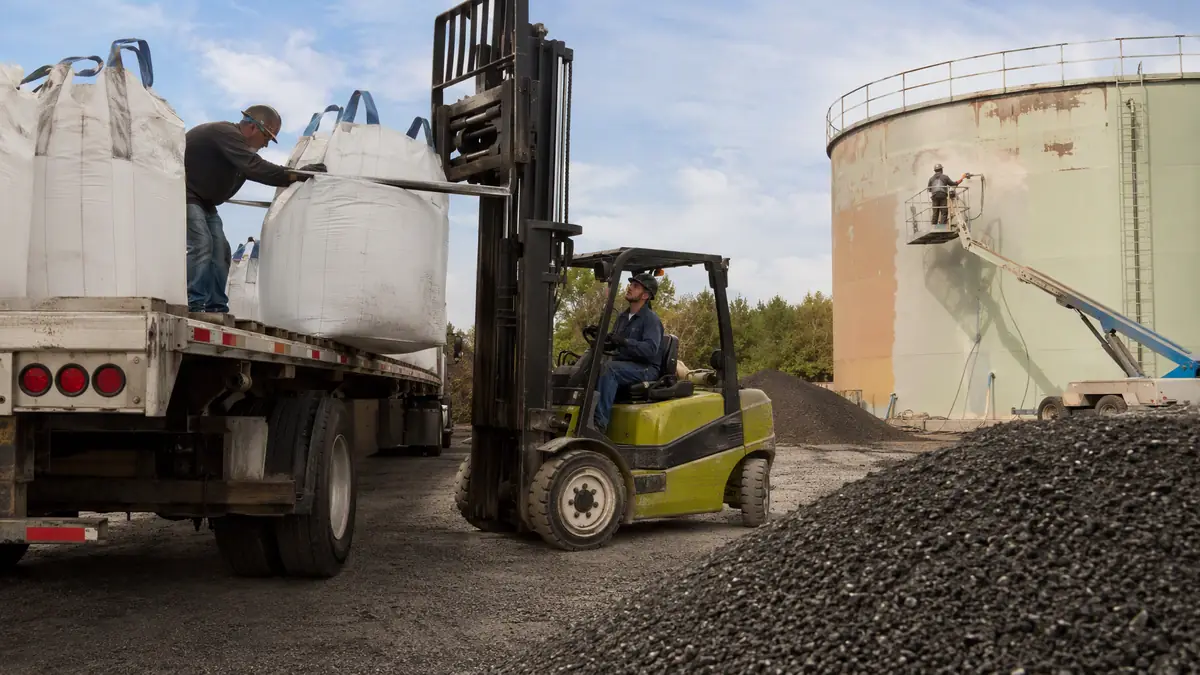
Coal slag can be a practical, budget-friendly choice for maintenance blasting on lightly rusted steel, especially when locally sourced.
A photorealistic image depicting a practical application for coal slag abrasive. A truck delivers bulk bags of coal slag to a supply yard, with a maintenance blasting project on a water tank visible in the background, illustrating the cost-effective use of coal slag for less demanding surface prepar
Coal slag can be the practical choice when:
Budget is the primary constraint and the coating system is light. For maintenance blasting on lightly rusted steel or thin paint films, the productivity difference narrows, and the lower purchase price may translate to genuine savings.
Local availability favours coal slag. In regions where coal slag is produced nearby and copper slag must be transported long distances, the delivered cost difference can be substantial.
The specification does not demand maximum cutting speed. When contract timelines are generous and labour costs are not the dominant factor, coal slag's lower upfront cost can be attractive.
The contractor has effective dust suppression already in place. If the site is already set up for water injection or full containment with dust extraction, the higher dust volume of coal slag may be manageable.
08 Common Mistakes When Selecting Slag Abrasives
Choosing by purchase price alone. The most frequent error is comparing the price per tonne and buying the cheaper option without calculating consumption rate, labour impact, and disposal costs. A media that costs less but requires more passes and generates more waste can increase total project cost.
Ignoring the friability difference. Assuming all slag abrasives perform the same leads to underestimating dust generation and overestimating productivity with coal slag on tough coatings. The result is slower progress, more dust, and potential non-compliance with environmental conditions.
Not verifying the mill certificate. Slag abrasives from different sources vary in chemistry, density, and free silica content. Relying on generic assumptions without checking the supplier's test data can lead to surface contamination or health compliance issues. Always request the current mill certificate and confirm it meets the project specification.
Overlooking disposal classification. Spent abrasive is not just the media — it includes the removed coating. Contractors sometimes assume the waste stream will be non-hazardous because the abrasive itself is inert. If the coating contains heavy metals or other hazardous constituents, the entire waste stream may require special handling. This cost should be factored into the media decision before the job starts.
Using the wrong grit size for the specification. Both copper and coal slag come in various grades. A contractor who switches slag type without adjusting grit size may find the surface profile is too deep or too shallow. Match the grit size to the required anchor pattern, not just the media type.
09 Practical Recommendations for Field Blasting Contractors
Calculate total cost per square metre, not cost per kilogram. Track actual media consumption, labour hours, and waste disposal volumes on a representative test area before committing to a full project purchase.
Request and review mill certificates. Confirm density, particle size distribution, free silica content, and chloride levels against your project specification. Do not assume all copper slag or all coal slag is the same — source matters.
Test on the actual substrate and coating. A trial blast on a small area of the actual workpiece will tell you more about productivity and profile than any datasheet. Measure the profile depth, check the cleanliness level, and observe dust behaviour.
Factor in dust management costs realistically. If the site is in an urban area, near water, or subject to environmental monitoring, the lower dust volume of copper slag may avoid costly work stoppages or additional suppression equipment.
Verify disposal classification for spent media with the coating being removed. Obtain a representative sample of the spent abrasive and have it tested if the coating is known or suspected to contain hazardous constituents. Budget for disposal accordingly before finalising the abrasive choice.
10 Conclusion
Copper slag and coal slag both have a place in open-air blasting, but they serve different priorities. Copper slag delivers higher productivity, lower dust, and more consistent profile control — advantages that typically translate to lower total cost per square metre on demanding jobs. Coal slag offers a lower purchase price and can be perfectly adequate for lighter maintenance blasting where cutting speed is not the primary driver and dust is well managed.
The decision that protects your margin is not which abrasive costs less to buy, but which one costs less to use from start to finish — including the nozzle time, the dust control, and the disposal skip. Run the numbers per square metre, test on your substrate, and verify the mill certificate against your specification before you commit.
For contractors evaluating expendable blast media, comparing available grades of slag abrasives against project requirements is the next practical step. Browse the abrasives range to review specifications, or contact the sales team to discuss your surface preparation requirements and request a quotation for bulk supply.
11 Frequently Asked Questions
What is the main performance difference between copper slag and coal slag?
The primary difference is density and friability. Copper slag is denser and less friable, which means it delivers higher impact energy for faster cutting on thick coatings and generates less dust. Coal slag is lighter and breaks down more easily, producing more fines and dust, which can slow production on heavy rust or scale.
Is copper slag always the better choice for open-air blasting?
Not always. Copper slag excels on large-scale projects with heavy corrosion, strict dust limits, or tight deadlines where high productivity is critical. Coal slag can be a practical, lower-cost option for light maintenance blasting on thin coatings or when it is locally available and the specification does not demand maximum cutting speed.
Why does coal slag generate more dust than copper slag?
Coal slag is more friable, meaning its particles fracture into finer pieces upon impact. This creates a higher volume of airborne dust compared to the tougher, glassier copper slag particles, which maintain their cutting edges longer and break down less.
How should I compare the cost of these abrasives for a project?
You must calculate the total cost per square metre blasted, not just the price per kilogram. This includes media consumption rate, labour hours, dust suppression measures, and disposal costs. A cheaper per-tonne media can be more expensive overall if it requires more material, takes longer, and generates higher waste volumes.
Can I use copper slag and coal slag interchangeably on the same job?
They are not directly interchangeable without consequence. Switching between them will change your dust levels, cutting speed, and waste volume. If a specification requires a consistent anchor profile and cleanliness level, changing the media type mid-project can lead to failed inspections or rework.
What safety precautions are required when blasting with slag abrasives?
Standard blasting safety protocols apply, including blast hoods with positive-pressure respirators and worker monitoring for respirable crystalline silica. The key operational difference is that coal slag's higher dust volume may require additional water suppression or more frequent work stoppages to maintain safe visibility.
How does the choice of slag affect waste disposal?
Copper slag's higher density and lower breakdown rate generally produce less waste volume per square metre blasted. Coal slag's higher friability creates more fines and a larger volume of spent material. This increases disposal costs, especially when charged by weight or volume, and can strain site logistics.
What should I check on the supplier's specification sheet before buying?
Verify the free silica content to ensure it is below 1%, and check for trace chlorides if blasting stainless steel or preparing for marine coatings. Confirm the bulk density and particle size distribution match your equipment and profile requirements. Always request the mill certificate for the specific batch.
12 Solution
Compare relevant Abrasives on SPA2Z and enquire for availability
13 Get a quote
Get a quote
Tell us what you need. We reply within one business day.
Recommended products
Catalogue products matched to this article. Ask for grade, quantity and destination.