Garnet Abrasive for Pipeline and Shipbuilding Surface Prep
Garnet abrasive blasting delivers a clean, low-embedment surface profile that field coating crews on pipelines and ship hulls can trust—without the contaminatio...
Published
27 Mar 2024
Category
Abrasives
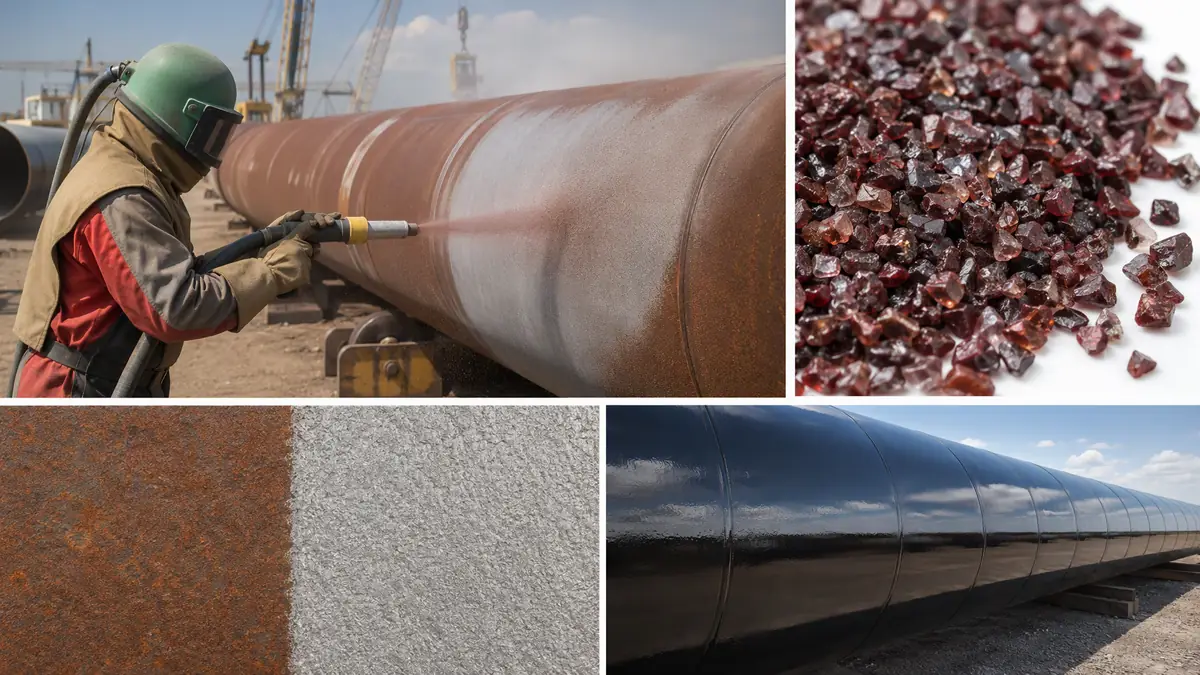
FIG. 01Garnet abrasive blasting delivers a consis...
A professional multi-panel industrial collage for an article on garnet abrasive blasting. The main panel features a technician blasting a steel pipe with garnet media in an outdoor field setting. Supporting panels show a close-up of sharp almandine garnet grains, a before-and-after surface cleanline
01 Introduction
Garnet abrasive blasting delivers a clean, low-embedment surface profile that field coating crews on pipelines and ship hulls can trust—without the contamination risks that metallic media or lower-grade minerals often introduce.
02 Introduction
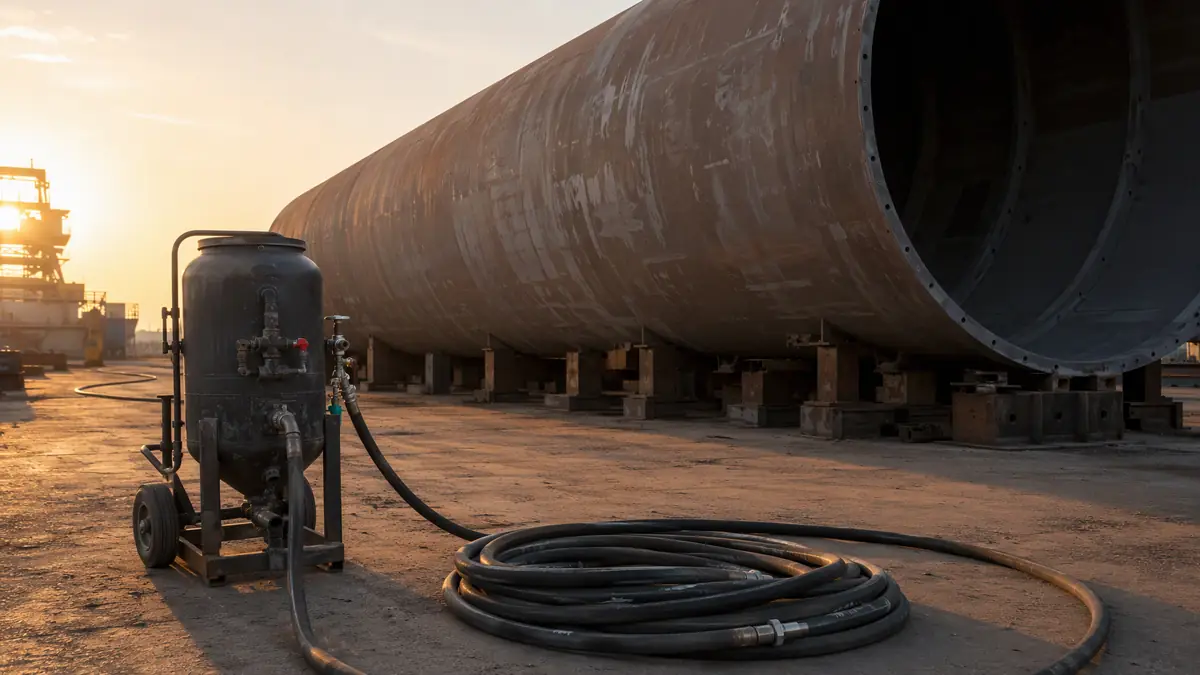
Marine and pipeline contractors rely on portable blasting equipment to achieve coating specifications in open-field conditions.
An industrial scene in a shipyard or pipeline yard showing a portable blast pot and hoses in the foreground, with a large uncoated steel structure in the background, representing the challenging environment for field surface preparation.
Marine and pipeline contractors face a tough combination: they must achieve a specified surface cleanliness and anchor profile in open-field conditions, often with portable equipment, while preparing steel for high-stakes immersion coatings. The wrong abrasive choice leads to embedded particles, flash rust, or profile inconsistency—problems that show up later as coating adhesion failure.
This article is written for blasting supervisors, coating inspectors, and procurement managers who are evaluating garnet as their primary field abrasive. It explains why garnet fits pipeline and shipyard surface preparation, how to select the right mesh grade, what can go wrong, and how to evaluate results against NACE and SSPC standards. The focus is practical, field-level decision-making—not a general overview of all abrasive types.
03 What Is Garnet Abrasive?
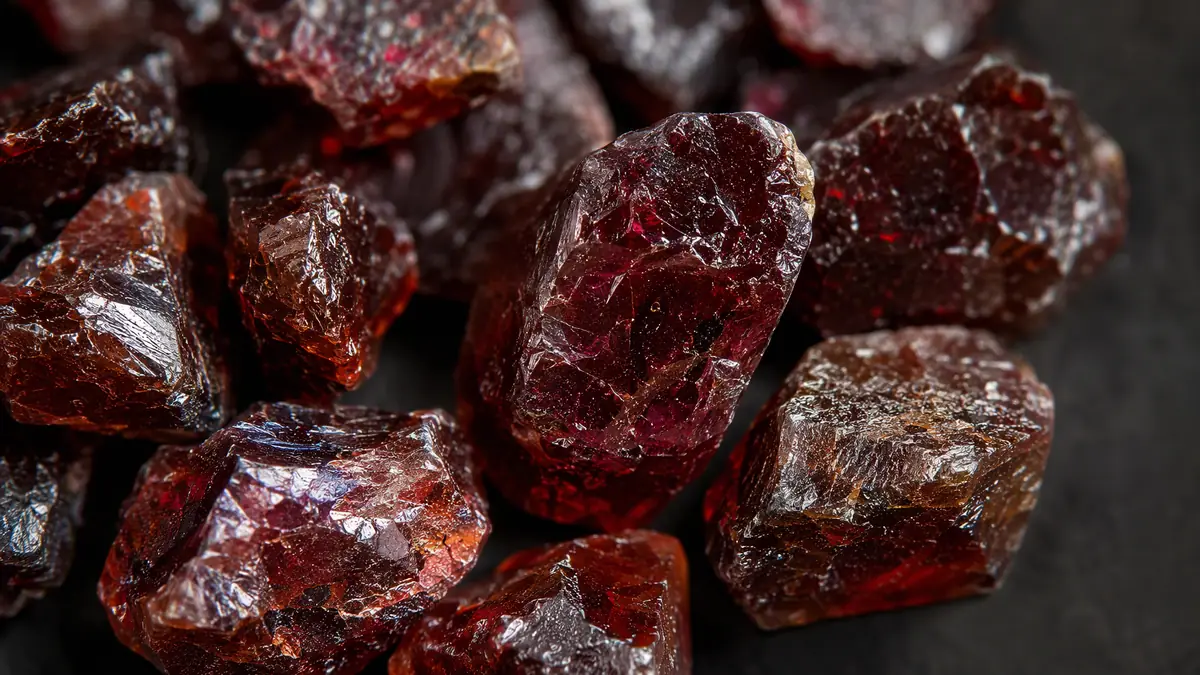
Garnet is a naturally occurring silicate mineral with a semi-angular grain shape that fractures on impact to expose fresh cutting edges.
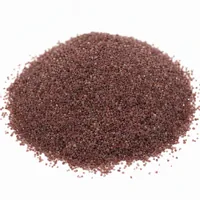
A macro photograph showcasing the sharp, angular, and crystalline texture of natural almandine garnet abrasive grains, emphasizing the physical properties that make it an effective single-use blasting media.
Garnet is a naturally occurring silicate mineral with a semi-angular grain shape and a Mohs hardness typically in the range of 7.5 to 8.0. In blasting, it is classified as a single-use mineral abrasive: the grain fractures on impact, exposing fresh cutting edges, then breaks down into dust that is too fine to reuse effectively.
Unlike metallic abrasives (steel grit or shot) that are recycled in wheel-blast or enclosed systems, garnet is consumed in a single pass. This single-use characteristic is not a disadvantage in field blasting—it is the reason garnet performs so consistently. Each grain that strikes the surface is sharp and uncontaminated, eliminating the risk of re-blasting embedded metallic fines from worn or dirty recyclable media.
Key properties that matter for pipeline and shipyard work:
Low embedment tendency: Garnet grains shatter rather than peen into the substrate, which is critical for immersion-service coatings where embedded iron particles become corrosion initiation sites.
Low free silica content: Typically below 1%, which reduces the respiratory hazard compared to silica sand or copper slag.
Moderate dust generation: The friable nature produces dust, but significantly less than softer expendable minerals.
Consistent specific gravity: Around 3.8 to 4.1, providing good impact energy without excessive bounce-back.
04 Why Garnet Fits Pipeline and Shipyard Field Blasting
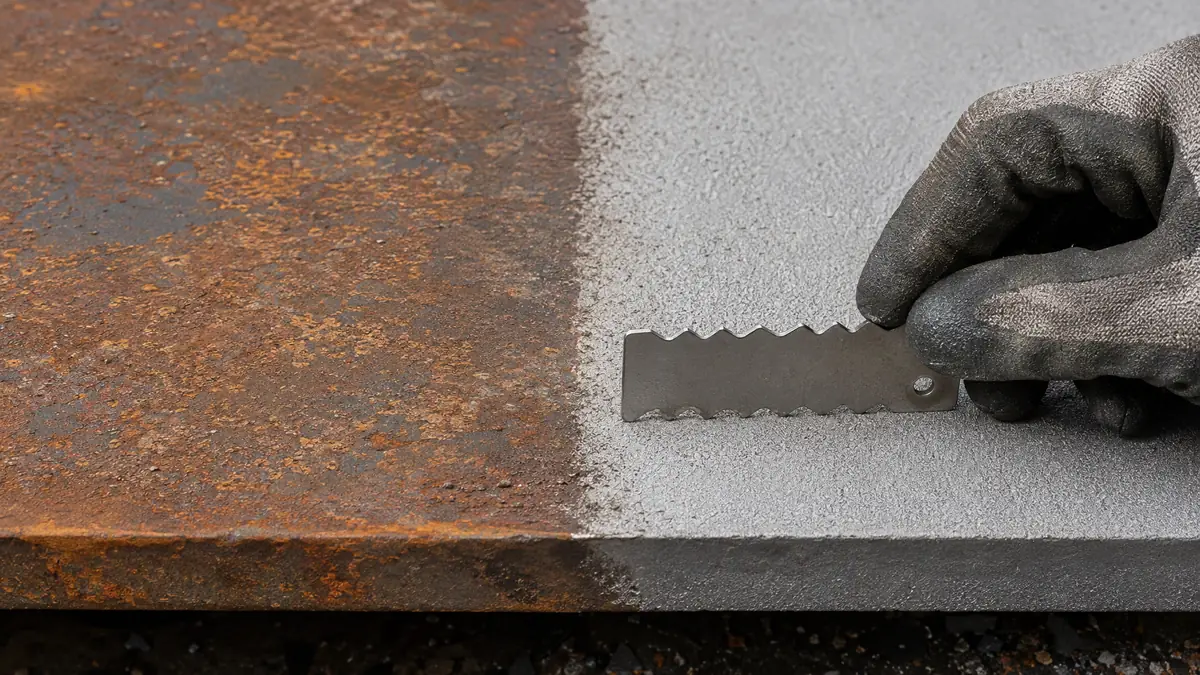
Garnet-blasted surfaces consistently show few to no embedded particles, reducing the risk of underfilm corrosion on submerged steel.
A visual comparison on a single steel panel contrasting a heavily rusted surface with a clean, near-white metal finish achieved by garnet abrasive blasting. A profile gauge is positioned near the transition, highlighting the quality of the anchor profile.
The Low-Embedment Requirement
When steel will be submerged—whether a ship's hull below the waterline or a buried pipeline—the coating system must resist cathodic disbondment and underfilm corrosion. Embedded abrasive particles create microscopic discontinuities in the coating film. If those particles are metallic, they can corrode and blister the coating from beneath.
Garnet's non-metallic, inert chemistry removes this risk. NACE and SSPC standards for immersion service (NACE No. 2 / SSPC-SP 10 near-white blast, and NACE No. 1 / SSPC-SP 5 white metal blast) do not explicitly ban metallic abrasives, but experienced coating inspectors know that garnet-blasted surfaces consistently show fewer embedded contaminants under magnification. For field crews who cannot control every variable the way a shop can, this margin matters.
Field Practicality vs. Metallic Wheel Media
Metallic abrasives—steel grit, steel shot, or their blends—excel in enclosed, automated wheel-blast systems where the media is recovered, cleaned, and recycled hundreds of times. That model works in a fabrication shop or a pipe-coating plant. It does not translate to a ditch-side pipeline weld joint or a shipyard dry dock.
In the field, portable blast pots use compressed air, and media recovery is rarely economical or practical. Garnet's single-use nature aligns with this reality: the contractor loads fresh media into the pot, blasts the joint or hull section, and moves on. There is no need to screen, de-dust, or replenish a working mix. The surface finish is predictable from the first square meter to the last.
Compatibility with Immersion Coatings
Pipeline field-joint coatings—fusion-bonded epoxy (FBE), liquid epoxy, polyurethane, and multi-layer systems—demand a sharp, angular surface profile for mechanical adhesion. Ship hull coatings, particularly high-solids epoxy anti-corrosives and antifouling systems, require the same. Garnet produces a clean, angular profile with peak heights that coating manufacturers recognize and specify.
05 Selecting the Right Garnet Mesh for Coatings
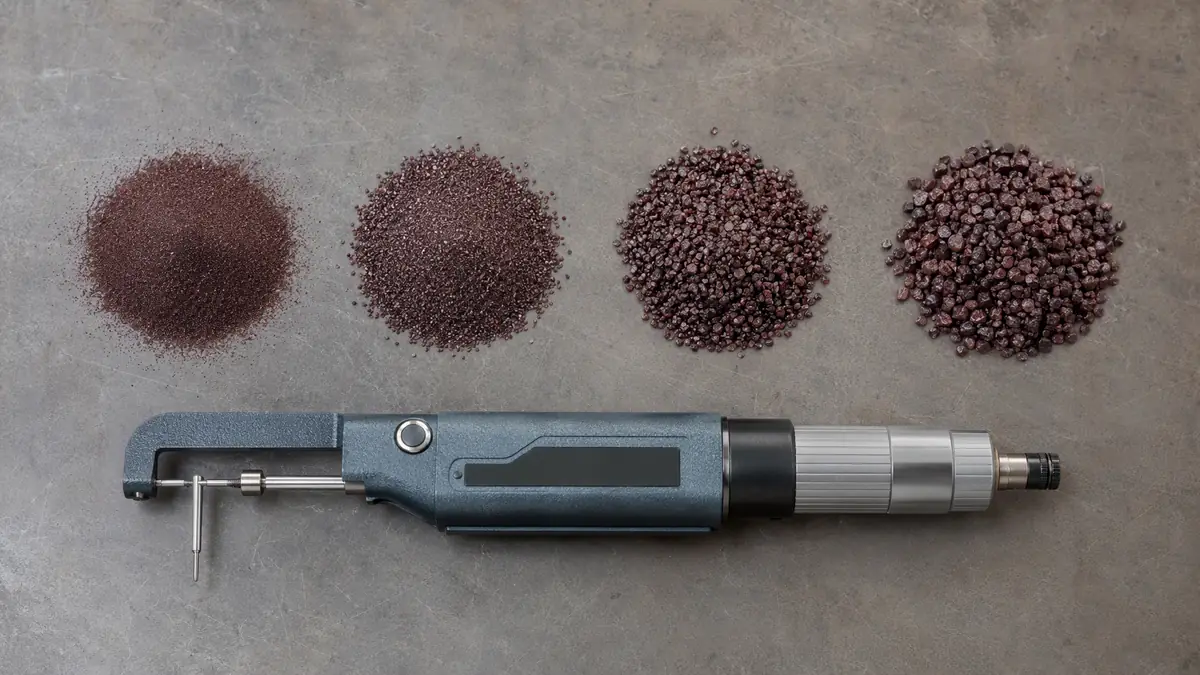
Selecting the correct garnet mesh size is critical for achieving the specified anchor profile for thin-film FBE or high-build epoxy coatings.
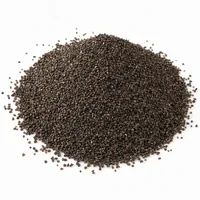
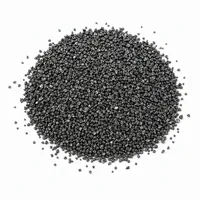
A flat-lay industrial photograph showing a gradation of garnet abrasive mesh sizes, from fine to coarse, arranged beside a profile measurement gauge to illustrate the relationship between grain size and surface profile depth.
Mesh size is the primary variable that determines surface profile depth, cleaning rate, and coverage. Contractors commonly use the following ranges for pipeline and marine work:
Note: Profile ranges are typical for garnet on new steel with 90–100 psi nozzle pressure. Actual results depend on standoff distance, blast angle, air pressure, and substrate condition. Always confirm against the coating manufacturer's written specification.
Selection Factors for Field Work
Coating specification comes first. The coating data sheet will state a required surface profile range (e.g., 50–100 µm or 2–4 mil). Select a garnet mesh that reliably produces a profile within that window under your typical field conditions. Do not assume a finer mesh is safer—too fine a profile can reduce adhesion just as too coarse a profile can cause peak penetration through the coating film.
Substrate condition matters. Heavily rusted, pitted, or previously coated steel may require a coarser initial grade to achieve the required cleanliness within a reasonable production rate. Some contractors use a 12/20 or 10/20 for the first pass and follow with a finer grade if the specification demands it—though this dual-grade approach increases media cost and handling.
Production rate vs. profile control. Coarser garnet cleans faster but leaves a deeper, more variable profile. Finer garnet gives tighter profile control but slower cleaning. For pipeline field joints where the blast area is small and the coating is critical, profile control usually takes priority. For large hull areas, production rate may drive the decision toward a coarser grade, provided the profile stays within specification.
06 Common Mistakes in Garnet Abrasive Blasting
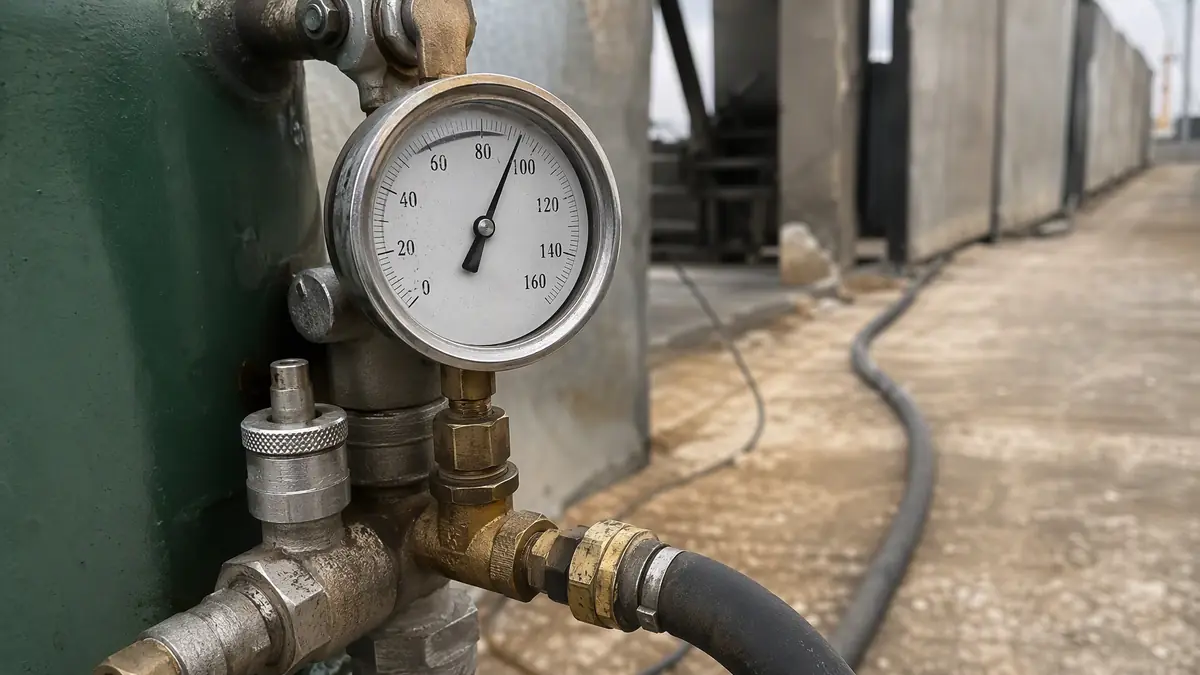
Blasting garnet at 90-100 psi at the nozzle optimizes cleaning speed and profile consistency while minimizing dust and media consumption.
A detailed industrial photograph focusing on the pressure gauge of a portable abrasive blast pot, showing the correct operating pressure range for garnet media. The metering valve and connected blast hose are visible in the background, emphasizing proper field setup.
Using contaminated or weathered garnet. Garnet stored in open bags or exposed to moisture can clump, causing erratic flow through the metering valve. Wet media also introduces moisture to the blasted surface, promoting flash rust before coating. Always store garnet in dry conditions and inspect bags before loading.
Blasting at excessive pressure. Garnet fractures efficiently at 90–100 psi at the nozzle. Pushing pressure to 110 psi or higher accelerates grain breakdown into dust without proportionally increasing cleaning speed. The result: higher media consumption, more dust, and a profile that may be finer than expected because the grains shatter before transferring full impact energy.
Inconsistent standoff distance. Field blasters working from scaffolding, man-lifts, or uneven ground often vary standoff distance without realizing it. Too close, and the profile deepens and the blast pattern narrows. Too far, and impact energy drops, reducing both cleaning rate and profile depth. A consistent 18–24 inch (450–600 mm) standoff is a good starting point for garnet; adjust based on nozzle type and field trials.
Neglecting nozzle wear. Garnet is aggressive on nozzle liners. A worn nozzle orifice increases air consumption, drops blast pressure at the surface, and widens the blast pattern unpredictably. Inspect nozzle orifices daily with a go/no-go gauge and replace when wear exceeds the manufacturer's tolerance.
Skipping the surface profile test. Even experienced crews can produce a surface that looks clean but has an out-of-spec profile. Use replica tape (ASTM D4417 Method C) or a digital profile gauge at the start of each shift and whenever blast parameters change. Document the readings—coating inspectors will ask for them.
07 Evaluating Results Against NACE and SSPC Standards
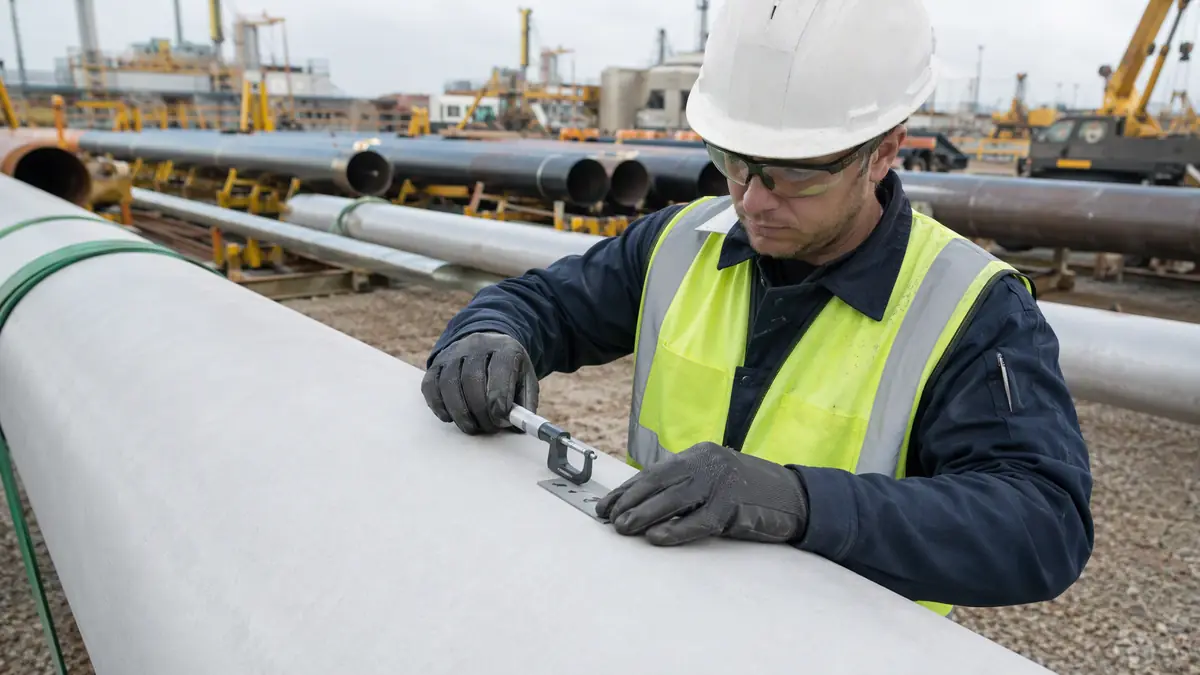
Inspectors verify that garnet-blasted surfaces meet NACE No. 2 / SSPC-SP 10 standards before coating application for immersion service.
An industrial field photograph of a quality control inspector performing a surface profile test with replica tape on a garnet-blasted steel pipe. The near-white metal finish is clearly visible, and the background shows a busy pipeline coating yard.
For pipeline and shipbuilding immersion service, the most commonly specified surface preparation standards are:
NACE No. 2 / SSPC-SP 10 (Near-White Metal Blast): The surface must be free of all visible oil, grease, dust, dirt, mill scale, rust, coating, and other contaminants. Random staining from rust, mill scale, or previously applied coating is permitted on no more than 5% of each unit area. This is the default specification for most marine epoxy and pipeline FBE systems.
NACE No. 1 / SSPC-SP 5 (White Metal Blast): The surface must be free of all visible contaminants, with no staining permitted. Required for some immersion-service tank linings and critical pipeline coatings.
Garnet consistently achieves both standards when used with proper technique. The visual appearance after garnet blasting is a uniform, angular white-metal or near-white surface with a matte finish. Inspectors should compare the surface to the relevant ISO 8501-1 visual comparator panels.
After confirming cleanliness, measure and record the surface profile. The combination of correct cleanliness and profile—achieved and documented—is what gives the coating manufacturer and asset owner confidence in the surface preparation.
08 When Garnet Is Not the Best Choice
Garnet is not a universal solution. Understanding its limitations prevents costly mistakes:
Enclosed wheel-blast systems. If you are operating a fixed pipe-coating plant with automated wheel-blast machines, metallic abrasives (steel grit/shot blends) are almost certainly more economical. Garnet's single-use cost per square meter is higher than recycled steel media in a closed-loop system.
Non-ferrous or thin substrates. Garnet's cutting action can warp thin sheet metal or remove too much material from aluminum or galvanized surfaces. Finer mesh grades and reduced pressure can mitigate this, but other media (such as aluminum oxide at lower pressure or plastic media) may be more appropriate.
Extremely high production rates on large, flat surfaces. For blasting vast hull areas where profile tolerance is wide and cost per square meter is the dominant concern, some contractors use copper slag or coal slag. These are cheaper per kilogram but produce more dust, may have higher embedment rates, and carry more environmental disposal concerns. The trade-off is a commercial decision, not a technical one.
Where local environmental regulations restrict garnet disposal. While garnet is inert and generally classified as non-hazardous, some jurisdictions regulate blast media disposal strictly. Confirm local requirements before committing to a large-volume garnet project.
09 Practical Recommendations for Marine and Pipeline Contractors
Qualify the garnet source. Not all garnet is equal. Almandine garnet from different geographic sources varies in hardness, grain shape, and chloride content. For immersion service, request a certificate of analysis confirming low chloride levels and consistent hardness. Chloride contamination on the blasted surface can initiate corrosion under the coating.
Run a field test panel. Before mobilizing for a large project, blast a test panel using the proposed garnet grade, nozzle type, air pressure, and standoff distance. Measure the profile and document the results. Share the panel with the coating manufacturer's technical representative if possible. This small investment prevents disputes later.
Monitor consumption rates. Track garnet consumption per square meter or per linear meter of pipeline joint. A sudden increase in consumption often signals a nozzle wear problem, a pressure drop, or a change in substrate condition. Typical consumption for 20/40 garnet on new steel with light rust is approximately 12–18 kg per square meter, but this varies widely—establish your own baseline.
Control moisture at every stage. Use an aftercooler and moisture separator on the compressor. Drain the blast pot and air receiver regularly. Blast only when the steel temperature is at least 3°C (5°F) above the dew point. Moisture is the enemy of immersion coating adhesion.
Document everything. Record the garnet grade, batch, blast pressure, standoff distance, ambient conditions, surface profile readings, and cleanliness standard achieved for each work area. This documentation protects the contractor if coating adhesion questions arise later.
10 Conclusion
Garnet abrasive blasting is the right field media for pipeline and shipbuilding surface preparation when the priority is a clean, low-embedment anchor profile that immersion coatings can bond to reliably. Its single-use, non-metallic nature eliminates the contamination risks associated with recyclable metallic media, and its consistent fracture mechanics produce predictable surface profiles across a range of mesh grades.
The key to success is not just choosing garnet—it is selecting the correct mesh for the coating specification, controlling blast parameters in the field, and verifying results against NACE or SSPC standards before the coating crew moves in. When those steps are followed, garnet delivers a surface that coating inspectors approve and coating manufacturers stand behind.
11 Frequently Asked Questions
Why is garnet preferred over steel grit for field blasting pipelines and ship hulls?
Garnet is a single-use mineral that shatters on impact, leaving a low-embedment profile critical for immersion coatings. Steel grit is designed for enclosed recovery systems and can embed metallic fines that cause corrosion under the coating. In open-field conditions where media recovery is impractical, garnet's consistent, non-contaminating performance makes it the safer choice.
What garnet mesh size should I use for a fusion-bonded epoxy (FBE) pipeline coating?
A 30/60 mesh is commonly used for FBE and thin-film coatings, typically producing a 75–100 µm (3–4 mil) profile. A versatile 20/40 mesh is also a reliable workhorse for FBE, generating a 65–115 µm (2.5–4.5 mil) profile. Always verify the selected mesh against the coating manufacturer's written specification for required surface profile range.
How does garnet blasting help meet NACE No. 2 / SSPC-SP 10 standards?
Garnet's semi-angular grain shape and high hardness effectively remove mill scale, rust, and old coatings to achieve the near-white metal finish required by the standard. Its low-embedment, non-metallic nature ensures the surface is free of contaminants that could cause coating failure. Proper technique with garnet consistently delivers the uniform, matte finish inspectors look for under these standards.
What is the correct blast pressure for garnet abrasive?
The optimal nozzle pressure for garnet is typically 90–100 psi. Exceeding 110 psi causes the grains to fracture prematurely into dust, increasing media consumption and potentially creating a finer-than-expected profile without improving cleaning speed. Maintaining the correct pressure ensures efficient cleaning and consistent surface profile.
Can I reuse garnet abrasive after blasting?
No, garnet is classified as a single-use mineral abrasive. Upon impact, the grains fracture and break down into fine dust that is too small to be effective for re-blasting. This is a key advantage in field work, as it guarantees every grain striking the surface is sharp and uncontaminated, eliminating the risk of re-blasting embedded fines from recycled media.
What are common mistakes that cause poor results with garnet blasting?
Common mistakes include using moisture-contaminated garnet that clumps and causes flash rust, blasting at excessive pressure which wastes media, and neglecting to check for nozzle wear which reduces impact energy. Another critical error is failing to test the surface profile with replica tape, which can result in an out-of-spec anchor pattern despite a visually clean surface.
How should garnet abrasive be stored on a job site?
Garnet must be stored in a dry, covered area to prevent moisture absorption. Wet or damp garnet will clump, causing erratic flow through the blast pot metering valve and introducing moisture to the steel surface, which can lead to flash rust before the coating is applied. Always inspect bags for damage and keep them sealed until use.
12 Solution
Selecting the right garnet grade and sourcing it reliably are the first practical steps toward consistent field blasting results. Explore the range of abrasive media available on SPA2Z, including garnet sand in the mesh grades discussed above. For project-specific guidance on compatibility with your coating system or to confirm availability for your location, contact the SPA2Z sales team with your specification requirements.
13 Get a quote
Get a quote
Tell us what you need. We reply within one business day.
Recommended products
Catalogue products matched to this article. Ask for grade, quantity and destination.