How Abrasive Hardness and Shape Affect Surface Profile
Getting the surface profile right is the foundation of every durable coating system. When a coating inspector measures a profile that is too shallow or too aggr...
Published
23 Nov 2021
Category
Abrasives
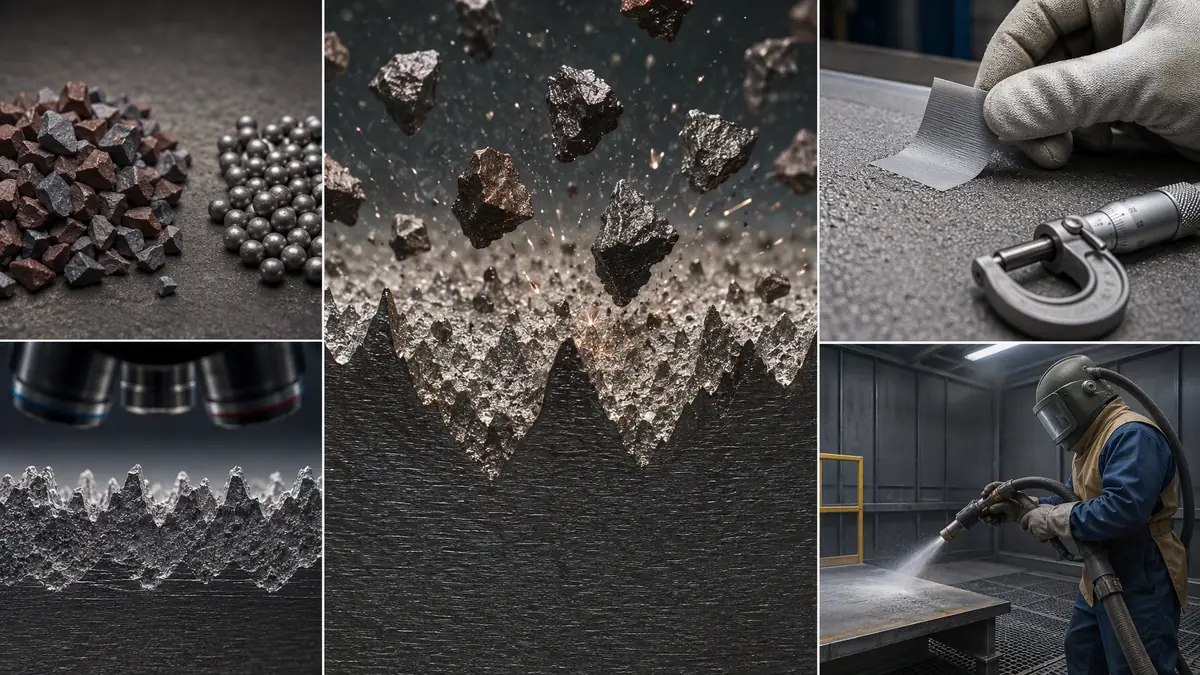
FIG. 01The relationship between abrasive hardness...
Professional multi-panel editorial image for coatings engineering article. Dominant panel shows abrasive particles impacting steel creating surface profile. Supporting panels compare angular vs spherical media, demonstrate replica tape profile measurement, visualize anchor pattern topography, and sh
01 Introduction
Getting the surface profile right is the foundation of every durable coating system. When a coating inspector measures a profile that is too shallow or too aggressive, the root cause often traces back to two physical properties of the abrasive: its…
02 Introduction
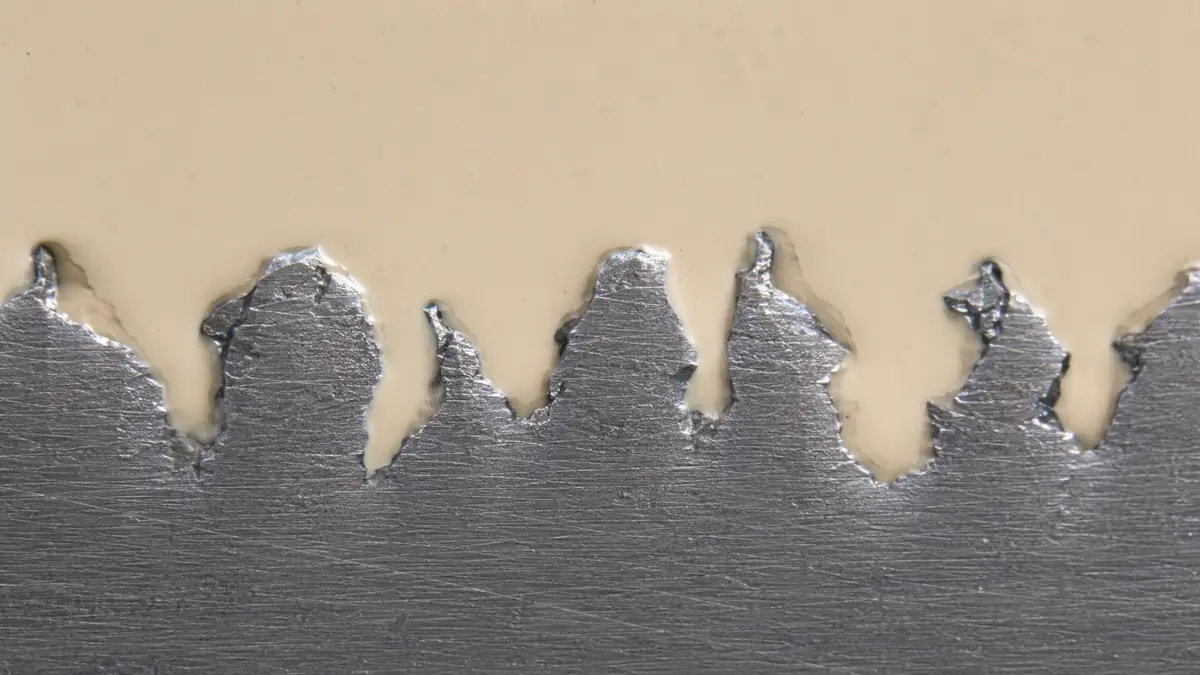
The anchor pattern created by abrasive blasting provides mechanical interlock essential for long-term coating adhesion.
Macro close-up cross-section view of blasted steel surface showing the microscopic peaks and valleys that form the anchor pattern. Primer coating visible mechanically interlocked into the profile topography. Demonstrates why surface profile is critical for coating system durability and adhesion perf
A coating fails at the interface long before it fails in the film. The anchor pattern—the microscopic peaks and valleys left on a steel surface after abrasive blasting—determines whether a primer can grip mechanically and whether the full coating system will meet its design life. Two abrasive properties dominate the creation of that profile: hardness and shape. Hardness governs whether a particle can cut into the substrate at all. Shape determines the character of the cut—sharp and angular, or rounded and peening. This article explains the mechanism by which these properties translate into measurable profile values like Rz, and how coating inspectors and engineers can use that understanding to diagnose profile problems and select abrasives with confidence.
03 What Is Surface Profile and Why Does It Matter?
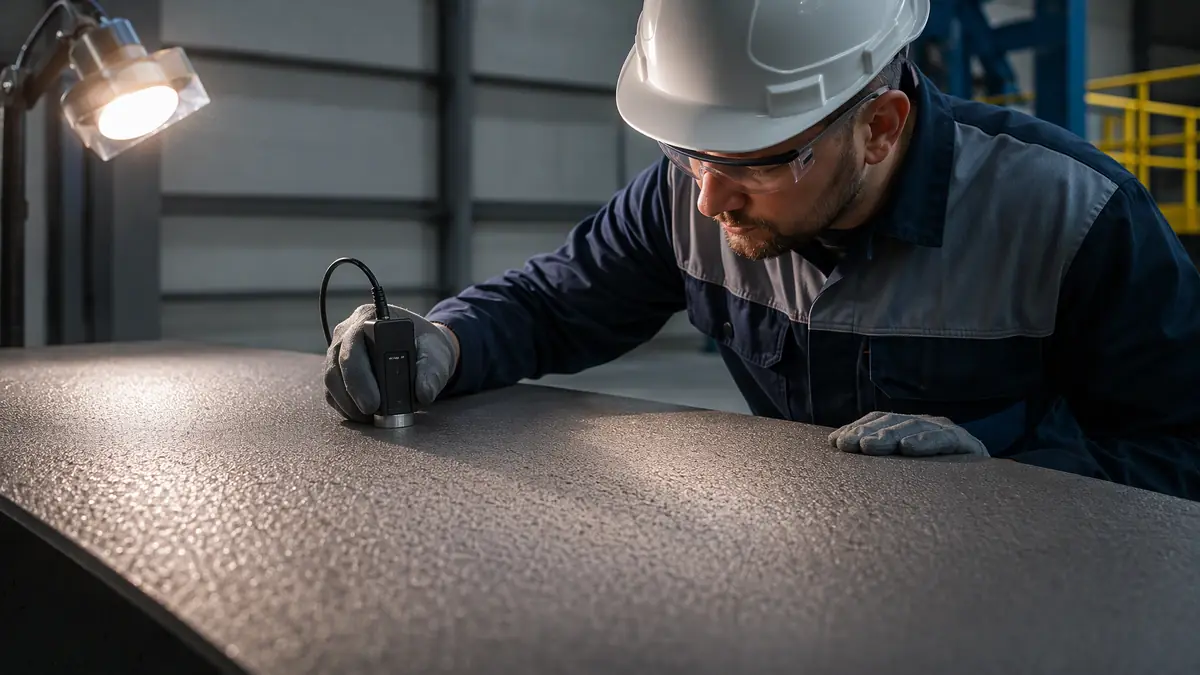
Surface profile is quantified as Rz—the average maximum peak-to-valley height that determines coating adhesion quality.
Professional industrial photograph of a coating inspector evaluating surface profile on freshly blasted steel. Raking light emphasizes the three-dimensional topography of peaks and valleys. Digital profile gauge visible. Demonstrates the inspection process that verifies adequate anchor pattern befor
Surface profile is the topography of peaks and valleys created on a substrate by abrasive impact. It is quantified most commonly as Rz—the average maximum peak-to-valley height across several sampling lengths—or as maximum profile depth. For coating engineers, profile is not a cosmetic feature; it is a mechanical interlock. Without adequate profile, even the best epoxy or polyurethane coating lacks the surface area and mechanical keying needed for long-term adhesion.
The relationship between abrasive hardness, shape, and the resulting profile is direct: harder particles penetrate deeper; angular particles cut rather than peen. Together, they define the anchor pattern that a coating inspector measures with replica tape or a digital profile gauge.
04 How Abrasive Hardness Controls Profile Depth
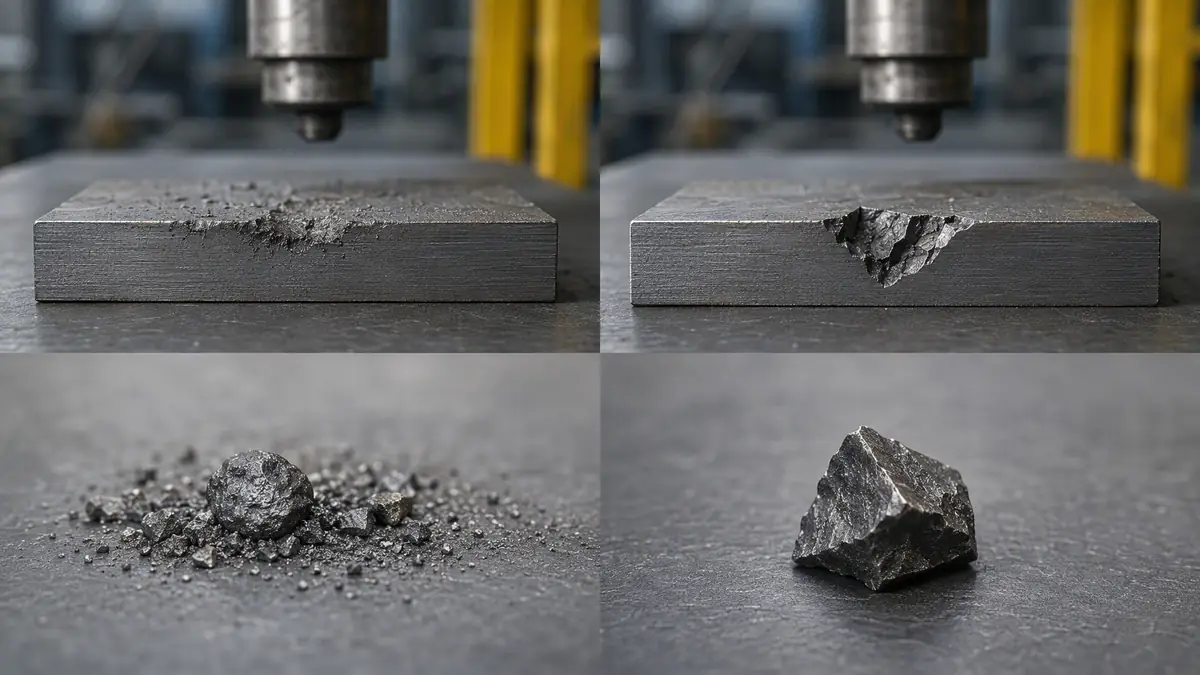
Harder abrasive particles penetrate deeper into steel substrate, creating the profile depth required for coating adhesion.
Industrial comparison scene demonstrating how abrasive hardness controls profile depth. Soft particles shatter on impact creating dust and minimal profile, while hard particles cleanly penetrate steel creating deep defined anchor pattern. Illustrates the threshold condition that abrasive must be har
The Hardness Requirement: Harder Than the Substrate
For an abrasive particle to create profile, it must be harder than the surface it strikes. This is not a matter of degree—it is a threshold condition. A particle softer than the substrate will deform or shatter on impact, transferring little energy into the steel. The result is low profile, high dust, and wasted abrasive.
Hardness in blasting abrasives is measured on two common scales:
Mohs scale: a relative scratch-hardness scale from 1 (talc) to 10 (diamond). Mild steel sits around Mohs 4–5. Most effective blasting abrasives fall between Mohs 6 and 9.
Rockwell C (HRC): an indentation hardness scale used primarily for metallic abrasives like steel grit. Typical steel grit ranges from approximately 40 to 65 HRC depending on the grade and heat treatment.
Hardness and Profile: The Mechanism
When a particle with sufficient hardness strikes the substrate at blasting velocity, it displaces material. The depth of that displacement—and therefore the peak-to-valley height—depends on:
Hardness differential: the greater the difference between abrasive hardness and substrate hardness, the more efficiently the particle cuts. A Mohs 9 aluminum oxide particle on Mohs 5 mild steel cuts aggressively. The same particle on hardened wear plate (Mohs 6–7) produces a shallower profile at the same pressure and standoff distance.
Friability: harder abrasives are often more friable (they fracture on impact). This can be an advantage—fresh cutting edges are continuously exposed—or a disadvantage if the abrasive breaks down too quickly to transfer sufficient energy. Garnet, with moderate friability, tends to balance cutting action and particle longevity.
Kinetic energy transfer: hardness alone does not determine profile. A very hard but very light particle may not carry enough momentum to cut deeply. This is why grit size and blasting pressure must be considered alongside hardness.
When Hardness Becomes a Problem
Excessively hard abrasives on thin or soft substrates can create a profile that is too aggressive, cutting peaks that protrude through thin-film coatings. This is a common failure mode when aluminum oxide is specified for thin-film zinc primers on sheet metal. The profile Rz may exceed the recommended one-third of the dry film thickness, leaving peak tips exposed to corrosion.
Conversely, using an abrasive that is only marginally harder than the substrate—such as certain slags on hardened steel—produces a shallow, inconsistent profile. The abrasive works, but slowly and with poor efficiency. The operator compensates with higher pressure or longer dwell time, which increases media consumption and heat generation without reliably deepening the profile.
05 Angular vs. Spherical Media: Shape Defines the Anchor Pattern
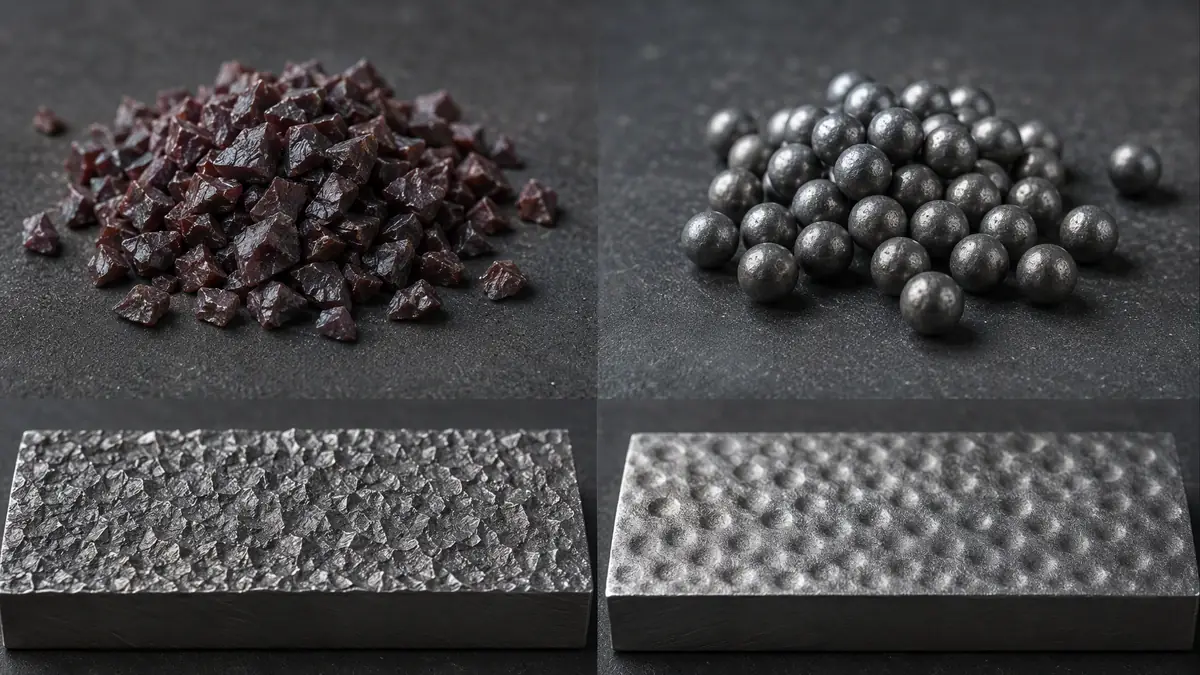
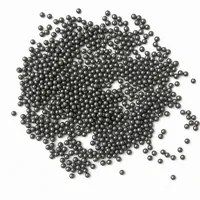
Angular grit cuts sharp anchor patterns for coating adhesion while spherical shot peens surfaces without creating adequate profile.
Professional macro comparison of abrasive media shapes. Angular crushed garnet shows sharp cutting edges that create high-surface-area anchor patterns ideal for coating adhesion. Spherical steel shot displays smooth round surfaces that peen rather than cut, producing dimpled profile unsuitable for h
Angular Grit: Cutting and Profile Creation
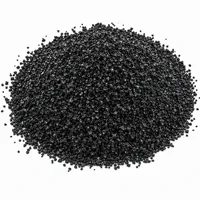
Angular abrasives—crushed garnet, aluminum oxide, crushed slag, steel grit—have sharp edges and irregular faces. On impact, these edges act as micro-cutting tools. The particle digs into the substrate, plowing material aside and creating a sharp-peaked, well-defined profile. This is the preferred shape for most coating applications because:
The resulting anchor pattern has high surface area for mechanical adhesion.
Peaks are sharp and closely spaced, providing excellent keying for primers.
Profile Rz values are consistent and predictable when grit size and pressure are controlled.
Angular grit is the standard choice for surface preparation to standards like ISO 8501 Sa 2½ (near-white blast) where a specified profile range must be achieved before coating.
Spherical Media: Peening and Surface Modification
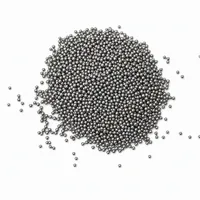
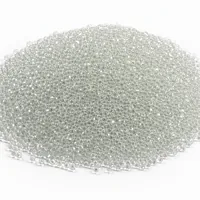
Spherical abrasives—steel shot, glass bead, ceramic bead—produce a fundamentally different surface. Instead of cutting, the rounded particle hammers the surface, creating overlapping dimples. The result is a peened profile with rounded peaks and valleys. This profile:
Has lower peak sharpness, which can reduce stress concentrations—beneficial for fatigue-sensitive components.
Produces a more uniform, cosmetically consistent finish.
Creates less embedment risk on softer substrates like aluminum.
May not provide sufficient mechanical keying for some high-build coatings unless followed by an angular grit blast.
In many shot blasting machines, a mix of steel shot and steel grit is used deliberately: the shot cleans and peens, while the grit component cuts the anchor pattern. The ratio is adjusted based on the required profile.
The Shape-Profile Relationship in Measurable Terms
For a given grit size and hardness, angular media consistently produces a higher Rz value than spherical media. A typical comparison: an S230 steel shot (spherical, ~0.6 mm) might produce a profile in the range of 50–75 µm Rz on mild steel, while a G40 steel grit (angular, similar particle size range) might produce 75–100 µm Rz under the same blasting conditions. These are approximate ranges—actual values depend on pressure, standoff distance, angle of impingement, and substrate condition—but the directional difference holds across all common abrasive types.
06 How Hardness and Shape Work Together
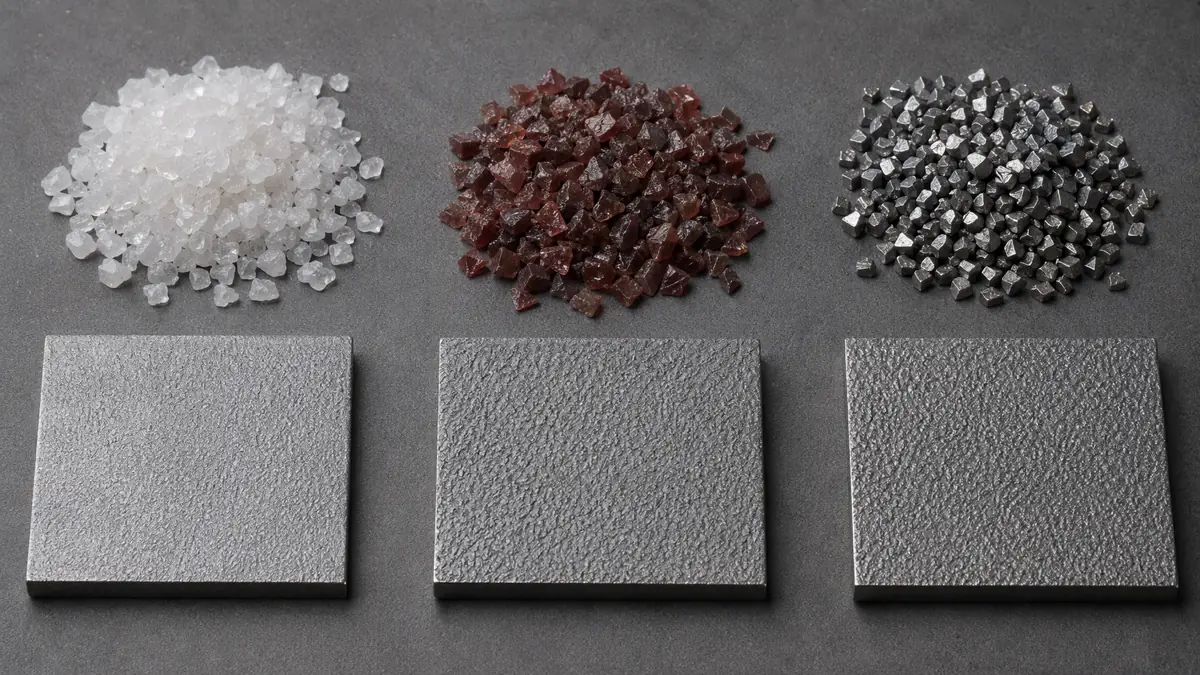
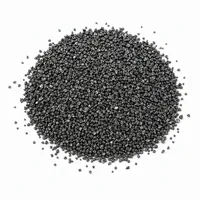
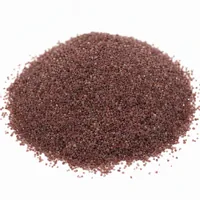
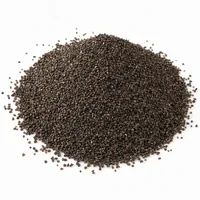
Aluminum oxide, garnet, and steel grit each produce distinct profile characteristics based on their combined hardness and shape properties.
Industrial product photography showing three common angular abrasive types—aluminum oxide, garnet, and steel grit—each with their characteristic particle shape and the resulting surface profile on steel test coupons. Demonstrates how hardness and shape work together to determine profile depth, peak
Hardness and shape do not act independently. Their combined effect determines the profile outcome:
Abrasive Type
Typical Mohs Hardness
Shape
Profile Character
Typical Application
Aluminum oxide
9
Angular, blocky
Deep, sharp profile; high Rz for grit size
Aggressive profile on steel; thin coatings may be bridged
Garnet
7.5–8
Angular, sharp-edged
Clean, consistent profile; moderate Rz
General steel preparation; SA 2½ blasting
Steel grit
~40–65 HRC
Angular
Controlled, reproducible profile; good peak density
Structural steel; shop blasting; recyclable systems
Steel shot
~40–50 HRC
Spherical
Peened, rounded profile; lower Rz
Cleaning, descaling, peening; often mixed with grit
Copper slag / coal slag
6–7
Angular, glassy
Moderate profile; variable due to particle breakdown
One-time use; open blasting; cost-sensitive projects
Glass bead
5.5–6
Spherical
Very low profile; cosmetic finish
Cleaning, deburring; not for coating adhesion profiles
A critical point: hardness and shape together determine whether the abrasive fractures or wears during blasting. A hard, angular particle that is highly friable (like some slags) may create an initial deep profile but break down rapidly, with the fines contributing to dust rather than profile development. A tough, angular particle (like chilled iron grit or certain grades of aluminum oxide) maintains its cutting edges through multiple impact cycles, producing a more consistent profile over the life of the media.
07 Common Mistakes in Abrasive Selection for Profile Control
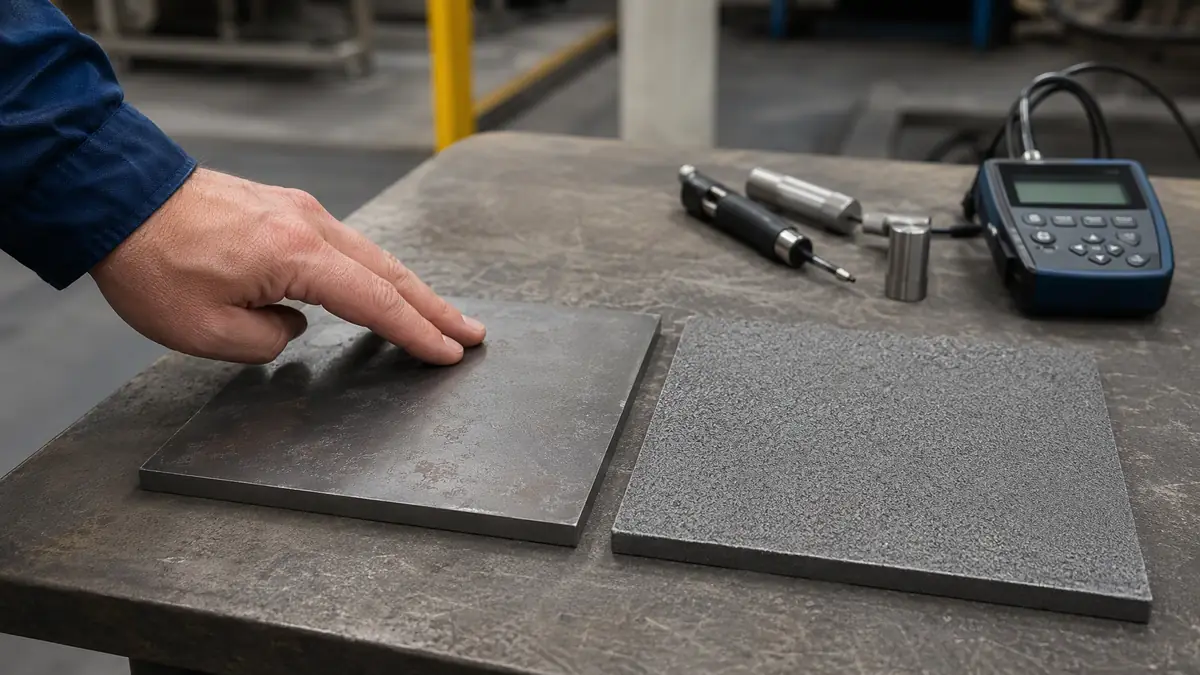
Specifying only grit mesh size without considering abrasive hardness and shape leads to inadequate surface profile and potential coating failure.
Professional industrial photograph illustrating common abrasive selection mistake. Inspector compares two blasted steel plates: one with inadequate low profile from incorrect abrasive choice showing smooth surface with mill scale remnants, the other with proper deep angular profile from correct abra
1. Selecting by Grit Size Alone, Ignoring Hardness and Shape
A common error is specifying only the grit mesh size (e.g., "30/60 mesh") without considering the abrasive type. A 30/60 garnet, a 30/60 coal slag, and a 30/60 aluminum oxide will produce three different profile depths on the same steel because their hardness and shape characteristics differ. The specification should include abrasive type and, where relevant, the hardness grade.
2. Using Spherical Media Where Angular Profile Is Required
Steel shot alone will not produce the sharp anchor pattern needed for high-performance coatings. If a specification calls for a minimum Rz and the contractor uses only shot, the profile will likely measure low, and coating adhesion may be compromised. This is a frequent finding during coating failure investigations.
In recyclable blasting systems (shot blasting machines, blast rooms), the abrasive work mix changes over time. Angular grit rounds with use; shot fractures and produces angular fines. The profile produced by a fresh charge of abrasive will differ from that produced after 50 or 100 cycles. Regular work mix sampling and replenishment with the correct ratio of new abrasive is essential for profile consistency.
08 Evaluating Profile Results: What to Measure and When
Coating inspectors should verify profile after blasting and before coating application. The key measurement is Rz (or maximum profile depth, depending on the specification). Common methods include:
Replica tape (Testex or similar): pressed onto the blasted surface; the compressed tape thickness is measured with a spring micrometer. This gives a maximum profile value. Suitable for profiles typically between 20 and 115 µm.
Digital profile gauge (stylus type): traverses the surface and calculates Rz, Rmax, and other parameters. Provides more detailed topography data but requires a flat surface and is sensitive to vibration.
Profile should be checked in multiple locations, particularly on large structures where blasting conditions may vary. If the measured profile is consistently low, the first diagnostic step is to examine abrasive hardness and shape, not simply to increase air pressure.
09 Practical Guidance for Specifying Abrasives by Profile Requirement
When writing or reviewing a blasting specification, consider these steps:
Define the required profile range (e.g., 50–75 µm Rz) based on the coating manufacturer's product data sheet.
Identify the substrate (material, hardness, thickness) to determine the acceptable hardness differential.
Select abrasive shape: angular grit for coating adhesion profiles; spherical shot only where peening or cleaning without aggressive profile is specified.
Choose abrasive type and grit size that, based on known performance data, produces the target profile on that substrate. Confirm against the abrasive supplier's technical data or conduct a blast trial on a test coupon.
Specify work mix requirements for recyclable abrasives, including the acceptable ratio of grit to shot and the frequency of replenishment.
When in doubt, a blast trial on a representative test panel is the most reliable way to confirm that the selected abrasive hardness, shape, and grit size produce the specified profile under actual job conditions.
10 Conclusion
Abrasive hardness and shape are not abstract material properties—they are the primary physical controls over surface profile. Hardness determines whether the particle can cut the substrate; shape determines the character and depth of the resulting anchor pattern. Coating inspectors and engineers who understand this mechanism can move beyond trial-and-error media selection and instead specify abrasives that produce a predictable, measurable profile. When profile problems arise—too low, too aggressive, or inconsistent—the first diagnostic step is to examine the abrasive itself: its hardness relative to the substrate, its particle shape, and how both are changing with use.
11 Frequently Asked Questions
How do I know if my abrasive is hard enough to create a proper surface profile?
The abrasive must be harder than the substrate to cut effectively. Mild steel sits around Mohs 4–5, so effective blasting abrasives typically fall between Mohs 6 and 9. If the abrasive is only marginally harder, it will produce a shallow, inconsistent profile and generate excessive dust. Always check the abrasive's hardness specification against your substrate material.
What is the difference between an angular and a spherical abrasive in terms of coating adhesion?
Angular abrasives cut sharp peaks and valleys into the surface, creating a high-surface-area anchor pattern ideal for mechanical adhesion of primers. Spherical abrasives peen the surface, forming rounded dimples with lower peak sharpness. This peened profile may not provide sufficient keying for high-build coatings unless followed by an angular grit blast.
Why does my profile Rz measurement vary when I switch abrasive types but keep the same grit size?
Grit size is only one factor. Hardness, shape, and friability differ between abrasive types. For example, a 30/60 mesh garnet, coal slag, and aluminum oxide will each produce a different profile depth on the same steel. A harder, angular particle cuts deeper, so the abrasive type must be specified alongside the mesh size for consistent results.
Can an abrasive be too hard for my application?
Yes. Using an excessively hard abrasive, such as aluminum oxide, on thin or soft substrates can create an overly aggressive profile. The sharp peaks may protrude through thin-film coatings, leading to pinpoint corrosion. The profile Rz should not exceed one-third of the planned dry film thickness.
When should I use a mix of steel shot and steel grit instead of just one type?
A mix is used to combine cleaning and profiling actions. The spherical steel shot cleans and peens the surface, while the angular steel grit cuts the required anchor pattern. The ratio is adjusted to achieve the target profile Rz without over-peening, making it a common approach in recyclable shop blasting systems.
What is the most common mistake when selecting an abrasive for a specific surface profile?
The most common mistake is specifying only the grit mesh size and ignoring the abrasive type, hardness, and shape. This leads to unexpected profile depths because different abrasives with the same mesh size cut differently. A complete specification should define the abrasive material and its key physical properties.
How does abrasive friability affect the final surface profile?
Friability is the tendency of a particle to fracture on impact. A highly friable abrasive may create a deep initial profile but break down rapidly into fine dust that does not contribute to further profiling. A tougher, less friable abrasive maintains its cutting edges longer, producing a more consistent profile over the life of the media.
What should I do if my measured profile is consistently too low?
First, verify that the abrasive is harder than the substrate. If hardness is sufficient, check that you are using an angular, not spherical, media. If the media is correct, the issue may be with blasting parameters like insufficient pressure, excessive standoff distance, or worn abrasive that has lost its cutting edges and needs replacement.
12 Solution
Use the principles covered here to evaluate the abrasives in your current blasting specification. If profile results are outside the target range, consider whether hardness or shape is the contributing factor before adjusting other blast parameters. For assistance in selecting abrasives that match your substrate and profile requirements, explore the abrasive media range available from SPA2Z or contact the technical sales team to discuss your specific application and request a quotation.
13 Get a quote
Get a quote
Tell us what you need. We reply within one business day.
Recommended products
Catalogue products matched to this article. Ask for grade, quantity and destination.