ABRASIVES GUIDE

How to Choose the Right Abrasive Media for Structural Steel

Choosing the wrong abrasive media for structural steel leads to slow production, poor coating adhesion, and costly rework. This guide helps fabricators and coat...

Published
13 Dec 2020
Category
Abrasives
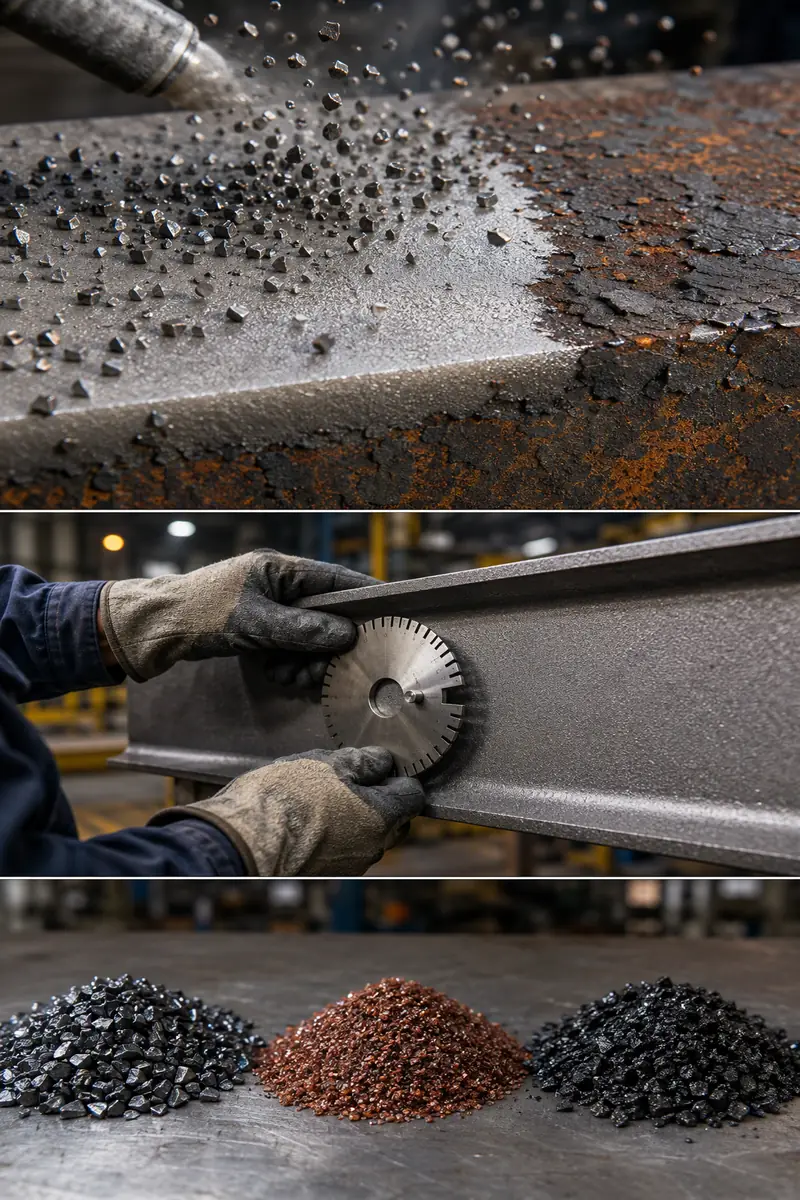
Multi-panel industrial collage showing steel grit blasting process, surface profile measurement, and abrasive media types for
FIG. 01A visual guide to selecting the right abra...

Featured editorial collage for an article on choosing abrasive media for structural steel. Panels show angular steel grit impacting mill scale, a technician measuring surface profile with a comparator, a blast nozzle operating in a shop, and samples of steel grit, garnet, and coal slag on a workbenc

Introduction

Choosing the wrong abrasive media for structural steel leads to slow production, poor coating adhesion, and costly rework. This guide helps fabricators and coating contractors match blast media to common structural steel specifications—so every job…

Introduction

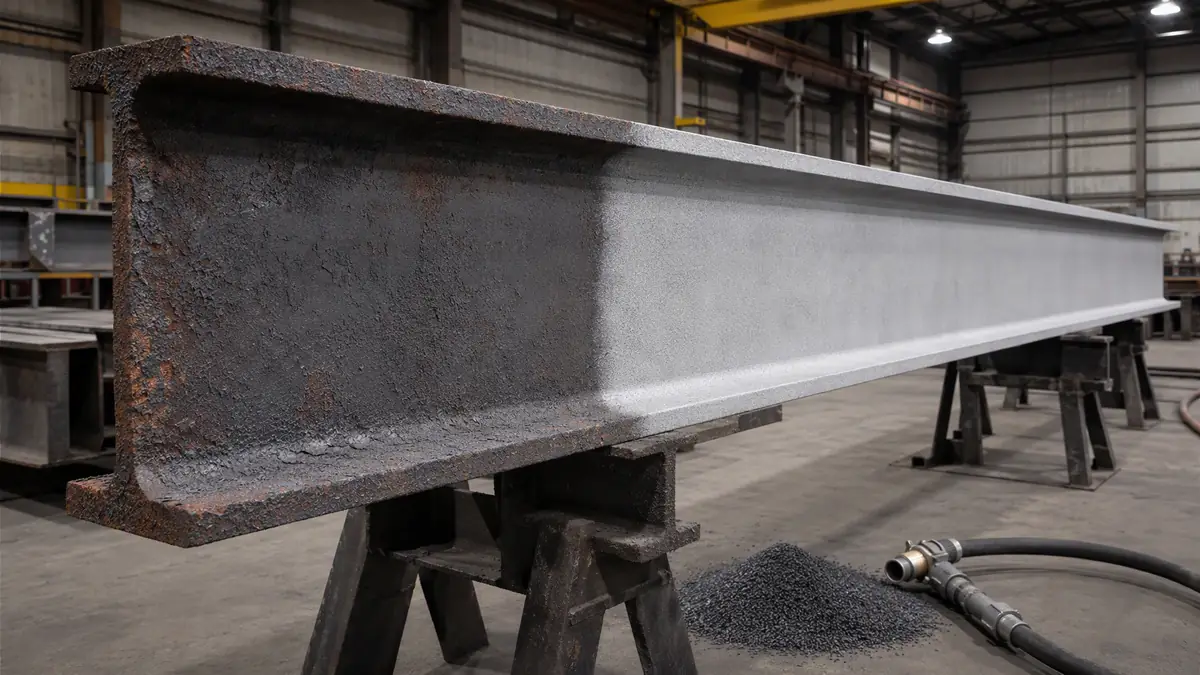
Structural steel I-beam showing dramatic contrast between rusted mill scale and freshly abrasive blasted clean white metal su
Surface preparation is the foundation of protective coating systems. The transition from rusted mill scale to a clean, blasted surface illustrates the critical

An industrial fabrication shop scene showing a structural steel I-beam on sawhorses. One half of the beam is covered in dark mill scale and rust, while the other half is bright, clean metal after abrasive blasting. A blast hose and nozzle lie nearby, emphasizing the surface preparation process that

Structural steel I-beam showing dramatic contrast between rusted mill scale and freshly abrasive blasted clean white metal su

Surface preparation is the foundation of every protective coating system applied to structural steel. Whether you are blasting bridge girders, building frames, or offshore platforms, the abrasive media you select directly determines the cleanliness level, surface profile depth, and ultimate service life of the coating. Yet many fabricators and coating applicators still default to whatever media is available, only to face failed adhesion tests, excessive dust, or blast rates that miss project deadlines.

This article provides a practical, specification-driven approach to selecting abrasive media for structural steel. We will examine how standards such as ISO 8501 and cleanliness grades like Sa 2.5 influence media choice, compare the most common blast media used on mild steel, and outline the key factors that affect productivity and coating performance. By the end, you will have a clear framework for matching abrasive type, size, and hardness to your specific structural steel application.

What Is Abrasive Media for Structural Steel?

Macro close-up of angular steel grit abrasive particles impacting and cleaning a rusted structural steel surface, revealing t
Abrasive media propelled at high velocity removes mill scale and rust while creating a microscopic anchor profile essential for coating adhesion.

An extreme close-up macro photograph showing the dynamic moment of impact as angular steel grit abrasive particles strike a rusted structural steel surface. The image reveals mill scale fracturing and the bright, rough anchor profile being created on the underlying steel, which provides mechanical g

Macro close-up of angular steel grit abrasive particles impacting and cleaning a rusted structural steel surface, revealing t
Samples of steel grit, garnet, glass bead, and coal slag abrasive media next to a blasted steel test panel.

Abrasive media for structural steel refers to the granular material propelled at high velocity against a steel surface to remove mill scale, rust, old coatings, and surface contaminants. The blasting process simultaneously cleans the substrate and creates an anchor profile—a microscopic roughness pattern that gives the new coating mechanical grip.

In structural steel fabrication and maintenance coating, abrasive blasting is the preferred method for achieving the cleanliness and surface profile demanded by international standards. Unlike chemical stripping or hand tool cleaning, abrasive blasting delivers consistent results across large surface areas, complex geometries, and heavily corroded sections.

The media itself can be metallic, mineral, or synthetic. Each category behaves differently in terms of impact energy, breakdown rate, dust generation, and the resulting surface profile on mild steel. Understanding these differences is essential because structural steel specifications rarely prescribe a single media type—they define the required outcome, and it is the contractor’s responsibility to select the media that achieves it efficiently.

Why Media Selection Matters for Structural Steel Coating Jobs

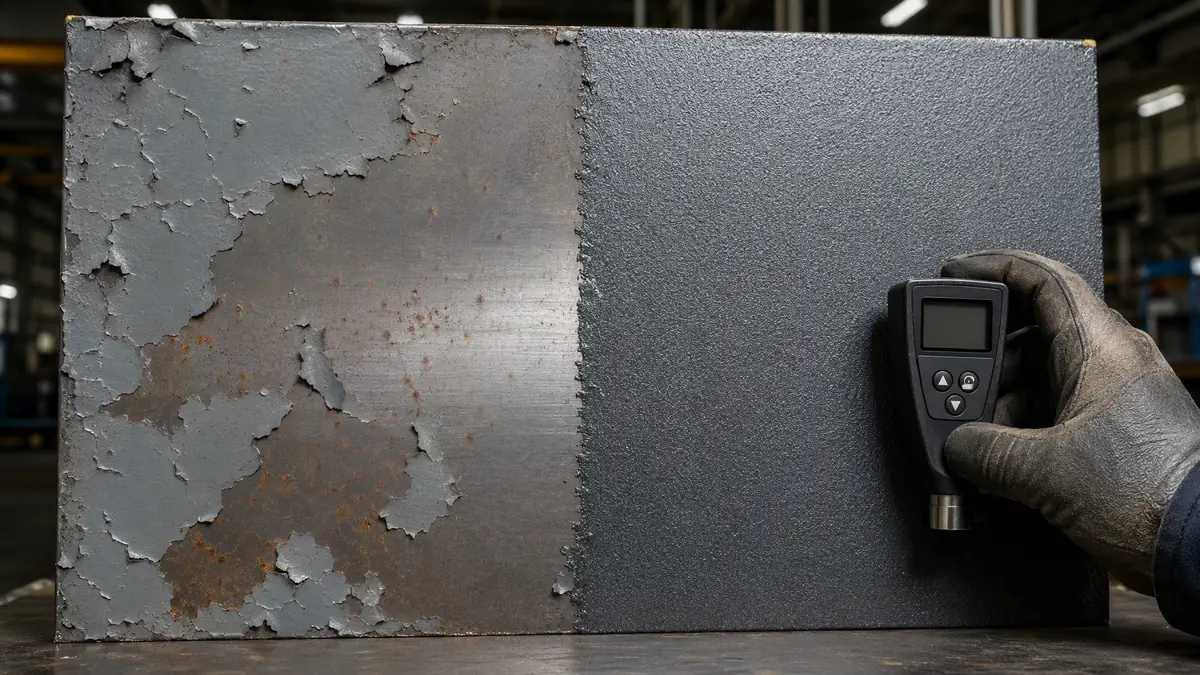
Side-by-side comparison of failed coating adhesion on smooth steel versus intact coating on properly blasted anchor profile.
Wrong media leads to coating delamination and pinpoint corrosion (left). Correct media creates an anchor profile for lasting adhesion (right).

A split-comparison image on a steel plate showing the consequences of abrasive media selection. The left side displays a coating failure with peeling primer and rust spots on a smooth surface. The right side shows a properly blasted rough anchor profile with a well-adhered, intact coating being meas

Side-by-side comparison of failed coating adhesion on smooth steel versus intact coating on properly blasted anchor profile.

The cost of getting abrasive media selection wrong extends far beyond the price per tonne of the media itself. When the wrong media is used on structural steel, several problems cascade through the project:

Failed coating adhesion. If the surface profile is too shallow, the coating lacks mechanical keying and may delaminate under service conditions. If the profile is too deep, peaks can protrude through the coating film, creating pinpoint corrosion sites.

Missed cleanliness specifications. Some media cannot effectively remove tenacious mill scale or deeply pitted rust within a reasonable blast cycle. The result is either non-conformance to standards like Sa 2.5 or excessive labour hours spent re-blasting the same areas.

Excessive dust and poor visibility. Media that fractures rapidly on impact generates fine dust that obscures the operator’s view, slows production, and increases the load on dust extraction systems. In confined spaces or urban job sites, dust emissions may also breach environmental permits.

Uncontrolled surface profile variability. Inconsistent media sizing or excessive breakdown during recycling produces an uneven anchor profile across the steel surface. Coating inspectors measuring surface profile with Testex tape or digital profile gauges will flag this variability.

Higher total blasting cost. Media consumption rate, blast nozzle wear, disposal costs for spent media, and labour productivity all contribute to the true cost of blasting. A cheaper media that wears blast equipment faster or requires more passes to achieve Sa 2.5 is rarely the economical choice.

Types of Abrasive Media Used on Structural Steel

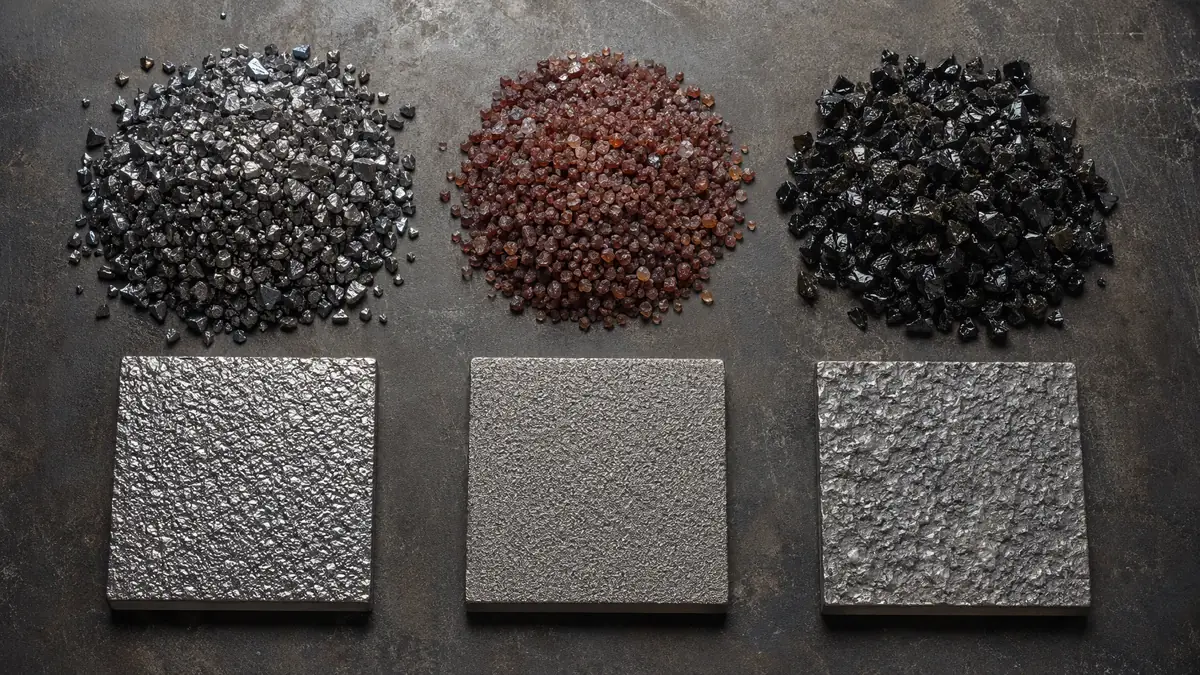
Top-down comparison of steel grit, garnet, and coal slag abrasive media piles with corresponding blasted steel surface profil
Steel grit, garnet, and coal slag represent the primary abrasive media categories for structural steel, each producing a distinct surface profile.

A flat-lay industrial photograph on a steel workbench showing three piles of abrasive media: dark angular steel grit, reddish sub-angular garnet, and black angular coal slag. Beside each pile is a steel coupon blasted with that media, visually demonstrating the different surface profile textures eac

Top-down comparison of steel grit, garnet, and coal slag abrasive media piles with corresponding blasted steel surface profil
Fabrication worker inspecting steel grit abrasive media in front of a structural steel girder being blasted.

Structural steel blasting typically employs either metallic abrasives, mineral abrasives, or a combination of both. The choice depends on whether the blasting is performed in a shop environment with recycling capability or on-site where single-pass consumption is the norm.

Steel Grit

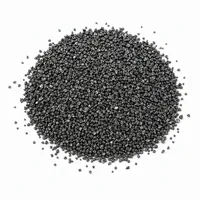
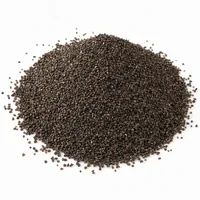
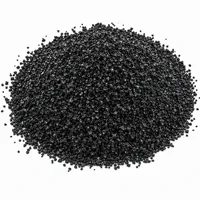
Steel grit is an angular metallic abrasive manufactured by crushing hardened steel shot. Its sharp edges cut aggressively into mill scale and corrosion products, making it one of the fastest media for achieving high cleanliness levels on structural steel.

Steel grit selection for structural steel typically falls in the G25 to G80 size range, with coarser grits used for heavy mill scale removal and finer grits for creating specific surface profiles prior to thin-film coatings. The hardness of steel grit—commonly between 50 and 65 HRC—determines its durability and breakdown characteristics.

Advantages: High recyclability (often 200+ cycles in properly maintained blast rooms), consistent particle size distribution, low dust generation compared to mineral abrasives, and the ability to achieve Sa 2.5 and Sa 3 cleanliness levels efficiently.

Limitations: Higher initial cost than expendable mineral abrasives, requires magnetic separation and screening equipment for recycling, and can embed ferrous particles in stainless steel if cross-contamination occurs (not relevant for mild structural steel but critical in mixed-metal shops).

Common applications: Shop blasting of structural steel beams, columns, and plate prior to shop primer or full coating systems. Also used in portable blast pots for field touch-up when recovery is practical.

Steel Shot

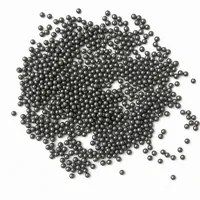
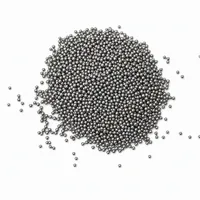
Steel shot is a spherical metallic abrasive produced by atomising molten steel. Its round shape peens the surface rather than cutting it, producing a dimpled profile with less sharp peaks than steel grit.

On structural steel, steel shot is rarely used alone for initial blasting because it is less effective at removing heavy mill scale. However, it is frequently used in wheel blast machines for descaling new structural sections and for creating a uniform surface profile before shop priming.

Advantages: Excellent recyclability, very low dust generation, produces a consistent surface profile, and imparts beneficial compressive stresses that can improve fatigue resistance.

Limitations: Slower mill scale removal than angular abrasives, may not achieve Sa 2.5 on heavily corroded steel without a grit pre-blast, and the rounded profile may not provide sufficient mechanical key for some high-build coatings.

Common applications: Automated wheel blast systems in structural steel mills and fabrication shops, often in a mix with steel grit to balance cleaning speed and profile characteristics.

Garnet Abrasive

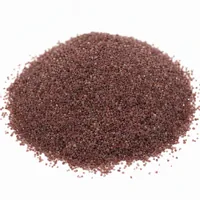
Garnet is a naturally occurring mineral abrasive valued for its hardness, angularity, and relatively low dust generation compared to other mineral abrasives. It is an expendable media typically used once before disposal, although some operators recover and reuse it for a limited number of cycles.

Garnet sand for sandblasting structural steel is commonly specified in mesh sizes from 30/60 for general blasting to 80 mesh for achieving finer surface profiles. Its specific gravity (higher than silica sand or coal slag) gives it good impact energy, and its sub-angular particle shape produces a sharp, clean profile.

Advantages: Produces a clean, white-metal finish, low free silica content (addressing health concerns associated with silica sand), good cutting speed on mill scale and rust, and widely available globally.

Limitations: Expendable nature means higher media consumption cost over large projects, generates more dust than metallic abrasives, and particle breakdown during blasting reduces its effectiveness in recycling systems.

Common applications: Site blasting of structural steel where media recovery is impractical, bridge maintenance coating projects, and applications requiring a consistently angular surface profile without ferrous contamination.

Aluminum Oxide

Aluminum oxide is a synthetic abrasive produced from bauxite in electric arc furnaces. It is one of the hardest commonly available blast media, with a Mohs hardness of 9, making it highly effective on tough mill scale and surface contaminants.

In structural steel applications, aluminum oxide is typically reserved for specialised requirements rather than general blasting due to its higher cost. It is more commonly found in blast cabinets for smaller components or in applications where a very sharp, deep profile is specified.

Advantages: Extreme hardness and durability, high recyclability, produces a very angular surface profile, and contains no ferrous material (important for applications where ferrous contamination must be avoided).

Limitations: Significantly more expensive than steel grit or garnet, can embed in softer substrates if not properly controlled, and the very aggressive cut may exceed profile requirements for thin-film coatings.

Common applications: Blasting of small structural steel components in cabinets, surface preparation before thermal spray coating, and applications requiring a deep, angular anchor profile for specialised coating systems.
Important Factors to Consider When Choosing Abrasive Media

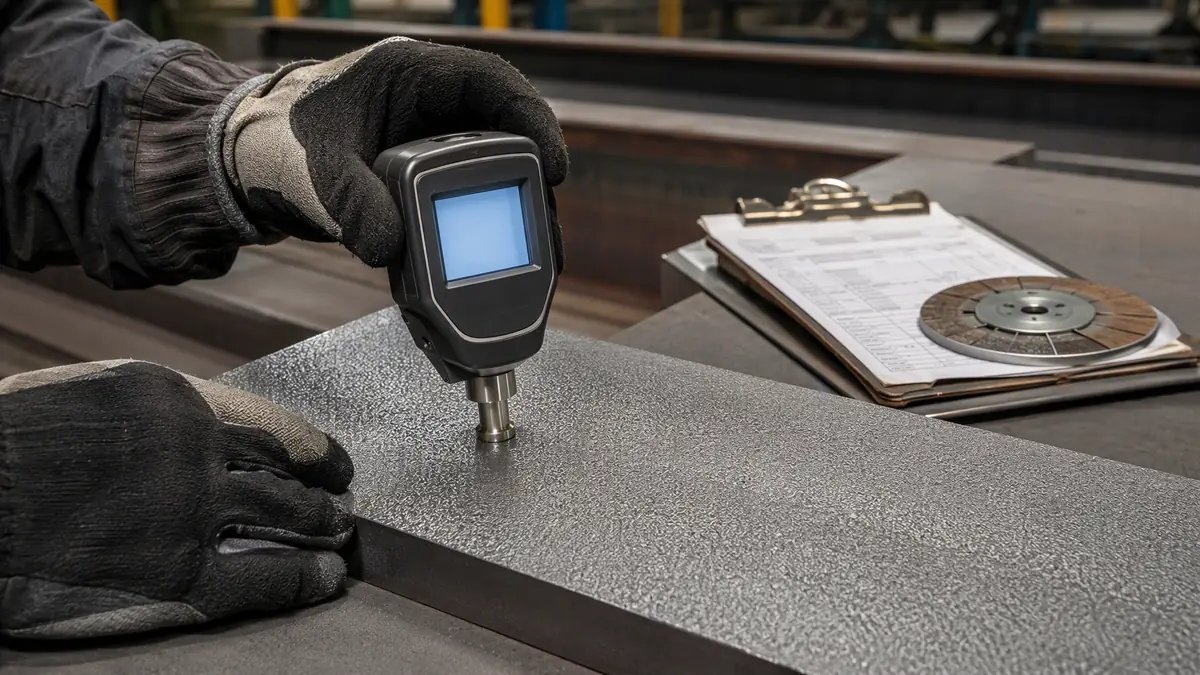
Technician measuring surface profile depth on blasted structural steel with a digital gauge, specification sheet in backgroun
Balancing cleanliness standards, surface profile requirements, and project specifications is critical when selecting abrasive media for structural steel.

A close-up industrial quality control scene showing a technician's gloved hands using a digital surface profile gauge on a freshly blasted structural steel plate. A project specification sheet and profile comparator are visible in the background, emphasizing the specification-driven approach to abra

Technician measuring surface profile depth on blasted structural steel with a digital gauge, specification sheet in backgroun
Digital profilometer measuring a 3.2 mil anchor profile depth on a blasted structural steel surface.

Selecting the right abrasive media for structural steel requires balancing multiple technical and commercial factors. The following considerations should guide your decision-making process.

Required Cleanliness Standard

The specified cleanliness grade is the primary driver of media selection. ISO 8501 defines four main grades for abrasive blast cleaning of steel surfaces:

Sa 2 – Thorough blast cleaning. The surface shall be free from visible oil, grease, dirt, and most mill scale, rust, and paint coatings. Any remaining contamination shall be firmly adherent. This is the minimum acceptable standard for many non-immersion coating systems.
Sa 2.5 – Very thorough blast cleaning. Mill scale, rust, and paint coatings shall be removed except for slight traces in the form of light stains. This is the most commonly specified cleanliness grade for structural steel protective coating systems and requires an angular, high-impact abrasive to achieve efficiently.

Sa 3 – Blast cleaning to visually clean steel. The surface shall be free from all visible oil, grease, dirt, mill scale, rust, and paint coatings. It shall have a uniform metallic colour. Achieving Sa 3 demands a sharp, clean-cutting abrasive and is typically specified only for critical immersion or high-temperature service.

For Sa 2.5 and Sa 3 on structural steel, angular abrasives such as steel grit or garnet are strongly preferred. Rounded media like steel shot alone may struggle to remove tenacious mill scale within a practical timeframe.

Surface Profile Requirements

The surface profile—also called anchor profile or roughness—is measured in microns or mils and must match the coating system’s requirements. Typical structural steel coating specifications call for a surface profile between 50 and 100 microns, depending on the primer type and dry film thickness.

Coarser abrasives produce deeper profiles; finer abrasives produce shallower profiles. As a general guide:
- Steel grit G25–G40: produces profiles in the 75–125 micron range
- Steel grit G50–G80: produces profiles in the 50–75 micron range
- Garnet 30/60 mesh: produces profiles in the 50–90 micron range
- Garnet 80 mesh: produces profiles in the 35–50 micron range

Always verify the achieved surface profile using Testex tape or a digital profile gauge during procedure qualification. The specified profile must be achieved consistently across all blasted surfaces, not just on flat plate.

Mill Scale Condition

The type and condition of mill scale on the structural steel significantly affects media choice. New steel with intact, tightly adherent mill scale requires a more aggressive abrasive than weathered steel where the mill scale has already begun to detach.

Heavy, intact mill scale typical of hot-rolled structural sections demands a coarse, angular abrasive with high impact energy. Steel grit in the G25–G40 range or coarse garnet (20/40 or 30/60 mesh) are effective choices. For lightly rusted or weathered steel where mill scale is already compromised, finer grit sizes or less aggressive media may suffice.

Blasting Environment: Shop vs. Site

The blasting location determines whether media recycling is practical and influences the choice between metallic and mineral abrasives.

Shop blasting in a blast room or automated wheel blast machine allows for efficient media recovery, cleaning, and recycling. Metallic abrasives such as steel grit and steel shot are the economic choice here, despite their higher initial cost, because they can be recycled hundreds of times. The controlled environment also permits precise media size management through regular screening.

Site blasting on erected structural steel, bridges, or tanks makes media recovery difficult or impossible. Expendable mineral abrasives like garnet are typically used because the media is consumed in a single pass. The higher per-tonne consumption cost is offset by the elimination of recovery equipment and the practicality of leaving spent media on the ground for later collection.

Coating System Compatibility

The specified coating system influences both the required surface profile and the acceptable level of surface contamination. Some high-performance epoxy primers and zinc-rich primers have specific surface profile requirements that must be met for warranty validation.

Additionally, certain coatings are sensitive to residual blast media dust on the surface. Mineral abrasives that fracture into fine dust may leave a residue that interferes with coating adhesion if not thoroughly removed by blowing down or vacuuming the surface after blasting. Metallic abrasives generally produce less problematic dust, but ferrous particles left on the surface can cause pinpoint rusting if not removed before coating application.

Health, Safety, and Environmental Regulations

Regulatory requirements increasingly influence abrasive media selection. Many jurisdictions restrict or prohibit the use of silica sand for dry abrasive blasting due to the risk of silicosis. Garnet, steel grit, and aluminum oxide are common silica-free alternatives.

Dust emissions, heavy metal content in the abrasive or the spent media, and disposal regulations for blast waste must all be considered. Some mineral abrasives contain trace heavy metals that classify spent media as hazardous waste, adding significant disposal costs.

How to Choose the Right Abrasive Media for Your Application

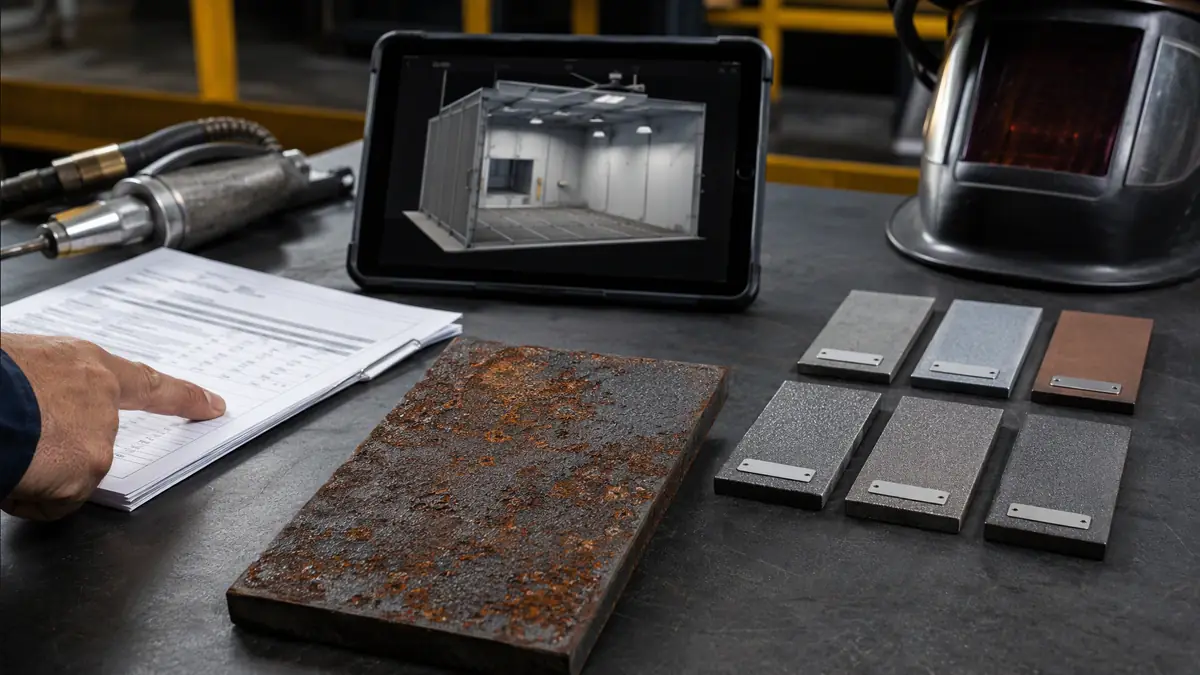
Workbench showing specification sheet, rusted steel sample, tablet with blast room layout, and test coupons for abrasive medi
A methodical approach: review specifications, assess steel condition, determine blasting location, and conduct trials to select the optimal abrasive media.

An organized industrial workbench scene illustrating the abrasive media selection process. Elements include a project specification sheet, a heavily rusted steel sample for condition assessment, a tablet displaying a blast room layout, and steel test coupons blasted with different media for trial ev

Workbench showing specification sheet, rusted steel sample, tablet with blast room layout, and test coupons for abrasive medi

Follow this step-by-step process to select the optimal abrasive media for your structural steel project.

Step 1: Identify the specification requirements. Review the project coating specification and extract the required cleanliness grade (Sa 2, Sa 2.5, or Sa 3), the surface profile range in microns, and any restrictions on abrasive type or contamination levels.

Step 2: Assess the steel condition. Examine the structural steel to determine the type and condition of mill scale, the presence and severity of rust pitting, and whether old coatings must be removed. This assessment determines the aggressiveness required from the abrasive.

Step 3: Determine the blasting location. Confirm whether blasting will be performed in a shop with recycling capability or on-site with single-pass consumption. This decision narrows the choice between metallic and mineral abrasives.

Step 4: Select the abrasive type. Based on the cleanliness requirement, steel condition, and blasting location, choose the abrasive category:
- Shop blasting, Sa 2.5 or Sa 3, heavy mill scale: steel grit (possibly mixed with steel shot)
- Site blasting, Sa 2.5, moderate mill scale: garnet 30/60 mesh
- Shop blasting, Sa 2, light rust only: steel shot or fine steel grit
- Specialised deep profile requirements: aluminum oxide or coarse steel grit

Step 5: Select the abrasive size. Match the abrasive particle size to the required surface profile. Conduct a blast trial on a representative steel sample and measure the achieved profile. Adjust the media size if the profile falls outside the specified range.

Step 6: Validate through testing. Before full production blasting, perform a procedure qualification trial. Blast a test area, measure the cleanliness against ISO 8501 visual standards, verify the surface profile, and apply the specified coating system to confirm adhesion. Document the results for the coating inspector.

Comparison of Common Abrasive Media for Structural Steel

Comparison of surface profiles on a steel I-beam blasted with steel grit, garnet, and glass bead media.

Abrasive MediaParticle ShapeTypical HardnessRecyclabilityDust GenerationBest For
Steel GritAngular50–65 HRCHigh (200+ cycles)LowShop blasting to Sa 2.5/Sa 3; heavy mill scale
Steel ShotSpherical40–50 HRCVery highVery lowWheel blast descaling; profile conditioning
GarnetSub-angular7–8 MohsLow (single-pass typical)ModerateSite blasting to Sa 2.5; silica-free requirement
Aluminum OxideAngular9 MohsHighLowDeep profile; non-ferrous requirement; small parts
Coal SlagAngular6–7 MohsNone (single-pass)HighEconomical site blasting; less restrictive specs
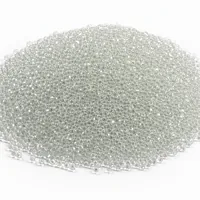
Crushed GlassAngular5–6 MohsNone (single-pass)ModerateLight rust; thin coatings; low profile requirement

Common Mistakes to Avoid

Worker sieving contaminated abrasive media, removing debris and rust flakes before it enters the blast pot.

Mistake 1: Choosing abrasive by price per tonne alone. The cheapest media often has the highest consumption rate, generates more dust, and requires more labour hours to achieve the specified cleanliness. Calculate the total blasting cost including media, labour, equipment wear, and disposal before making a decision.

Mistake 2: Ignoring surface profile requirements. Achieving Sa 2.5 cleanliness is only half the requirement. If the surface profile is too shallow or too deep for the specified coating system, the job will fail inspection regardless of how clean the steel appears. Always measure the profile during procedure qualification.

Mistake 3: Using the same media for every job. Structural steel projects vary widely in steel condition, coating specification, and blasting environment. A media that works perfectly for shop blasting new steel beams may be completely unsuitable for site blasting a corroded bridge girder.

Mistake 4: Neglecting media size management in recycling systems. In shop blasting operations using recycled steel grit, the media size distribution changes over time as particles fracture. Without regular screening and topping up with new media, the working mix drifts finer, reducing productivity and altering the surface profile. Establish a media management programme with daily screening.
Mistake 5: Failing to remove blast dust before coating. After blasting, the surface must be thoroughly cleaned of dust and spent media residue. This is particularly important when using mineral abrasives that generate fine dust. Blow down with clean, dry compressed air and vacuum where specified. Coating over dust is a common cause of premature coating failure.

Mistake 6: Overlooking abrasive contamination risks. Cross-contamination between ferrous and non-ferrous metals can cause galvanic corrosion. If your shop handles both carbon steel and stainless steel, maintain separate media stocks and blast equipment, or use non-ferrous abrasives like garnet or aluminum oxide for stainless work.

Maintenance, Safety, and Best Practices

Media storage. Store abrasives in dry conditions to prevent caking and clumping. Moisture in the media causes flow problems in blast pots and can introduce water to the blasted surface, promoting flash rusting. Steel grit and shot should be stored under cover to prevent rusting of the media itself.

Blast equipment maintenance. Regularly inspect blast nozzles, hoses, metering valves, and deadman controls for wear. Abrasive media is inherently destructive to equipment, and worn components reduce blasting efficiency and pose safety risks. Replace venturi nozzles when the orifice diameter increases beyond the manufacturer’s tolerance.

Operator safety. Abrasive blasting generates respirable dust, high noise levels, and projectile hazards. Operators must wear approved air-fed blast helmets with proper air filtration, hearing protection, and protective clothing. Containment screens and exclusion zones protect other personnel on site.

Environmental controls. On site blasting projects, contain spent abrasive and removed coatings using tarpaulins, containment screens, or full enclosure systems. Spent media from blasting old lead-based paint coatings is classified as hazardous waste in most jurisdictions and must be disposed of accordingly.

Surface cleanliness after blasting. Blasted structural steel begins to oxidise immediately upon exposure to the atmosphere. Apply the first coat of the protective system as soon as possible after blasting—ideally within four hours and before any visible rusting occurs. In high-humidity environments, this window may be shorter.

Conclusion

Selecting the right abrasive media for structural steel is a technical decision that directly impacts coating performance, project productivity, and total blasting cost. The specification—not habit or price alone—should drive your choice. Start with the required cleanliness grade and surface profile, assess the steel condition and blasting environment, then match the abrasive type and size to these parameters.

For shop blasting of structural steel to Sa 2.5 with heavy mill scale, angular steel grit offers the best combination of speed, recyclability, and profile control. For site blasting where recovery is impractical, garnet abrasive provides excellent cleaning performance with manageable dust and no silica hazard. In every case, validate your media selection through a blast trial and profile measurement before committing to full production.

The time invested in proper media selection pays back through faster blasting, fewer rejected areas, and coating systems that achieve their full design life.

Frequently Asked Questions

What is the difference between steel grit and steel shot for blasting structural steel?

Steel grit is angular and cuts aggressively into mill scale and rust, making it fast for achieving high cleanliness levels like Sa 2.5. Steel shot is spherical and peens the surface, creating a dimpled profile, but it is slower at removing heavy mill scale and is often used in wheel blast machines for descaling or mixed with grit to balance cleaning speed and profile.

How do I know if I need an expendable mineral abrasive like garnet or a recyclable metallic abrasive like steel grit?

The primary factor is your blasting environment. For shop blasting with a blast room and recovery system, recyclable steel grit is the most economical choice. For on-site field blasting where media recovery is impractical, expendable mineral abrasives like garnet are the standard, despite higher single-use consumption costs.

What surface profile depth is needed for structural steel coatings, and how does media choice affect it?

The required profile depth is dictated by the coating specification, but it's the abrasive media size and shape that create it. Angular media like steel grit or garnet produces a sharper, more defined profile for mechanical keying. The media must be sized correctly; a profile that is too shallow causes poor adhesion, while one too deep can leave peaks protruding through the coating.

Can I use the same abrasive media to achieve both an Sa 2.5 cleanliness and a specific surface profile?

Yes, but it requires careful media selection. A single, correctly specified abrasive can often achieve both. For example, a specific grade of angular steel grit can remove mill scale to meet Sa 2.5 while simultaneously creating the required anchor profile. The key is matching the media's hardness, size, and shape to both the initial steel condition and the coating's requirements.

What is the most common mistake when selecting blast media for mild steel?

The most common mistake is choosing media based on the lowest price per tonne without considering total blasting cost. A cheaper, softer mineral abrasive may fracture rapidly, creating excessive dust, slowing production, and requiring more passes to achieve the specified cleanliness. This increases labor hours, disposal costs, and equipment wear, making it more expensive overall than a durable, recyclable media.

How does media hardness affect dust generation and operator visibility during blasting?

Media that is too brittle or soft for the application fractures on impact, creating fine dust that obscures the operator's view and increases the load on dust extraction systems. Harder, more durable media like steel grit or high-quality garnet resists fracturing, generating significantly less dust, which improves visibility, productivity, and compliance with environmental and safety permits.

What is the next step after identifying the right type of abrasive media for my structural steel project?

Once you've identified the media type, the next step is to define the specific grade or mesh size needed to achieve your target surface profile and cleanliness level. You can then compare product specifications from suppliers to ensure the media meets the required hardness and particle size distribution, and request a quote or sample for a trial on your specific steel condition.

Solution

Finding the right abrasive media for your structural steel project starts with understanding what is available and how each product performs against your specification. Explore the range of steel grit, garnet, and aluminum oxide abrasives available through SPA2Z to compare grades, sizes, and packaging options suited to both shop and site blasting operations.

If you need assistance matching an abrasive to a specific coating specification or surface profile requirement, contact the SPA2Z team with your project details for a technical recommendation and quotation.

Get a quote

Get a quote

Tell us what you need. We reply within one business day.

Sending…
Need a price? Ask us here.