ABRASIVES GUIDE

Selecting Blast Media for Thermal Spray Bond Strength

The blast media you choose directly determines whether a thermal spray coating bonds or fails. For applicators running HVOF, plasma, or arc spray systems, surfa...

Published
18 Feb 2017
Category
Abrasives
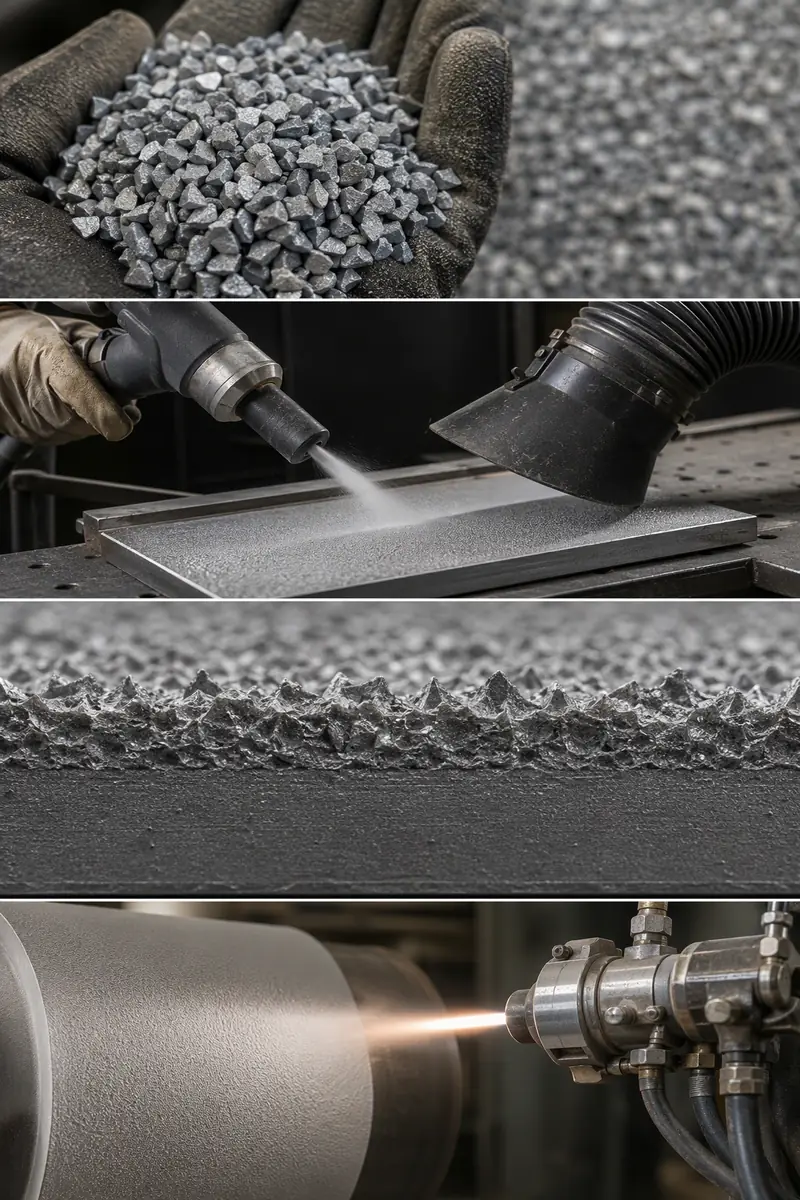
Multi-panel collage showing angular blast media, surface blasting process, anchor profile, and thermal spray coating applicat
FIG. 01The path to coating integrity: from select...

A professional multi-panel editorial image for an article on selecting blast media for thermal spray. It visually links the key stages: the angular alumina abrasive, the blasting process creating a surface profile, the microscopic anchor pattern, and the final coating application, highlighting the f

Introduction

The blast media you choose directly determines whether a thermal spray coating bonds or fails. For applicators running HVOF, plasma, or arc spray systems, surface preparation is not a preliminary step — it is the foundation of coating integrity. Thi…

Introduction

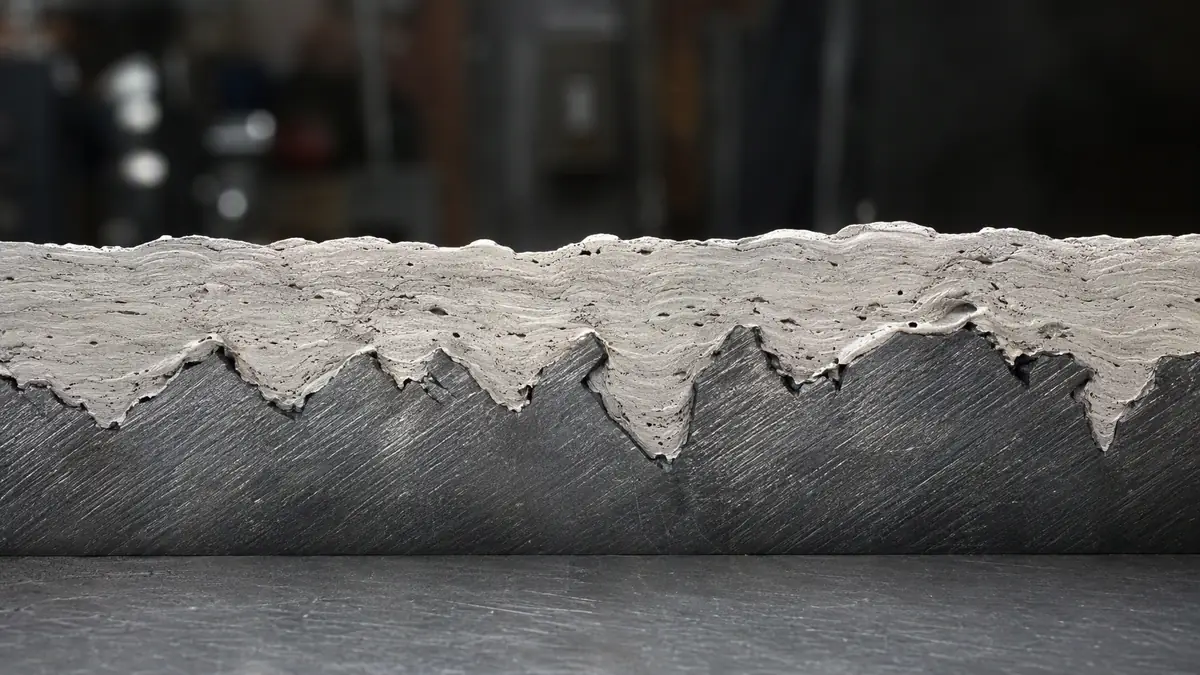
Cross-section showing mechanical interlock of thermal spray coating on a blasted angular surface profile.
Thermal spray bond strength relies on mechanical interlock: molten particles flattening into a sharp, clean anchor profile.

A detailed cross-section view illustrating the fundamental principle of thermal spray adhesion. Semi-molten particles are shown impacting and solidifying into the angular profile of a blast-prepared steel substrate, creating a strong mechanical bond without chemical adhesion.

Cross-section showing mechanical interlock of thermal spray coating on a blasted angular surface profile.

Thermal spray coatings do not bond chemically to the substrate. They rely on mechanical interlock: molten or semi-molten particles striking a roughened, perfectly clean surface, flattening into the profile, and solidifying. If the blasted surface is too smooth, contaminated, or inconsistently prepared, the coating will delaminate under load, thermal cycling, or corrosion exposure.

For thermal spray applicators, selecting the right blast media is a commercial and technical decision. The wrong abrasive wastes coating material, causes rework, and risks component failure in service. The right abrasive, specified correctly, delivers repeatable bond strength and keeps production moving.

This guide covers what makes a blast media suitable for thermal spray bond preparation, how to specify it, and what to avoid — with a focus on the practical realities of a blasting booth, not just laboratory conditions.

Why Surface Preparation Dictates Thermal Spray Bond Strength

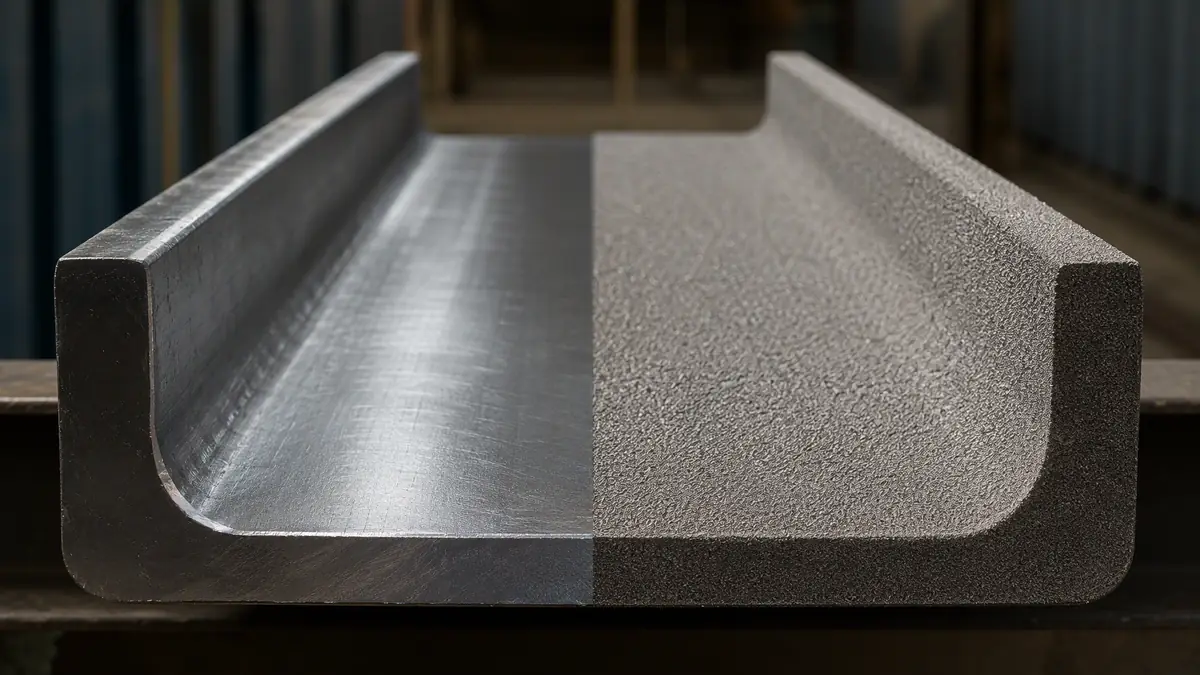
Split comparison of a smooth unprepared steel surface versus a clean, angular blasted anchor profile.
A clean, angular anchor profile (right) is essential for thermal spray bond strength, unlike a smooth, unprepared surface (left).

A single steel plate demonstrating the critical importance of surface preparation. One half is polished smooth, while the other half has been blasted to create a sharp, angular anchor profile. The lighting accentuates the peaks and valleys required for mechanical keying of thermal spray coatings.

Split comparison of a smooth unprepared steel surface versus a clean, angular blasted anchor profile.

Thermal spray processes — whether HVOF, plasma spray, arc spray, or flame spray — share a common requirement: the substrate must provide a clean, angular anchor profile that allows impacting particles to grip mechanically.

Three factors determine bond quality:

  1. Surface cleanliness — Any oil, grease, moisture, or oxide layer between the substrate and the coating creates a weak interface. Thermal spray requires the highest practical cleanliness standard.
  2. Surface profile (roughness) — The blasted surface must have sharp, angular peaks and valleys. Rounded or polished profiles reduce mechanical keying.
  3. Profile depth — The roughness amplitude must match the coating material and thickness. Too shallow, and particles cannot anchor. Too deep, and peaks may protrude through thin coatings.

When any of these three factors is compromised, the failure mode is predictable: the coating lifts, flakes, or spalls — often at the coating-substrate interface, indicating a preparation failure rather than a coating material problem.

What Thermal Spray Demands from Blast Media

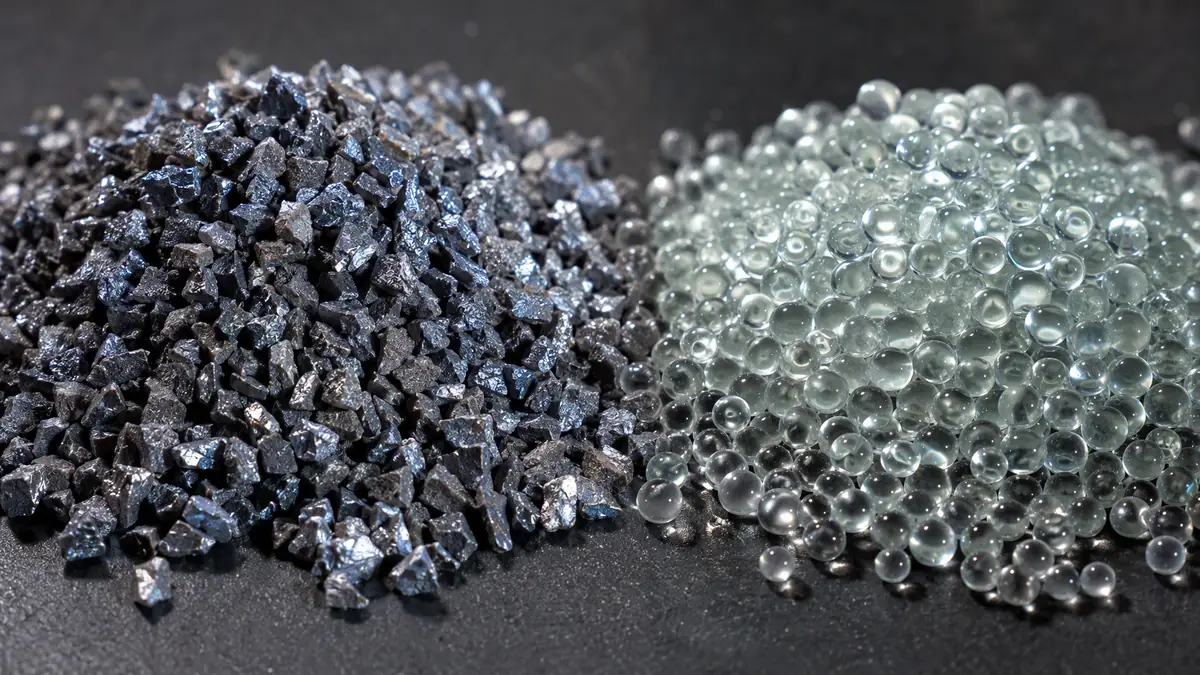
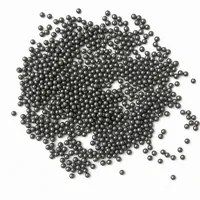
Macro comparison of sharp angular aluminum oxide grit versus smooth rounded glass bead media.
Sharp, angular aluminum oxide (left) cuts a profile for mechanical lock, while rounded glass beads (right) peen and smooth the surface.

A detailed macro comparison of two abrasive types. Sharp, blocky fused aluminum oxide particles are shown next to smooth, spherical glass beads, visually explaining why angular media is the industry standard for creating the anchor profile required for thermal spray bond strength.

Macro comparison of sharp angular aluminum oxide grit versus smooth rounded glass bead media.

Not all abrasives are suitable for thermal spray preparation. The media must meet specific criteria that go beyond general industrial blasting requirements.

Sharp, Angular Particle Shape

Thermal spray bond strength correlates strongly with the angularity of the blast media. Angular particles cut into the substrate, creating sharp peaks and undercuts that molten droplets can flow into and mechanically lock behind. Rounded media — such as glass beads or heavily recycled steel shot — peen the surface, producing a smoother, less retentive profile.

For this reason, angular oxide abrasives — particularly fused aluminum oxide (alumina) — are the industry standard for thermal spray surface preparation. Their blocky, sharp-edged fracture pattern produces the aggressive profile that thermal spray coatings require.

Chemically Inert Composition

The blast media must not leave residues that contaminate the substrate. Some abrasives embed particles in the surface or leave chemical films that interfere with coating adhesion. Aluminum oxide is preferred because it is chemically stable, does not react with most substrates, and does not introduce corrosion-promoting contaminants — provided it is high-purity virgin material.

Avoid abrasives that contain free iron (which can rust under the coating), soluble salts, or organic binders. Copper slag, coal slag, and low-grade mineral abrasives often carry contaminants that compromise bond integrity, even if they produce an acceptable visual profile.

Controlled Particle Size Distribution

The profile depth produced by blasting is a function of abrasive particle size, hardness, velocity, and impact angle. For thermal spray, the target surface roughness typically falls in the range of 60–120 µm Ra, depending on the coating material and thickness specification.

Achieving this consistently requires a tight particle size distribution. Oversized particles create excessively deep profiles and risk surface damage on thin substrates. Undersized particles or excessive fines produce shallow profiles and dust that can embed in the surface.

A common specification for aluminum oxide in thermal spray prep is a grit size in the F24 to F36 range (approximately 0.4–0.8 mm), but the exact grade should be matched to the coating system and validated through pull-off adhesion testing.

Hardness Sufficient for the Substrate

The abrasive must be harder than the substrate to cut effectively. Aluminum oxide (Mohs 9) easily profiles steel, stainless steel, nickel alloys, titanium, and ceramics. For softer substrates such as aluminum or magnesium, lower-hardness media or reduced blast pressure may be necessary to avoid excessive material removal or grit embedment.
The Cleanliness Standard: Sa 3 and Why It Matters

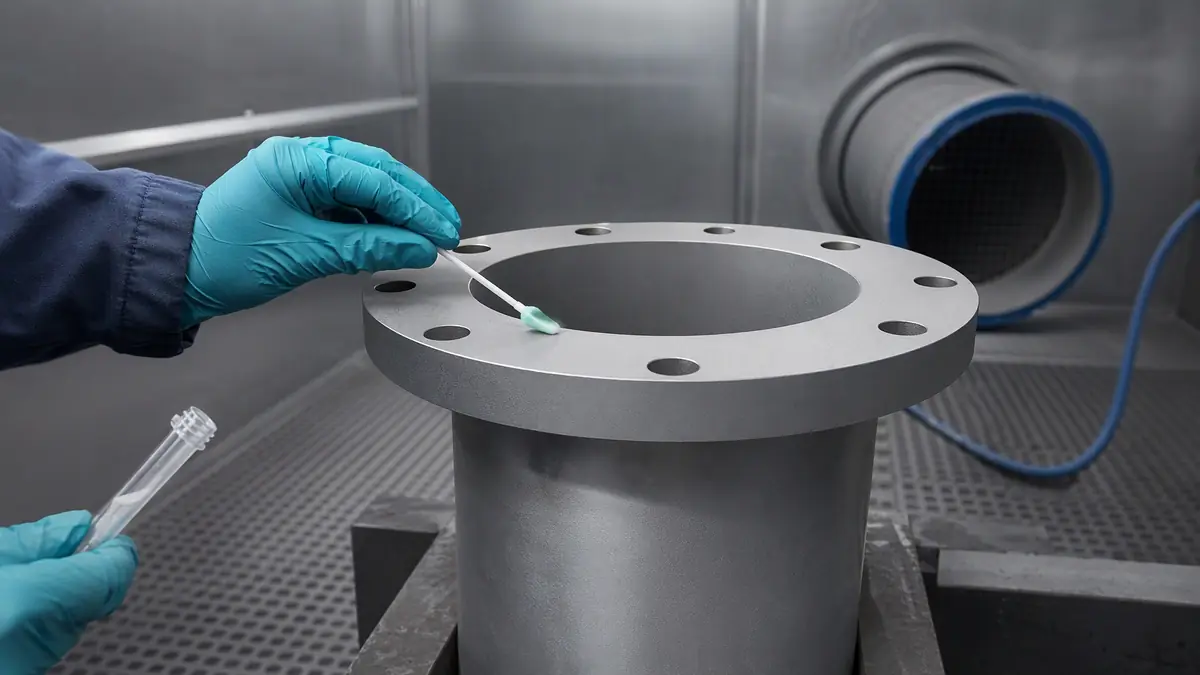
Technician testing a Sa 3 visually clean steel surface on a pipe flange with a contamination kit.
Achieving the Sa 3 standard requires a uniformly clean, metallic surface, verified here with a contamination test before coating.

A close-up scene in a blast booth showing a freshly prepared pipe flange. The surface is uniformly bright metallic, meeting the Sa 3 visual cleanliness standard. A technician's gloved hand uses a test kit to verify the absence of contaminants, a critical step before thermal spray coating application

Technician testing a Sa 3 visually clean steel surface on a pipe flange with a contamination kit.

Thermal spray specifications commonly reference Sa 3 — the highest cleanliness grade defined in ISO 8501-1. Sa 3, "blast cleaning to visually clean steel," requires removal of all mill scale, rust, paint, and foreign matter. The surface must have a uniform metallic color.

This is a more stringent requirement than Sa 2½ (near-white blast), which is common for protective coatings. The rationale is straightforward: thermal spray coatings lack the wetting and chemical adhesion mechanisms of liquid paints. Any contaminant remaining on the surface becomes a bond-line defect.

In practice, achieving Sa 3 means:

  • Using clean, dry, contaminant-free compressed air
  • Employing virgin abrasive that has not been recycled beyond its useful life
  • Blasting until the surface is uniformly bright with no visible stains or shadows
  • Handling blasted components with clean gloves to prevent recontamination
  • Applying the thermal spray coating within the specified time window (typically within 2–4 hours, depending on ambient humidity)

If your current blasting process targets Sa 2½ for paint, upgrading to Sa 3 for thermal spray may require changes in abrasive type, air quality, and workflow discipline.

Alumina vs. Other Abrasives for Thermal Spray Prep

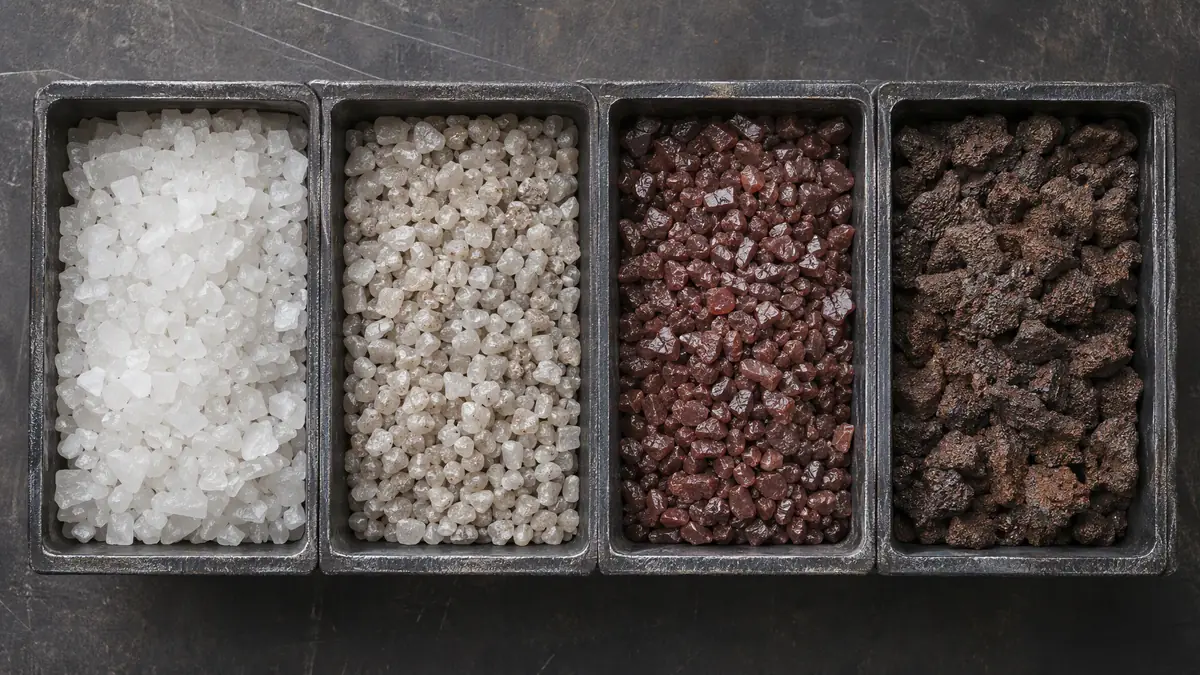
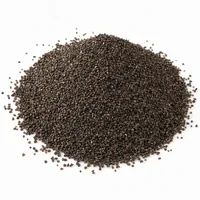
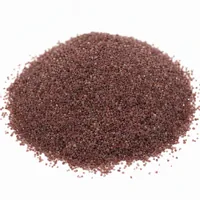
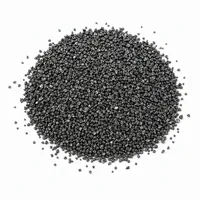
Flat lay comparison of virgin alumina, recycled alumina, garnet, and copper slag abrasives.
A visual comparison of common abrasives: virgin alumina, recycled alumina, garnet, and copper slag, highlighting differences in angularity and purity.

A professional flat lay image comparing four abrasive types used in surface preparation. The distinct particle shapes, from the sharp blocky virgin alumina to the jagged copper slag, are clearly visible, aiding in understanding their suitability for thermal spray applications based on angularity and

Flat lay comparison of virgin alumina, recycled alumina, garnet, and copper slag abrasives.

The table below compares abrasives commonly considered for surface preparation, evaluated against thermal spray requirements.

Abrasive TypeAngularityContamination RiskProfile ControlSuitability for Thermal Spray
Fused aluminum oxide (virgin)Excellent — sharp, blockyVery low (high purity)Good with controlled sizingPrimary choice for most applications
Alumina (recycled)Moderate — rounds with reuseLow if properly cleanedVariable — fines accumulateAcceptable with strict recycling controls
GarnetGood — angular fractureLow to moderateGoodSuitable alternative; verify salt content
Steel gritGood — angularHigh (iron contamination risk)GoodNot recommended — rust and embedment risk
Copper slag / coal slagModerateHigh (soluble salts, heavy metals)FairNot recommended for critical bond
Glass beadsPoor — sphericalLowPoor — peening effectNot suitable — insufficient profile
Silicon carbideExcellent — very sharpVery lowGoodSuitable but higher cost; used for ceramics

Fused aluminum oxide (alumina) remains the default recommendation for most thermal spray applications because it delivers the required angularity, purity, and profile control at a cost that supports production economics. Garnet can be an acceptable alternative where alumina is unavailable or cost-prohibitive, but applicators should verify the specific garnet source for salt content and hardness consistency.

How to Specify Blast Media for Thermal Spray

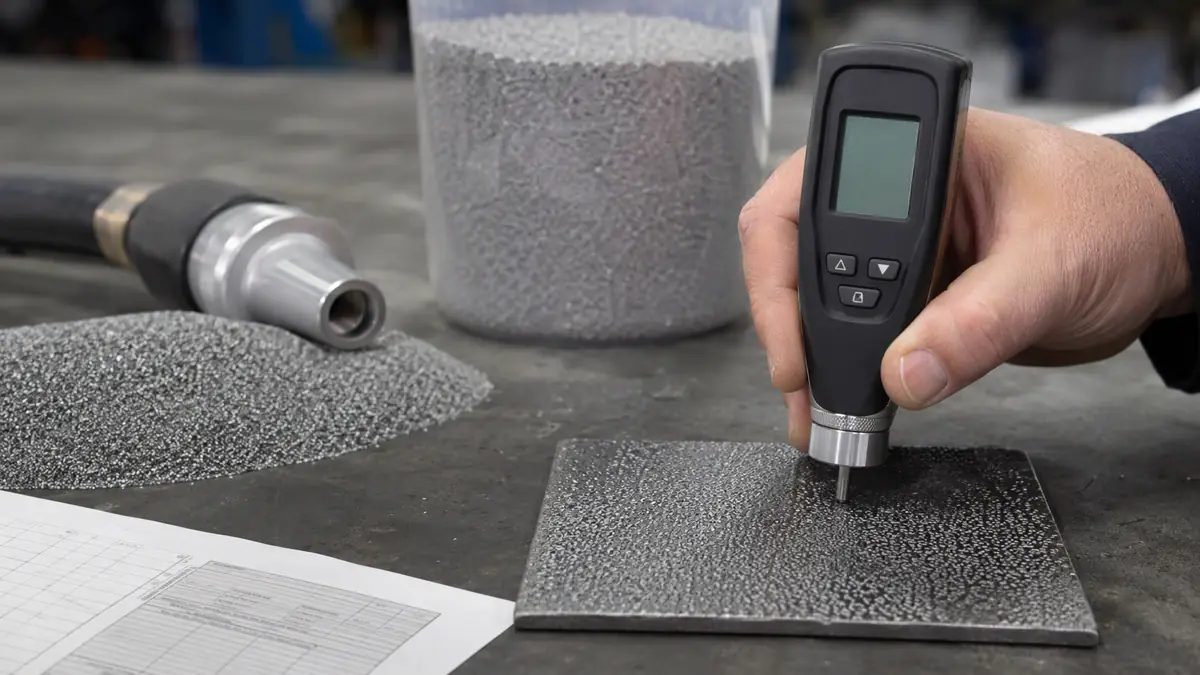
Technician measuring the surface profile of a blasted steel test coupon with a digital gauge.
Validating the anchor profile on a test coupon with a digital gauge ensures the specified grit size and blast parameters are correct.

A detailed scene of quality control in surface preparation. A technician uses a digital profile gauge to measure the roughness of a blast-prepared test coupon. The background includes the blast nozzle and a container of F24 alumina, linking the process, the media, and the critical verification step

Technician measuring the surface profile of a blasted steel test coupon with a digital gauge.

When procuring blast media for thermal spray surface preparation, specifiers should address these parameters:

Grit Size and Profile Target

Specify the required grit size (e.g., F24, F30, F36 per FEPA standards) and the target surface profile range. The relationship between grit size and profile is not fixed — it depends on blast pressure, nozzle distance, angle, and substrate hardness. Validate through test coupons before production runs.

A typical starting point: F24 alumina at 5–6 bar (70–90 psi) blast pressure, 100–150 mm nozzle distance, 60–90° angle, produces profiles in the 60–100 µm Ra range on mild steel. Adjust parameters and verify.

Purity and Contamination Limits

Request certification for:
- Chemical composition (minimum 95% Al₂O₃ for brown fused alumina; 99%+ for white)
- Moisture content (should be dry and free-flowing)
- Chloride and soluble salt levels (relevant for corrosion-sensitive substrates)
- Absence of free iron

Virgin vs. Recycled Media

Virgin alumina provides the most consistent angularity and lowest contamination risk. Recycled alumina can be used if the blasting system includes effective classification to remove fines and dust, and if the media is not contaminated by previously blasted substrates. However, each recycling cycle rounds the particles slightly, reducing profile sharpness. For critical bond applications — aerospace, power generation, oil and gas components — virgin media is the safer specification.

Common Mistakes That Compromise Bond Strength

Using the Wrong Abrasive Type

The most frequent error is using whatever abrasive is available in the shop — often steel grit or slag — for thermal spray preparation. The resulting profile may look acceptable to the eye, but pull-off adhesion tests will reveal the difference. Steel grit embedment, in particular, creates rust initiation points that destroy coating integrity over time.

Inadequate Cleanliness

Blasting to Sa 2½ instead of Sa 3 leaves microscopic contaminants that weaken the bond. The difference may not be visible without magnification, but it shows up in adhesion testing and service performance. Thermal spray applicators should verify cleanliness with surface contamination testing (e.g., Bresle patch for soluble salts) rather than relying on visual comparison alone.

Excessive or Inconsistent Profile

Over-blasting with oversized media or excessive pressure creates a profile deeper than the coating can fill, leaving voids at the interface. Under-blasting produces insufficient mechanical keying. Both conditions reduce effective bond area. Profile measurement using replica tape or a stylus profilometer should be part of the quality control routine.

Delayed Coating Application

A freshly blasted steel surface begins oxidizing immediately. The window between blasting and coating is typically 2–4 hours under controlled humidity, shorter in humid environments. Delays beyond this window require re-blasting. This is a process discipline issue, not an abrasive issue — but it is one of the most common causes of bond failure in production environments.

Contaminated Compressed Air

Oil, water, or particulate contamination in the blast air stream transfers directly to the substrate surface. Even the best abrasive cannot compensate for poor air quality. Compressed air should be filtered and dried; moisture separators and coalescing filters should be maintained and checked regularly.

Evaluating Results: Confirming Bond Strength

The ultimate validation of blast media selection is the bond strength of the applied coating. Standard evaluation methods include:

  • Pull-off adhesion testing (ASTM C633 / ISO 14916) — Quantifies tensile bond strength. Values vary by coating material, but consistent results above the specification minimum (often 5,000–10,000 psi or 35–70 MPa for HVOF carbide coatings) indicate proper preparation.
  • Surface profile measurement — Verifies that the blasted profile falls within the specified range before coating.
  • Visual inspection — Confirms uniform cleanliness (Sa 3) and consistent texture across the entire surface.
  • Bend testing — A qualitative check where a coated coupon is bent around a mandrel; good preparation prevents flaking at the bond line.

If bond strength is inconsistent or below specification, review the abrasive type, grit size, blast parameters, air quality, and the time between blasting and coating — in that order.

Conclusion

Blast media selection for thermal spray is not a commodity decision. The abrasive directly determines whether the coating bonds or fails. Fused aluminum oxide, specified with the correct grit size, purity, and angularity, remains the most reliable choice for achieving the Sa 3 cleanliness and 60–120 µm anchor profile that thermal spray processes demand.

The key takeaways for thermal spray applicators:

  • Specify angular, high-purity abrasive — alumina is the proven standard
  • Target Sa 3 cleanliness, not Sa 2½
  • Control grit size to achieve consistent profile within specification
  • Validate preparation quality through profile measurement and adhesion testing
  • Do not substitute general blasting abrasives for thermal spray preparation

A coating system is only as strong as its bond line. The abrasive you choose is the first and most critical variable in that equation.

Frequently Asked Questions

Why can't I use the same steel grit for thermal spray prep that I use for painting?

Steel grit creates a high risk of iron embedment in the substrate. These embedded particles can rust under the thermal spray coating, creating corrosion cells and bond-line defects that lead to delamination. Thermal spray requires a chemically inert, iron-free abrasive like aluminum oxide to prevent this contamination.

What does an Sa 3 cleanliness standard mean for my blasting process?

Sa 3 requires removal of all mill scale, rust, paint, and foreign matter until the surface shows a uniform metallic color with no visible stains or shadows. This is more stringent than the Sa 2½ standard used for paint. Achieving it typically requires virgin abrasive, clean dry compressed air, and strict handling protocols to prevent recontamination before coating.

How do I know if my profile depth is correct for HVOF coating?

The target surface roughness for thermal spray is typically in the 60–120 µm Ra range, but the exact requirement depends on your specific coating material and thickness. You must validate the profile using test coupons and pull-off adhesion testing. A common starting point is F24 alumina at 5–6 bar blast pressure, which often produces a 60–100 µm Ra profile on mild steel.

Can I recycle aluminum oxide for thermal spray surface preparation?

Recycled alumina can be used if your blasting system effectively removes fines and dust, and the media hasn't been contaminated by previous substrates. However, each cycle rounds the particles slightly, reducing profile sharpness. For critical applications in aerospace or power generation, virgin media is the safer specification to guarantee bond strength.

What is the difference between brown and white fused alumina for this application?

Brown fused alumina typically has a minimum purity of 95% Al₂O₃, while white fused alumina exceeds 99% purity. Both provide the sharp, angular profile needed for thermal spray bond strength. White alumina is specified when the highest chemical purity is required to eliminate any risk of contamination on sensitive substrates.

How soon after blasting must I apply the thermal spray coating?

You should apply the coating within 2–4 hours of blasting, depending on ambient humidity. The freshly exposed surface will begin to oxidize and can attract moisture or contaminants from the air. Delaying beyond this window compromises the cleanliness standard and risks bond failure, even if the surface still looks clean.

Is garnet a suitable alternative to aluminum oxide for thermal spray prep?

Garnet can be an acceptable alternative because it fractures into angular particles and provides good profile control. However, you must verify the specific source for salt content and hardness consistency, as some garnet deposits contain soluble salts that can contaminate the substrate and reduce bond integrity.

Solution

Selecting the right blast media for your thermal spray application requires matching abrasive specifications to your coating system, substrate material, and production setup. SPA2Z supplies aluminum oxide grit and garnet abrasives suitable for thermal spray surface preparation, with technical support to help you specify the correct grade and particle size distribution.

Compare abrasive options on the SPA2Z website or contact the sales team to discuss your surface preparation requirements, request a quotation, or confirm compatibility with your thermal spray process.

Get a quote

Get a quote

Tell us what you need. We reply within one business day.

Sending…
Need a price? Ask us here.