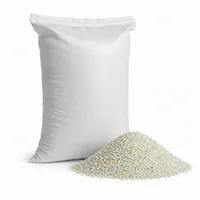
Walnut Shell Abrasive Blasting for Soft Metal and Mold Cleaning
Die and mold cleaning presents a recurring challenge: remove baked-on release agents, light carbon deposits, and process residues without altering critical tool...
Published
06 Apr 2015
Category
Abrasives
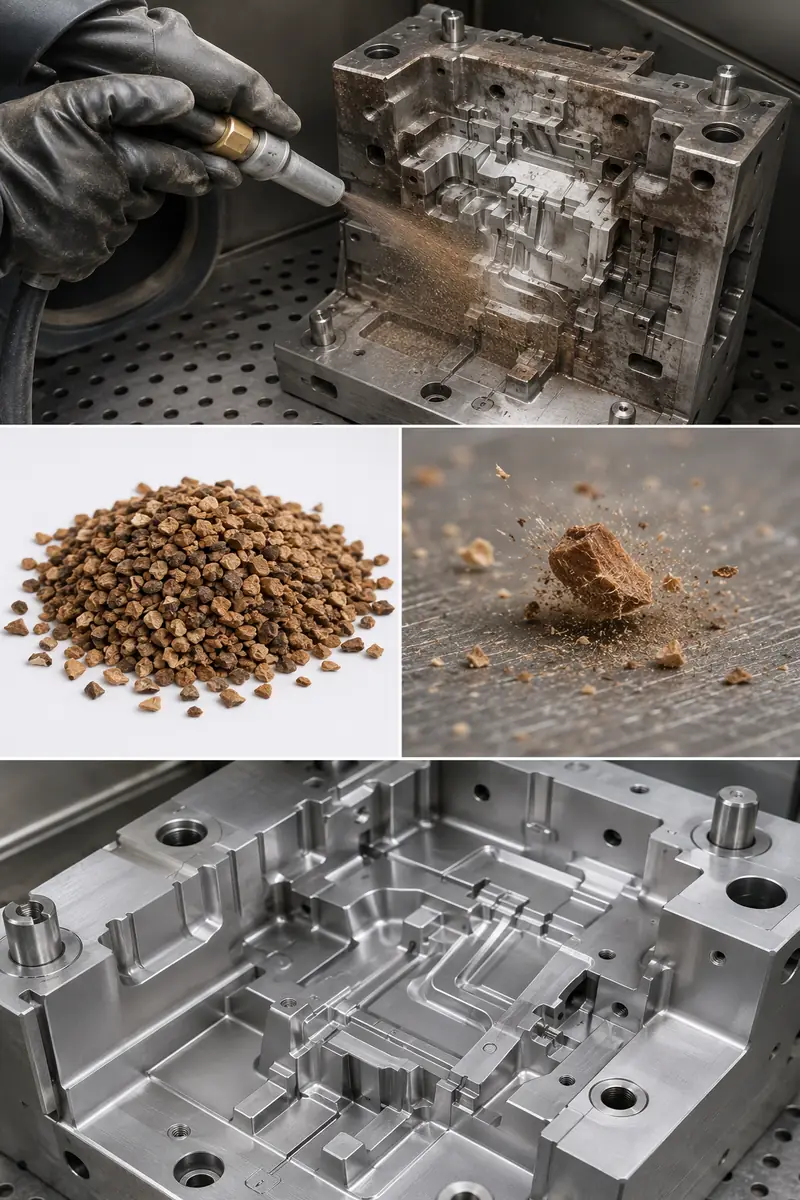
FIG. 01A visual overview of walnut shell abrasive...
Professional industrial collage featuring four panels: raw crushed walnut shell media, a macro shot of a particle shattering on impact, a dominant scene of blasting a detailed aluminum mold inside a cabinet, and the final cleaned mold showing no dimensional change or surface erosion. Illustrates the
01 Introduction
Die and mold cleaning presents a recurring challenge: remove baked-on release agents, light carbon deposits, and process residues without altering critical tool dimensions or surface finish. When conventional metal grits prove too aggressive for alu…
02 Introduction
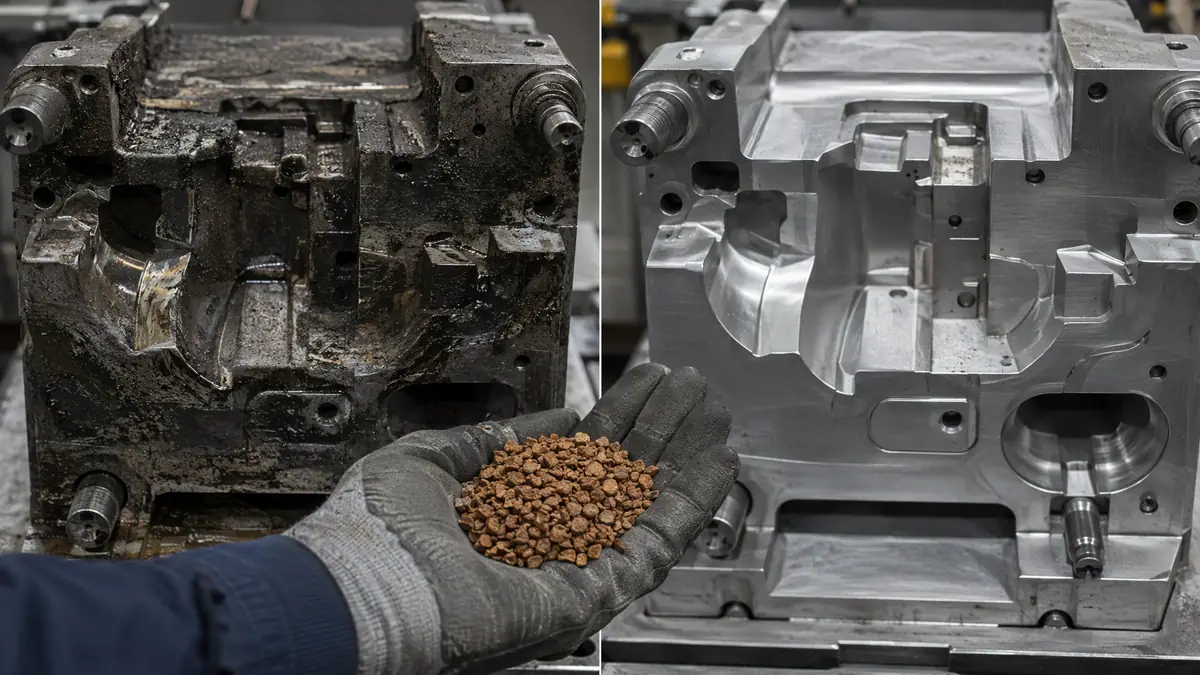
Walnut shell abrasive effectively removes baked-on residues from soft tooling without eroding parting lines or altering critical surface dimensions.
Industrial split-view photograph showing a soiled aluminum die-casting mold on the left and the identical mold half cleaned to a pristine finish on the right. A gloved hand in the foreground presents a sample of the brown, angular organic walnut shell blast media responsible for the non-damaging cle
Maintenance teams in die casting and injection molding shops face a persistent dilemma. Tooling accumulates residues that must be removed to maintain part quality and thermal transfer efficiency, yet the cleaning method itself can erode parting lines, round off sharp edges, or change surface roughness in ways that affect release characteristics. Metal abrasives—steel grit, aluminum oxide, even glass bead—remove material along with the contaminant. For soft tooling alloys, plated surfaces, and finely detailed mold cavities, that material removal is unacceptable.
Walnut shell abrasive blasting addresses this gap. As an organic, soft blast media, crushed walnut shell removes surface deposits through impact and friability rather than cutting or fracturing the substrate. This article explains what walnut shell media is, where it fits in industrial cleaning, how to select appropriate grades, and what limitations to expect—so you can determine whether it belongs in your tool maintenance program.
03 What Is Walnut Shell Abrasive?
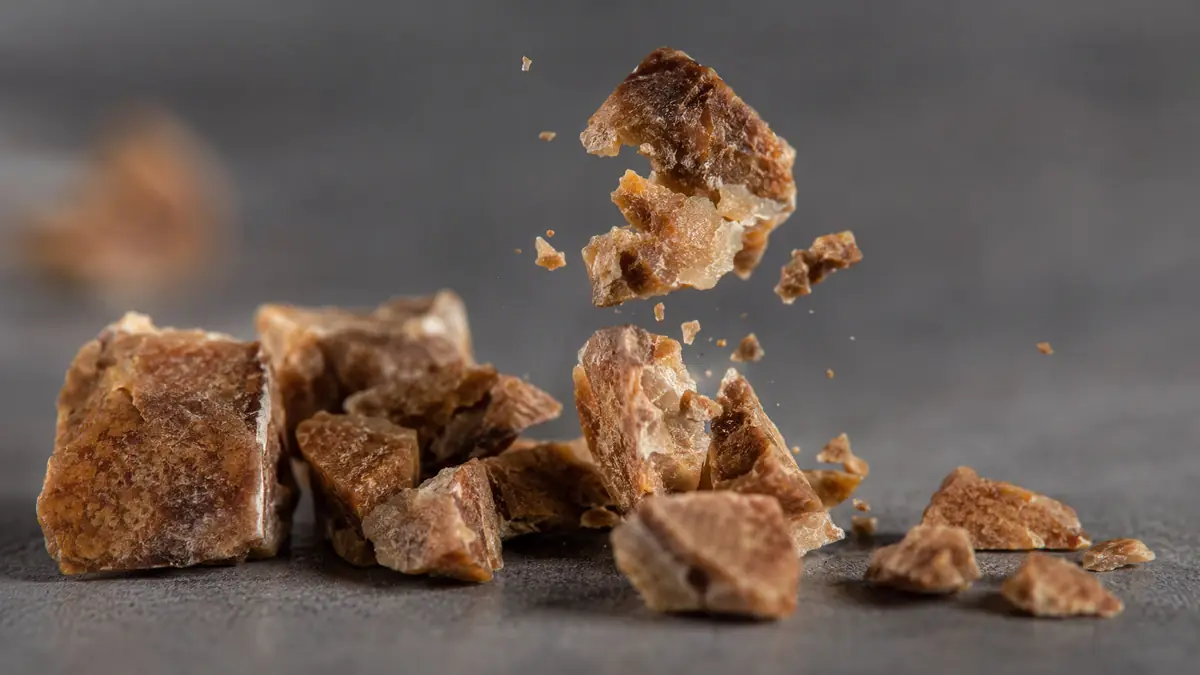
Crushed walnut shell media is angular and friable, shattering on impact to remove contaminants without cutting into the substrate.
Detailed macro photograph of crushed English walnut shell abrasive grit. The image focuses on the sharp, irregular edges of the organic particles and captures the dynamic moment one particle fractures, illustrating the friable mechanism that makes it a soft, non-damaging blast media.
Walnut shell abrasive is a granular blast media produced from crushed English walnut shells (Juglans regia). The shells are cleaned, crushed, and classified into controlled particle size distributions. Unlike mineral or metallic abrasives, walnut shell is organic, angular but relatively soft (typically 3.0–3.5 on the Mohs hardness scale), and friable—meaning particles fracture on impact rather than cutting into the workpiece.
This friability is the defining performance characteristic. When a walnut shell particle strikes a surface, it absorbs energy by breaking apart. The impact dislodges surface contaminants, but the particle's low hardness and tendency to shatter prevent it from gouging or eroding the underlying metal. For comparison:
Steel grit (Mohs ~7–8): cuts aggressively, removes substrate material
Aluminum oxide (Mohs ~9): sharp angular cutting, used for profiling
Glass bead (Mohs ~5.5): peens and burnishes, can embed in soft metals
Walnut shell (Mohs ~3.0–3.5): cleans by impact/friability, negligible substrate removal
The media is also biodegradable, non-toxic, and generates no free silica dust—advantages that matter for operator safety and waste disposal.
04 Why Walnut Shell Blasting Matters for Mold and Die Shops
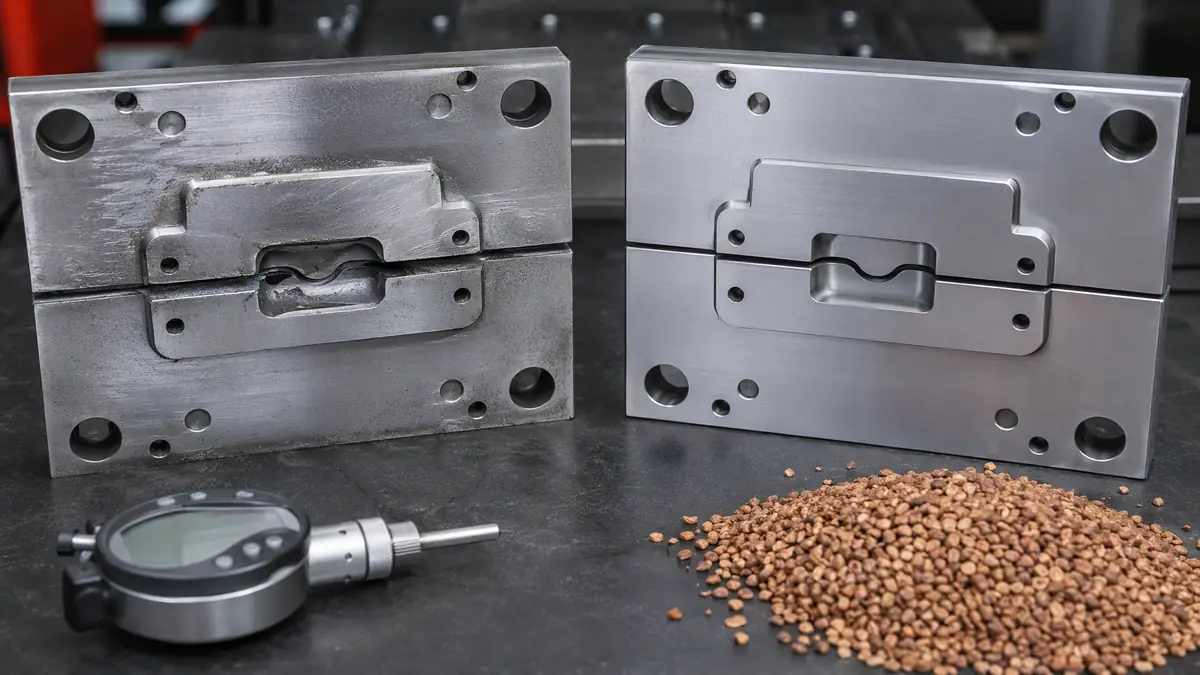
Walnut shell blasting preserves critical parting line sharpness and surface finish, preventing the cumulative dimensional change caused by harder abrasives.
Industrial comparison photograph showing two identical aluminum mold inserts. The left insert exhibits a rounded, eroded parting line and surface roughness from aggressive cleaning. The right insert, maintained with walnut shell abrasive, displays a sharp, crisp parting line and original surface fin
The Core Problem: Preserving Tool Geometry
Die casting dies and injection molds represent substantial capital investment. A single cavity insert can cost thousands of dollars; multi-cavity tools far more. Every cleaning cycle that removes even a few microns of tool steel accumulates over hundreds of cycles into dimensional change. Parting line erosion leads to flash. Edge rounding affects seal-off and part aesthetics. Surface roughness shifts alter release behavior, potentially requiring higher ejection forces or more frequent application of mold release.
Walnut shell blasting mitigates this cumulative damage because the media sacrifices itself rather than the tool. The cleaning mechanism is mechanical dislodgement of the contaminant layer, not abrasion of the substrate.
Typical Applications in Die Casting and Molding
Removing baked-on die lubricant residues from cavity surfaces, cores, and slides
Cleaning light carbon deposits from aluminum and zinc die casting dies
Stripping accumulated mold release from injection mold cavities without affecting polished or textured surfaces
Cleaning ejector pins, slides, and lifters where dimensional tolerance is critical
Preparing tool surfaces for re-coating or inspection without altering the base metal profile
Cleaning heat exchanger plates and delicate aluminum components in process equipment
When Walnut Shell Is a Poor Fit
Organic soft blast media has clear limitations. It is not suitable for:
Heavy rust or mill scale removal—walnut shell lacks the cutting action needed for thick oxide layers
Surface profiling for coating adhesion—it will not create the anchor profile required by standards like SSPC-SP10 or SA 2.5
Hard carbon or burnt plastic deposits that require aggressive mechanical removal
Cleaning ferrous die casting dies with heavy soldering—aluminum soldering on steel dies typically requires glass bead or mild abrasive followed by polishing
High-production automated cleaning cells where cycle time is the primary driver—walnut shell cleans more slowly than harder media
Understanding these boundaries prevents misapplication and wasted trial runs.
05 Types and Grades of Walnut Shell Media
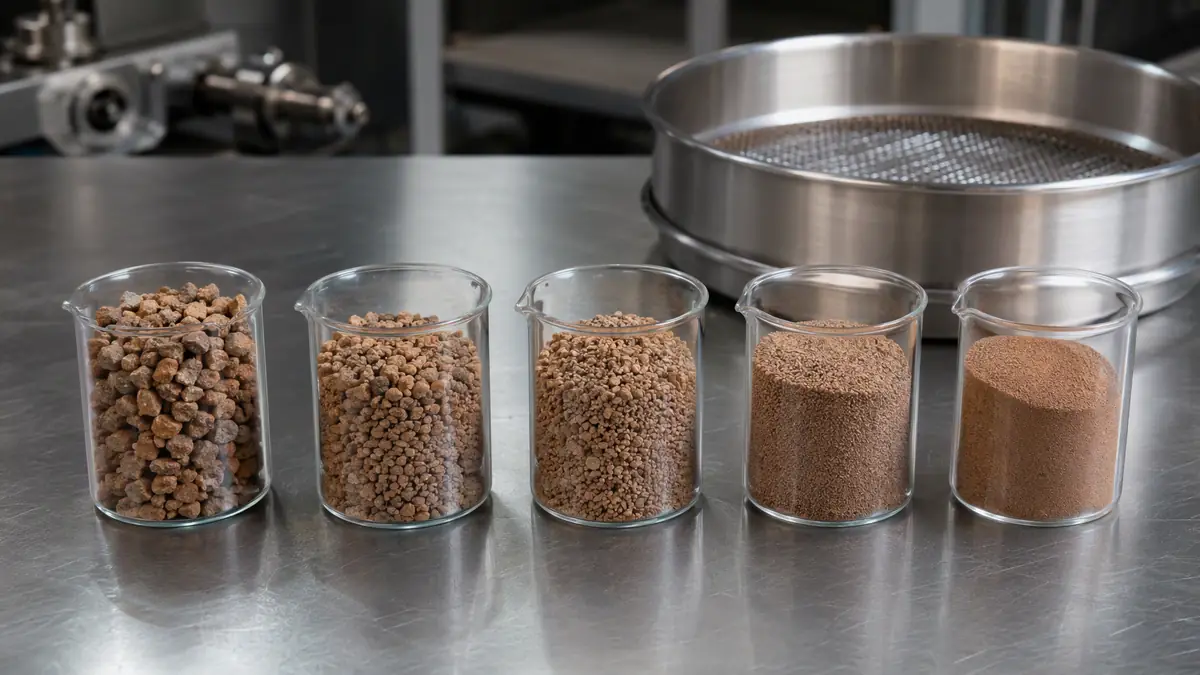
Walnut shell abrasive is available in controlled particle size distributions, from coarse grit for heavy residue to fine powder for delicate polished surfaces.
A scientific-style product photograph showing a graded series of crushed walnut shell blast media. Five transparent containers display the full range of particle sizes, from 6/12 coarse mesh to 60/100 fine mesh, illustrating the selection available for different mold cleaning applications and substr
Walnut shell abrasive is classified primarily by particle size. Selection depends on the contaminant type, substrate sensitivity, and blasting equipment configuration.
Common Size Classifications
Mesh Size
Typical Particle Range
Best Suited For
6/12 or 8/12
Coarse (~2.0–3.4 mm)
Heavy residue on robust tooling; initial stripping passes
12/20
Medium-coarse (~1.0–2.0 mm)
General mold cleaning; moderate deposit removal
20/30
Medium (~0.6–1.0 mm)
Fine detail cleaning; polished cavity surfaces
30/40 or 40/60
Fine (~0.3–0.6 mm)
Delicate surfaces; cleaning without any visible surface change
60/100
Extra fine
Precision cleaning of optical molds, micro-features
Finer grades clean more gently and reach intricate details but work more slowly. Coarser grades remove deposits faster but may leave a slight matte appearance on very soft alloys. Most die casting shops find 12/20 or 20/30 mesh to be the practical sweet spot for routine maintenance cleaning.
Media Quality Considerations
Not all walnut shell media performs identically. Factors that affect results include:
Cleanliness: residual shell dust and fiber can clog dust collection systems and reduce visibility during blasting
Hardness consistency: natural variation in shell hardness exists; reputable suppliers wash and grade to minimize variability
Moisture content: excessive moisture causes clumping and inconsistent feed through blast pots
Freedom from contaminants: shells should be free from dirt, stones, and organic debris that could damage tooling
Confirm these parameters with your media supplier before committing to production use.
06 How to Select Walnut Shell Abrasive for Your Application
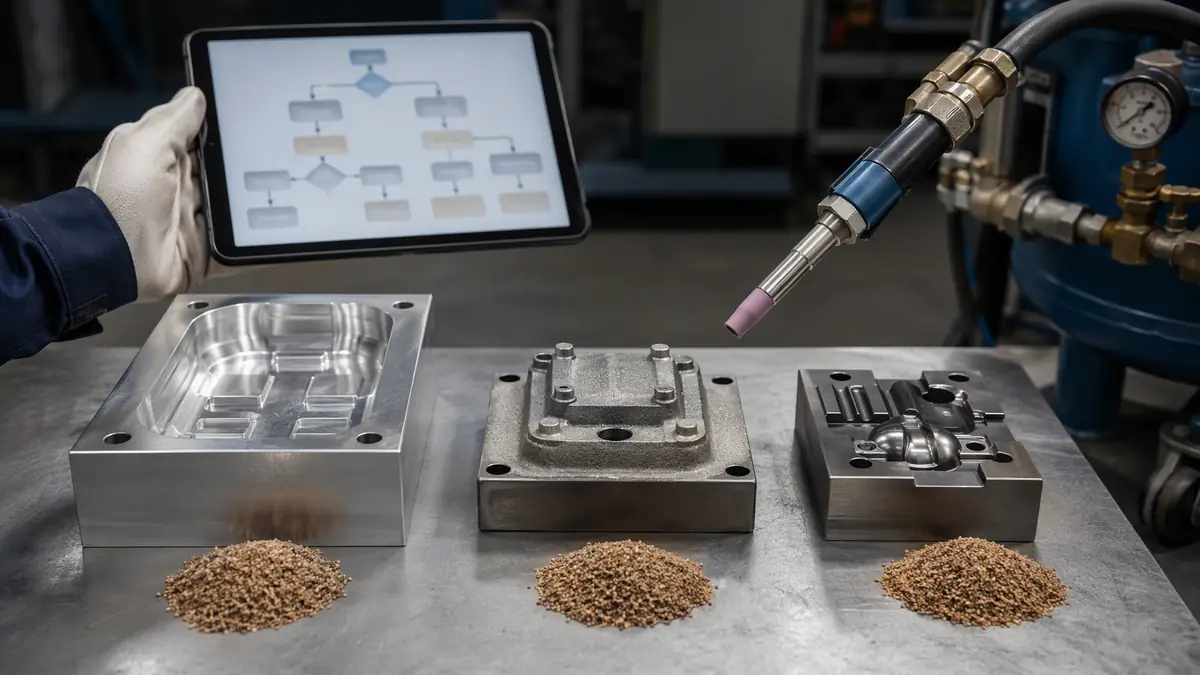
Media selection depends on substrate material, surface finish, and contaminant type. Walnut shell is ideal for aluminum, zinc, and polished or textured surfaces
Industrial scene depicting the abrasive selection process. A gloved technician references a decision guide while evaluating a polished, a textured, and an EDM-finished mold insert. A blast nozzle and samples of walnut shell media are positioned nearby, visually reinforcing the need to match the orga
Decision Criteria
Work through these questions to determine whether walnut shell blasting fits your cleaning task:
What is the substrate material and hardness? Aluminum, zinc alloys, brass, and tool steels below ~45 HRC are good candidates. Hardened tool steels above 50 HRC can tolerate more aggressive media; walnut shell may clean too slowly to be economical.
What is the contaminant? Baked-on die lube, light carbon, and mold release residues respond well. Heavy soldering, rust, or thick polymer degradation products do not.
What surface finish must be preserved? Polished, textured, or EDM-finished surfaces benefit from organic media. As-cast or machined surfaces with less stringent finish requirements may not need this level of gentleness.
What is the acceptable cycle time? Walnut shell cleans more slowly than glass bead or aluminum oxide. If tool turnaround time is the binding constraint, factor in the longer blast duration.
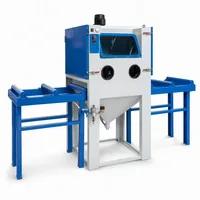
What blasting equipment is available? Walnut shell can be used in suction-fed and pressure-fed dry blast cabinets. It is not suitable for wet blasting systems. Confirm that your dust collector can handle organic dust loading.
Practical Selection Steps
Start with a 20/30 mesh grade for general die and mold cleaning
Reduce to 30/40 or finer if any surface dulling is observed on polished cavities
Increase to 12/20 if cleaning time is excessive and the tooling can tolerate slightly more aggressive impact
Test on a non-critical area or a scrap tool before committing to production cleaning
Document blast pressure, standoff distance, and media grade for repeatability
Blast Parameters That Influence Results
Blast pressure: typically 30–60 PSI for walnut shell. Higher pressure increases cleaning rate but also increases media breakdown and the risk of surface effects on very soft alloys
Standoff distance: 6–12 inches is common; closer distances concentrate impact energy
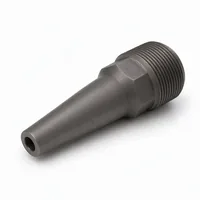
Nozzle type: straight-bore venturi nozzles provide effective particle acceleration; avoid narrow-orifice nozzles that may cause excessive media fracturing at the nozzle exit
Media recycling: walnut shell fractures with each impact. After several cycles, particle size distribution shifts finer and cleaning efficiency drops. Monitor and replenish media regularly
07 Common Mistakes and Troubleshooting
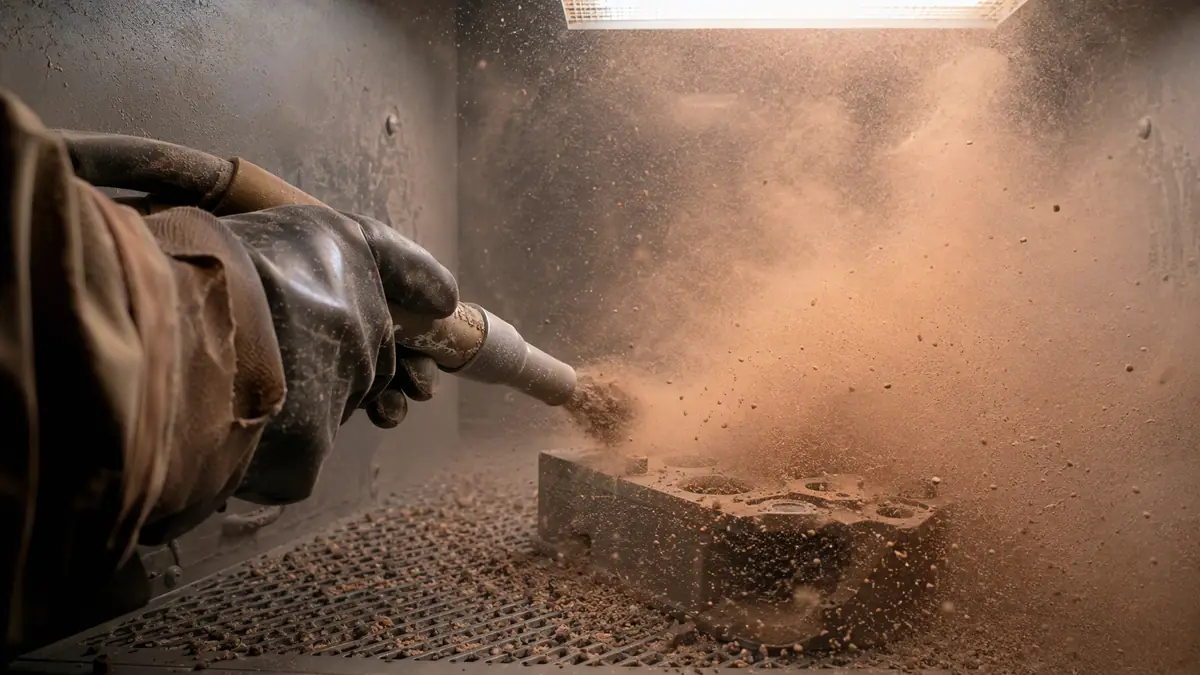
Excessive blast pressure or incorrect nozzle distance causes premature media breakdown and heavy dust, reducing visibility and cleaning efficiency.
A gritty, photorealistic image from inside an abrasive blast cabinet capturing a troubleshooting scenario. A dense cloud of walnut shell dust and shattered media particles engulfs the nozzle and workpiece, illustrating the common mistake of using excessive air pressure or poor nozzle technique, whic
Mistake 1: Using Walnut Shell for Heavy Deposits
Operators sometimes attempt to remove thick, hardened deposits by increasing blast pressure rather than switching to a more appropriate media. The result is excessive media consumption, long cycle times, and potential surface heating from prolonged blasting. If walnut shell at 60 PSI does not remove the deposit within a reasonable time, the contaminant likely requires a two-step process: initial removal with a mildly more aggressive media (e.g., fine glass bead), followed by a walnut shell finishing pass.
Mistake 2: Neglecting Media Cleanliness
Low-cost walnut shell media may contain shell dust, fibers, and fine particles that reduce visibility and clog dust collection filters. This leads to inconsistent cleaning and increased maintenance on the blast system. Specify washed, dust-free grades from suppliers who serve the industrial blasting market.
Mistake 3: Overlooking Moisture Control
Walnut shell absorbs moisture from ambient air. Damp media clumps, feeds erratically, and can pack in blast pot valves. Store media in sealed containers in a dry area. If clumping occurs, dry the media before use—but avoid high heat that could degrade the organic material.
Mistake 4: Assuming Zero Surface Effect
While walnut shell is exceptionally gentle, prolonged blasting at close range with coarse grades can produce a subtle matte finish on soft aluminum alloys. This is not material removal in the conventional sense, but a micro-texturing from repeated impact. Always validate on a test coupon or non-critical surface.
Mistake 5: Inadequate Dust Collection
Walnut shell blasting generates fine organic dust. Standard dust collectors with appropriate filter media handle this adequately, but neglected filters or undersized systems lead to poor visibility, operator exposure, and potential combustible dust hazards. Ensure your dust collection system is rated for organic particulate and maintained on schedule.
08 Implementation Best Practices
Equipment Setup
Use a dedicated blast cabinet or blast room to contain organic dust
Confirm that the media metering valve is compatible with lighter-density organic media—some valves designed for steel grit may meter walnut shell inconsistently
Install a moisture separator on the compressed air line; dry air prevents media clumping
Set regulator pressure at the lower end of the effective range and increase only as needed
Safety Considerations
Walnut shell dust is not classified as hazardous in the same way as silica, but it remains a respiratory irritant. Operators must wear appropriate respiratory protection consistent with local regulations
Organic dust can form combustible mixtures under certain conditions. Follow standard housekeeping practices for combustible dust: regular cleaning of settled dust, proper electrical classification in dust-handling areas, and no open flames near blasting operations
Eye protection and protective clothing remain mandatory, as with any blasting operation
Process Control
Establish a written cleaning procedure per tool or tool family: media grade, pressure, standoff, estimated cycle time
Inspect cleaned tools under consistent lighting to verify contaminant removal and surface condition
Track media consumption and replenishment cycles to maintain consistent particle size distribution
Periodically verify that critical tool dimensions remain unchanged using the same metrology methods applied during tool qualification
09 Alternatives to Walnut Shell for Gentle Cleaning
When walnut shell does not meet requirements, consider these alternatives—each with its own trade-offs:
Corn cob grit: similar hardness to walnut shell, slightly more absorbent; useful for drying and polishing applications as well as light cleaning
Plastic media (urea, acrylic): available in a range of hardness grades; more consistent than organic media but higher cost; commonly used for paint stripping from delicate substrates
Sodium bicarbonate (baking soda): water-soluble, single-pass media that cleans very gently; leaves no residue that could contaminate subsequent processes; limited reusability
Dry ice (CO₂ pellets): non-abrasive cleaning via thermal shock and kinetic energy; no secondary waste beyond the removed contaminant; higher equipment cost and limited availability in some regions
Fine glass bead (100–170 mesh or finer): provides slightly more cleaning aggression while still being relatively gentle; may peen the surface slightly, which can be beneficial or detrimental depending on the application
The choice among these depends on contaminant type, substrate sensitivity, equipment availability, and cost-per-cleaning-cycle targets.
10 Conclusion
Walnut shell abrasive blasting fills a specific and valuable niche in industrial tool maintenance: cleaning soft metals and precision molds where substrate preservation is non-negotiable. Its organic, friable nature provides effective contaminant removal through impact rather than cutting, making it one of the few blast media suitable for polished aluminum dies, textured mold cavities, and dimensionally critical tooling components.
The key to successful implementation is matching the application to the media's capabilities. Walnut shell excels at removing baked-on lubricants, light carbon, and mold release residues from soft substrates. It is the wrong choice for heavy corrosion, thick scale, or applications where surface profiling is required. Selecting the appropriate particle size, maintaining clean and dry media, and controlling blast parameters will produce consistent, damage-free cleaning results.
For die casting and mold shops evaluating gentler cleaning methods, walnut shell media warrants a controlled trial—starting with a medium grade on a non-critical tool, documenting results, and scaling up once the process is validated.
11 Frequently Asked Questions
What exactly is walnut shell abrasive blasting?
It is a cleaning process that uses crushed English walnut shells as a blast media. The angular, organic particles are relatively soft and friable, meaning they shatter on impact to dislodge surface contaminants without cutting or eroding the underlying metal substrate.
When should I choose walnut shell over glass bead or aluminum oxide?
Choose walnut shell when preserving precise tool geometry and surface finish is critical. It is ideal for soft alloys, polished cavities, and delicate features where harder media like glass bead or aluminum oxide would cause dimensional change, peening, or embedding.
What types of contaminants can walnut shell blasting effectively remove?
It works best on baked-on die lubricants, light carbon deposits, and accumulated mold release residues. It is not effective for heavy rust, mill scale, hard carbon, or aluminum soldering on dies, which require a more aggressive cutting action.
What mesh size of walnut shell media should I start with for general mold cleaning?
A 20/30 mesh is the practical starting point for most general die and mold cleaning applications. If cleaning is too slow, you can move to a coarser 12/20 mesh; if you notice any surface dulling on polished cavities, switch to a finer 30/40 mesh.
What is a common mistake when using walnut shell media?
A frequent error is trying to remove heavy, hardened deposits by simply increasing blast pressure. This leads to excessive media consumption and long cycle times. The correct approach is often a two-step process using a more aggressive media first, followed by a walnut shell finishing pass.
What blast pressure and distance should I use for walnut shell blasting?
A typical starting point is 30–60 PSI with a standoff distance of 6–12 inches. Higher pressure increases the cleaning rate but also accelerates media breakdown. Always test on a non-critical area first to confirm the parameters do not affect the surface.
Does walnut shell media wear out, and how do I manage it?
Yes, walnut shell is friable and fractures with each impact. After several cycles, the particle size distribution shifts finer and cleaning efficiency drops. You need to monitor the media and regularly replenish it with fresh material to maintain performance.
12 Solution
Selecting the right abrasive media for your tool maintenance program requires matching media characteristics to your specific tooling materials, contaminant types, and production requirements. If you are considering walnut shell abrasive or exploring alternatives for gentle die and mold cleaning, reviewing available abrasive specifications against your process parameters is the logical next step.
Explore the Abrasives category for walnut shell and complementary media options, or contact SPA2Z with your application details for technical guidance on media selection and compatibility with your existing blasting equipment.
13 Get a quote
Get a quote
Tell us what you need. We reply within one business day.
Recommended products
Catalogue products matched to this article. Ask for grade, quantity and destination.