Wet Blasting Media Options for Dust-Sensitive Plants
Wet blasting eliminates airborne dust at the source — but only if you choose a media that stays suspended in slurry, cuts at the right rate, and doesn't clog yo...
Published
18 Sep 2019
Category
Abrasives
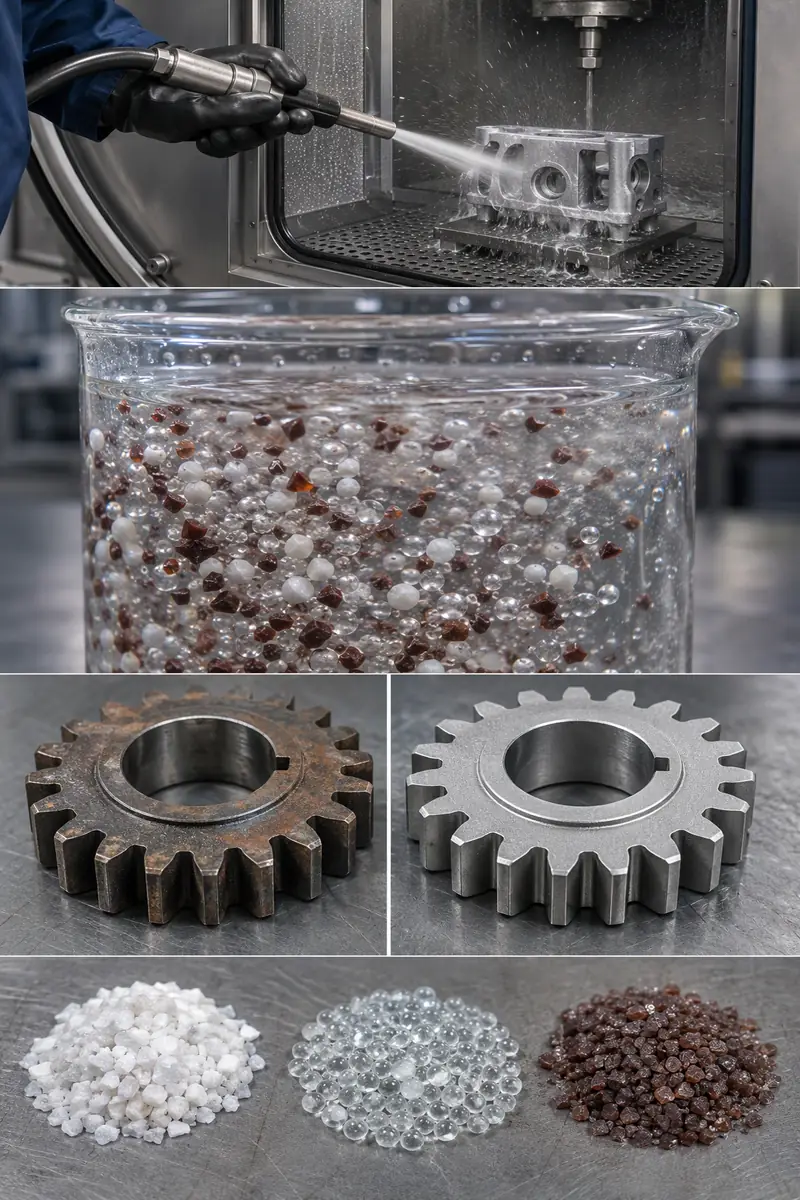
FIG. 01A visual guide to wet blasting media: from...
Featured image for an article on wet blasting media options. A multi-panel editorial collage shows a central slurry suspension beaker, a wet blast cabinet in operation, a before-and-after surface finish comparison on steel parts, and a lineup of raw abrasive samples including aluminum oxide, glass b
01 Introduction
Wet blasting eliminates airborne dust at the source — but only if you choose a media that stays suspended in slurry, cuts at the right rate, and doesn't clog your system. This guide helps precision manufacturing teams select the right wet blasting m…
02 Introduction
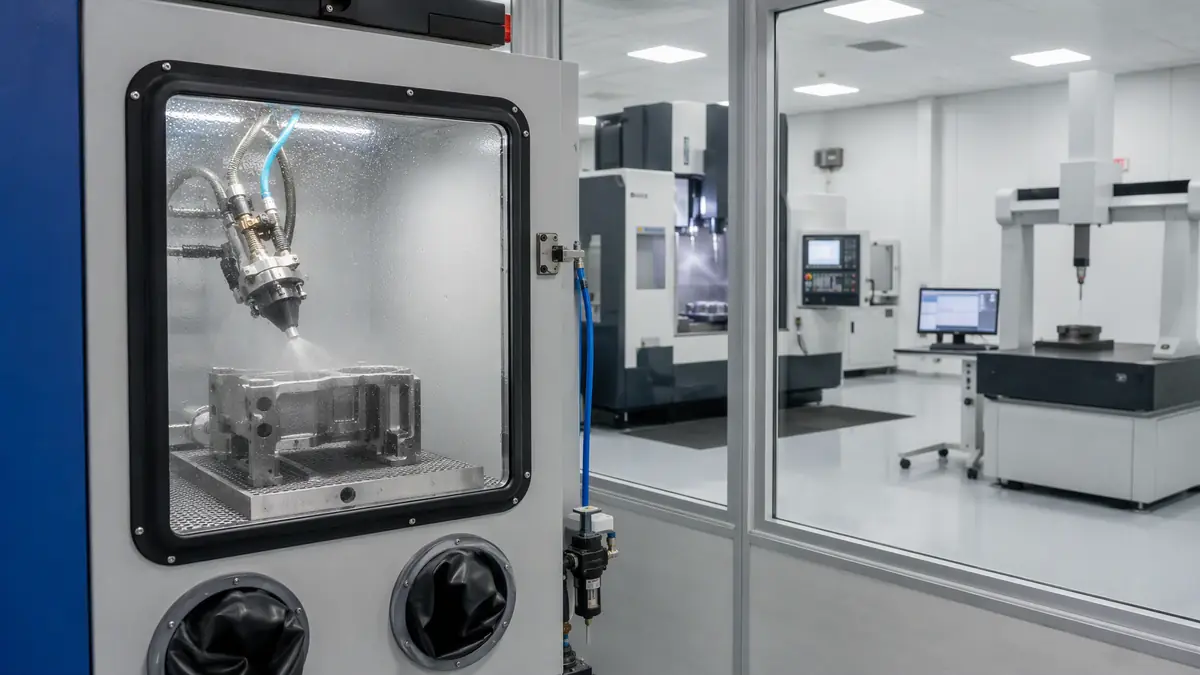
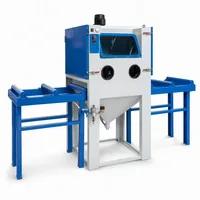
A wet blasting cabinet contains all abrasive and dust, protecting sensitive CNC machining and metrology equipment in the adjacent clean area.
A photorealistic scene showing a wet blasting cabinet in the foreground of a clean industrial plant. Through a glass wall, a CNC machine and a CMM are visible, highlighting the importance of dust suppression in precision manufacturing environments.
If you operate a blast system inside a plant that also houses precision assembly, electronics, or clean processes, you already know the problem: dry blasting generates dust that drifts into bearings, seals, and painted surfaces. Wet blasting — also called slurry blasting or vapor blasting — solves this by suspending abrasive in water, suppressing dust before it becomes airborne. But the media you choose for a wet system must work differently than what you'd load into a dry pressure pot. The wrong choice leads to settling in the slurry tank, inconsistent finish, or excessive pump wear.
This article walks through the media options that actually perform in wet and slurry blast systems, what makes them suitable, and how to evaluate them for your specific application. It's written for engineers, maintenance leads, and procurement managers in precision manufacturing who need to specify abrasives that keep their processes clean without sacrificing productivity.
03 What Is Wet Blasting Media?
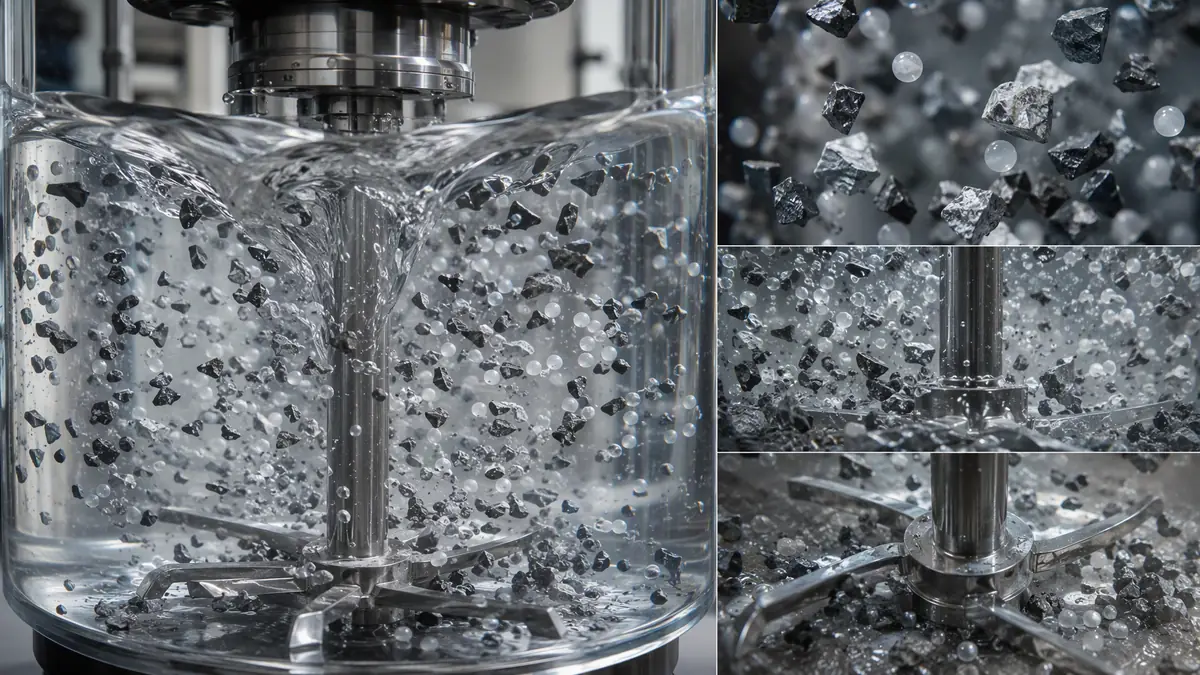
The critical moment of slurry creation: abrasive particles with different specific gravities are mixed in water, some settling while others remain suspended.
A detailed macro photograph showing the process of wet blasting media being suspended in water inside a transparent slurry tank. Angular and spherical particles are visible in motion, with a mechanical agitator blade stirring the mixture.
Wet blasting media is any abrasive material engineered or selected to remain effectively suspended in a water-abrasive slurry and deliver consistent impact energy when propelled through a wet blast nozzle. Unlike dry blasting — where media is carried by compressed air alone — wet blasting mixes water and abrasive either at the nozzle (vapor blast) or in a pressurized slurry vessel (slurry blast). The water encapsulates each particle, weighs it down, and cushions the impact, which changes how the abrasive behaves.
This matters because not every abrasive that works in dry blasting translates well to wet. Some media sink too quickly in the slurry tank, requiring constant agitation. Others break down too fast when wet, turning the slurry into mud. Still others are too aggressive without the full kinetic energy of a dry blast stream, leaving an unacceptable finish on sensitive substrates.
Key Terms
Slurry blast — A system where water and abrasive are premixed in a pressurized vessel and delivered as a slurry stream. Higher abrasive concentration, more aggressive cut.
Vapor blast / vapor honing — Water is introduced at the nozzle, creating a mist-like stream with lower abrasive density. Typically used for finer finishing and cleaning.
Slurry density — The ratio of abrasive to water in the mixture. Affects cut rate, pump loading, and media suspension behavior.
04 Why Wet Blasting Media Selection Matters
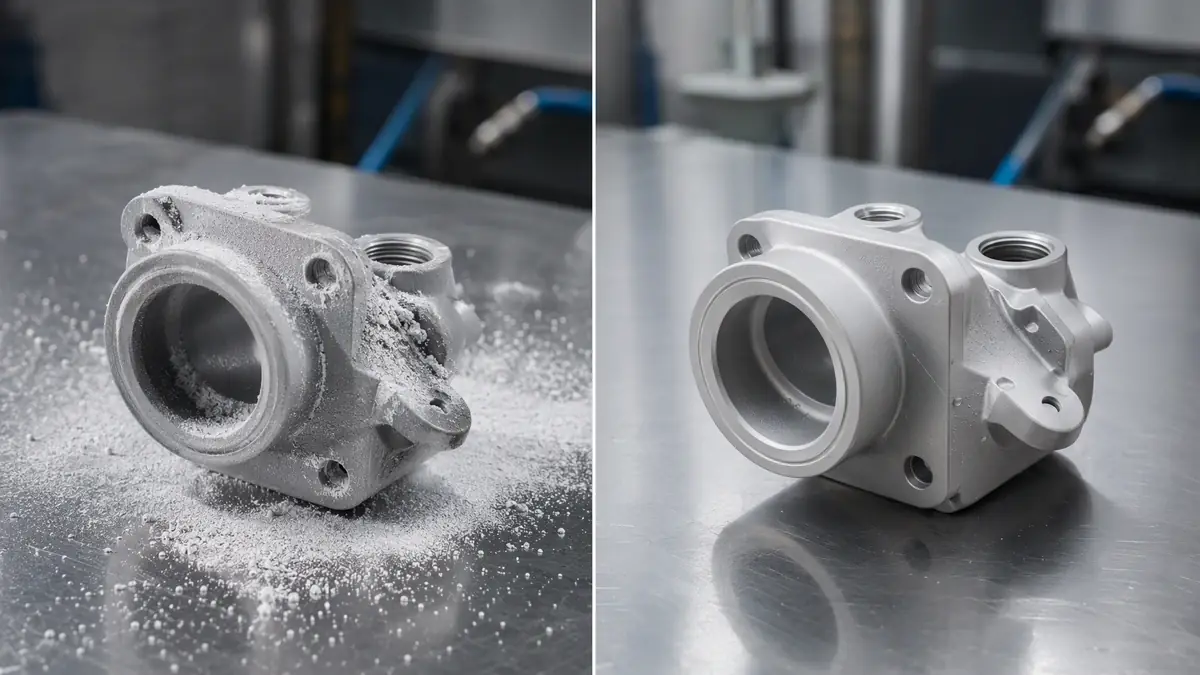
The wrong media choice can lead to dust contamination (left), while the correct wet blasting media delivers a clean, superior surface finish (right).
A studio comparison image showing two identical machined components. The left component is contaminated with fine dust after a dry blasting simulation, while the right component shows a pristine, uniform satin finish achieved through proper wet blasting media selection.
In a dust-sensitive plant, the primary reason to switch to wet blasting is obvious: dust suppression. But the media itself determines whether that switch succeeds or creates new problems.
When wet blasting is the right choice:
You're blasting inside a facility that also houses CNC machining, coordinate measuring machines, or clean assembly areas.
Your process cannot tolerate airborne silica, aluminum oxide dust, or metallic particulate.
You need a finer, more uniform surface finish than dry blasting typically produces — common in mold cleaning, deburring, and cosmetic surface prep.
You're working with heat-sensitive substrates where dry blasting friction causes warping or discoloration.
When wet blasting may be a poor fit:
You require the maximum possible cutting speed for heavy mill scale or thick coatings. Dry blasting with high-pressure air delivers more kinetic energy per particle.
Your production volume demands continuous, high-throughput blasting where slurry management (refilling, concentration monitoring, waste disposal) becomes a bottleneck.
You're blasting ferrous substrates that will flash-rust before they can be dried or coated, unless you incorporate a rust inhibitor into the slurry — which adds cost and process complexity.
Your existing blast equipment cannot be retrofitted for wet operation without substantial modification to pumps, seals, and plumbing.
05 Types of Wet Blasting Media
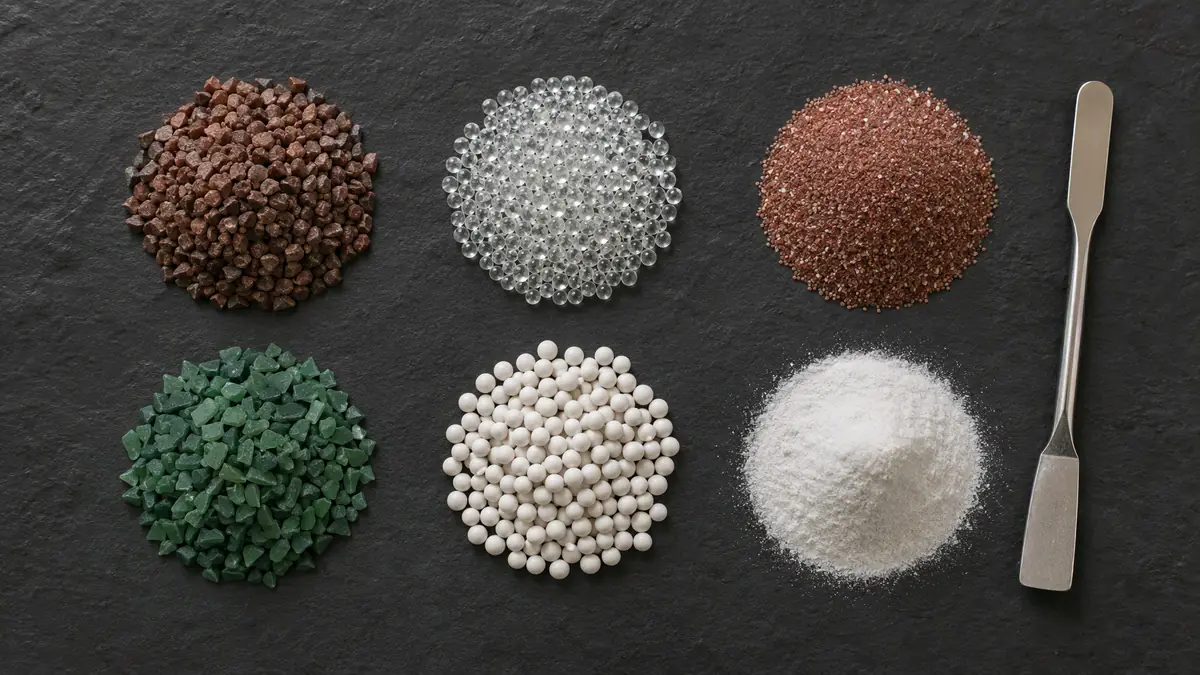
A visual comparison of common wet blasting abrasives: aluminum oxide, glass bead, garnet, plastic media, and ceramic bead, each with distinct particle shapes an
A high-quality flat-lay image displaying six different types of abrasive media used in wet blasting. The samples include angular aluminum oxide, spherical glass beads, garnet, plastic media, and ceramic beads, arranged neatly on a dark slate background to show their unique textures.
The abrasives below are commonly used in wet and slurry blast systems. Each behaves differently in suspension, cuts at a different rate, and suits different substrates. The right choice depends on your finish requirement, substrate material, and slurry system design.
Aluminum Oxide
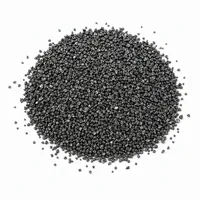
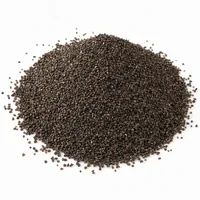
Aluminum oxide is a hard, angular, reusable abrasive that cuts aggressively and leaves a sharp anchor profile. In wet blasting, its high specific gravity means it settles faster than lighter media — so it requires continuous mechanical agitation or a well-designed slurry recirculation system.
Best for: Deburring hardened steel parts, etching surfaces before coating, cleaning investment castings.
Limitations: Settles rapidly; can wear pump impellers and slurry nozzles faster than softer media if the system isn't designed for it.
Typical mesh range for wet: 120 to 220 mesh for fine finishing; coarser grades (80–100) for faster stock removal where the slurry system can handle the weight.
Glass Bead
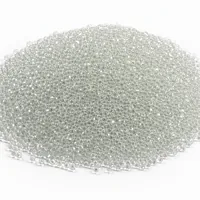
Glass beads are spherical and relatively soft. In wet blasting, they produce a bright, peened finish without removing significant base material. They stay suspended reasonably well due to their uniform shape and moderate density, making them a forgiving choice for general-purpose wet blast cabinets.
Best for: Cosmetic finishing of stainless steel and aluminum, mold cleaning, removing light carbon deposits without dimensional change.
Limitations: Low cutting action — not suitable for rust removal or surface profiling. Beads fracture over time and must be screened and replenished.
Important note: Confirm with your media supplier that the beads are manufactured for wet blasting. Some glass bead grades contain fines that turn the slurry cloudy and reduce visibility in manual cabinets.
Garnet
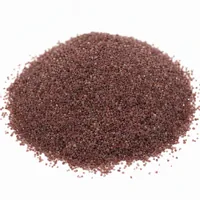
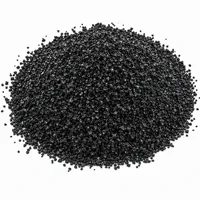
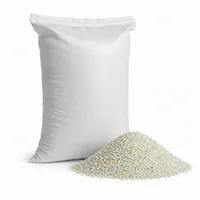
Garnet is a natural mineral abrasive with moderate hardness and a sub-angular grain shape. It's widely used in dry blasting and waterjet cutting, and it transitions well to wet blasting — particularly in slurry systems where its density helps maintain cutting energy.
Best for: General cleaning, light rust and coating removal, surface preparation before painting where a consistent profile is needed.
Limitations: Fractures more quickly than aluminum oxide, so slurry life is shorter. The resulting fines increase slurry viscosity and may require more frequent water changes.
Slurry behavior: Garnet tends to form a stable slurry at moderate concentrations. Monitor slurry density regularly — as garnet breaks down, the effective abrasive concentration drops even if the mixture looks thick.
Plastic Media
Plastic media is lightweight, soft, and angular. In wet blasting, it's used almost exclusively for stripping coatings from sensitive substrates — aircraft skins, composite molds, thin aluminum panels — where any substrate removal is unacceptable.
Best for: Paint and coating removal from aluminum, composites, and fiberglass.
Limitations: Very low cutting action on base metal. Tends to float rather than suspend, so slurry agitation must be carefully managed. Not suitable for rust or scale.
System note: Plastic media works better in vapor blast configurations than in dense slurry systems, where its buoyancy makes consistent metering difficult.
Ceramic Beads
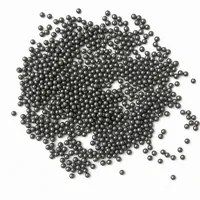
Ceramic beads are dense, spherical, and extremely durable. They are engineered for high-cycle wet blast applications where media longevity and consistent finish are priorities.
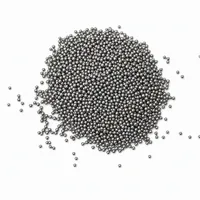
Best for: Shot peening in wet systems, finishing hardened steel components, long-running automated slurry blast lines.
Limitations: Higher initial cost than glass bead or garnet. Requires a system with good slurry circulation to prevent packing in dead zones.
Durability advantage: Ceramic beads can outlast glass beads by a factor of five or more in continuous wet blasting, which offsets the upfront cost in high-volume operations.
Sodium Bicarbonate (Baking Soda)
Soda blasting media is water-soluble, which makes it a special case. In dedicated soda slurry systems, it's used for delicate cleaning where the media must not leave any residual abrasive embedded in the surface.
Best for: Cleaning sensitive assemblies, removing grease and carbon from engine components, stripping paint from thin sheet metal without warping.
Limitations: Single-pass — the media dissolves and cannot be recycled. Requires a system designed for soda, as standard slurry pumps may clog or corrode. The slurry is mildly alkaline and requires appropriate disposal.
Critical caution: Do not use sodium bicarbonate in a standard wet blast cabinet not designed for it. Dissolved soda can damage pump seals and leave residue that contaminates subsequent processes.
06 How to Select Wet Blasting Media: Decision Criteria
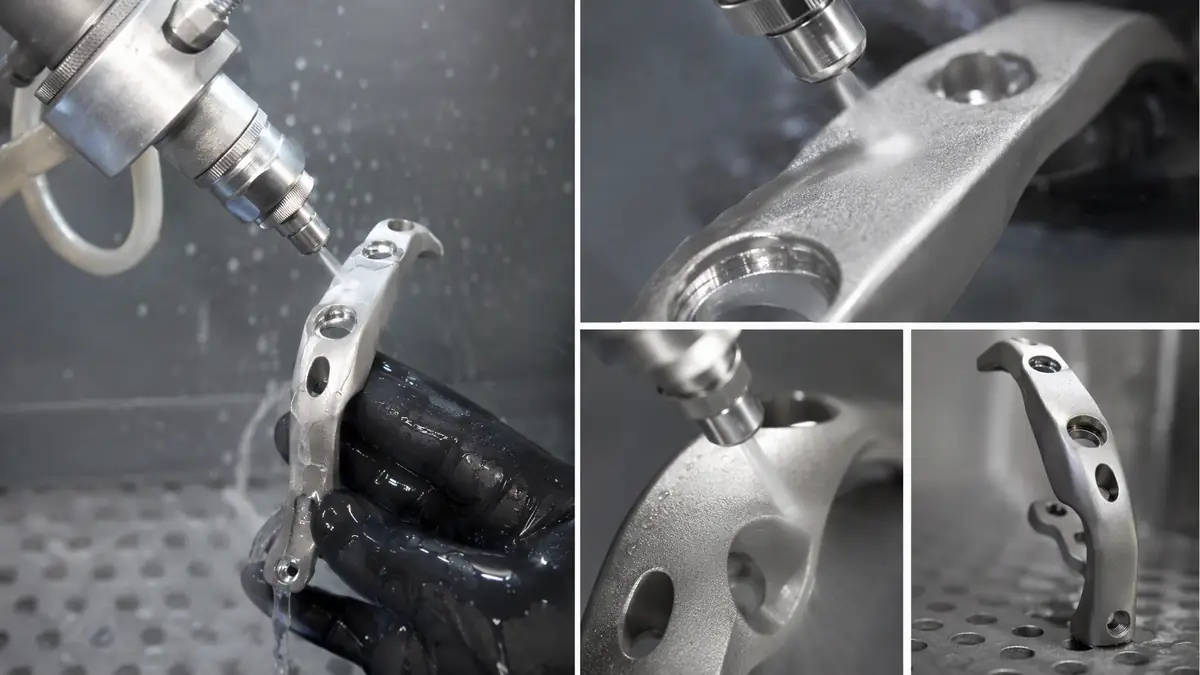
Selecting the right media, like fine glass bead, allows for delicate cosmetic finishing of stainless steel parts without substrate damage.
A detailed macro photograph showing the wet blasting process on a stainless steel medical component. A slurry stream of fine glass beads and water gently impacts the surface, creating a uniform satin finish, demonstrating the precision achievable with correct media selection.
Choosing the right wet blasting media is not a one-variable decision. Work through these factors in order, and confirm each against your process requirements before committing to a production load.
1. Substrate Material and Hardness
Match the abrasive hardness to the substrate. A general guideline: the abrasive should be harder than the contaminant but not so hard that it erodes the base material beyond tolerance.
Aluminum, brass, composites: Glass bead, plastic media, or fine garnet (120 mesh and finer).
Stainless steel (cosmetic): Glass bead or fine ceramic; avoid carbon steel media that can embed and cause corrosion.
Titanium, nickel alloys: Aluminum oxide or ceramic; confirm compatibility — some alloys are sensitive to specific abrasive residues.
2. Required Surface Finish and Profile
Cosmetic finish, satin sheen: Glass bead or fine ceramic bead at low slurry density.
Paint adhesion profile (25–75 micron anchor pattern): Garnet or fine aluminum oxide; verify profile with test coupons and a surface profile gauge.
Deburring without dimensional change: Glass bead or plastic media at controlled pressure.
Aggressive stock removal: Coarser aluminum oxide in a slurry system rated for high-density abrasive.
3. Slurry System Compatibility
Not every wet blast machine handles every media. Check your equipment specifications:
Pump type: Diaphragm pumps tolerate heavier slurries better than centrifugal pumps. If your system uses a centrifugal pump, avoid high-density abrasives like coarse aluminum oxide unless the manufacturer explicitly rates it.
Agitation method: Mechanical paddle agitators keep dense media suspended; air-bubble agitation works for lighter media like glass bead but may not be sufficient for garnet or aluminum oxide.
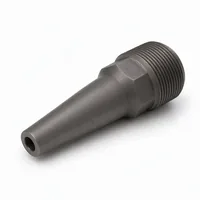
Nozzle material: Wet blast nozzles wear faster than dry nozzles due to the water-accelerated erosion. Tungsten carbide is a minimum; boron carbide lasts longer with aggressive media.
Slurry concentration range: Most systems operate between 10% and 40% abrasive by volume. Confirm your media's settling rate at your target concentration before scaling up.
4. Dust Suppression Effectiveness
All wet blasting suppresses dust, but the degree varies:
Maximum dust control: Media that stays fully wetted throughout the blast stream — glass bead, ceramic bead, and fine garnet perform well.
Partial dust control: Coarse, angular media like aluminum oxide can still generate some mist-borne fines, especially at high pressures. Local exhaust ventilation may still be required depending on your plant's air quality standards.
5. Media Life and Total Cost
Single-pass media: Garnet and soda are consumed in one cycle. Factor in disposal costs and downtime for slurry change-out.
Recyclable media: Aluminum oxide, glass bead, ceramic bead, and plastic media can be recirculated. Track media breakdown rate — as particles fracture, they become fines that reduce cutting efficiency and increase slurry viscosity.
Waste disposal: Wet blast slurry cannot be discharged to standard drains without treatment. Heavier media settle faster in a holding tank, simplifying water separation. Lighter media and fines stay suspended longer, requiring flocculation or filtration.
07 Common Mistakes When Selecting Wet Blasting Media
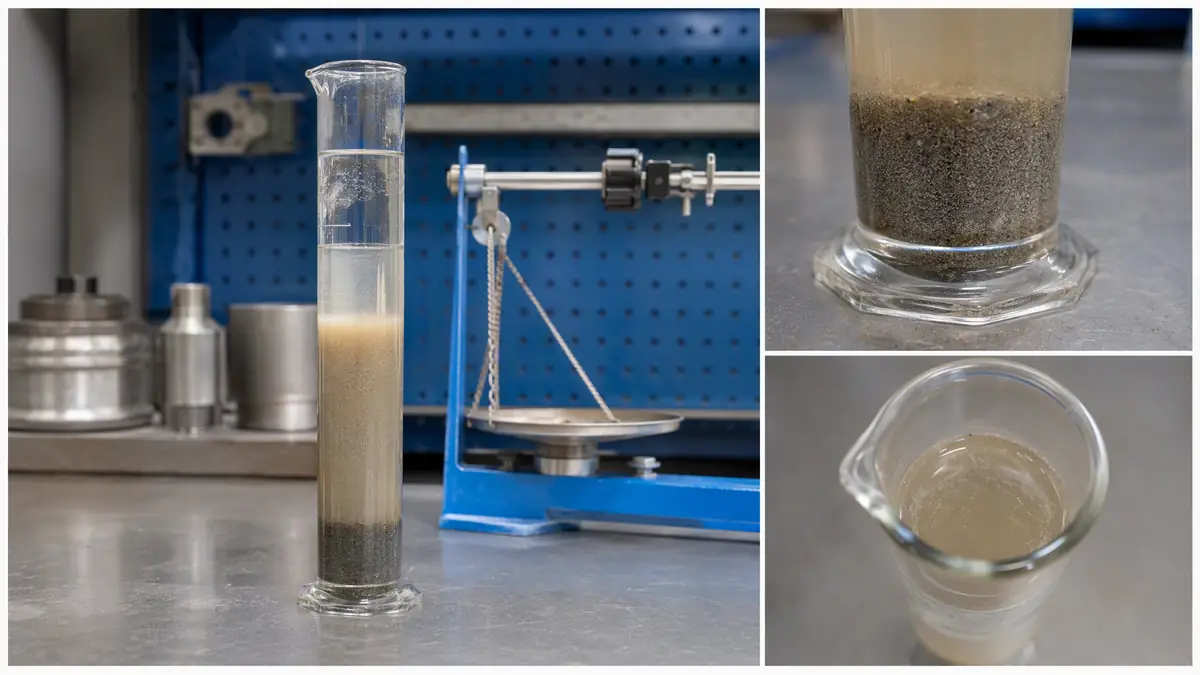
A common mistake: ignoring slurry density drift leads to media settling into a solid cake, reducing cut rate and causing inconsistent finishes.
An image showing a graduated cylinder containing a separated wet blasting slurry. Distinct layers of clear water, suspended particles, and a compacted cake of abrasive at the bottom illustrate the problem of media settling and density drift in poorly managed slurry systems.
Mistake 1: Using dry blast media specifications for a wet system.
Dry blasting media is often specified by mesh size and hardness alone. In wet blasting, particle shape, specific gravity, and fracture toughness matter just as much because they determine slurry behavior. A media that cuts perfectly in a dry cabinet may settle into a solid cake in a slurry tank.
Mistake 2: Ignoring slurry density drift.
As media breaks down, the effective abrasive concentration changes. Operators often top up with water to maintain visibility, inadvertently diluting the slurry and reducing cut rate. Monitor slurry density with a simple mud balance or graduated cylinder at regular intervals, and replenish media — not just water.
Mistake 3: Mixing incompatible media.
Some plants try to blend media to balance cost and performance — for example, mixing garnet with glass bead. This rarely works in wet blasting because the media separate in the slurry tank by density, leading to inconsistent feed at the nozzle. Stick to a single media type per slurry charge.
Mistake 4: Overlooking rust formation on ferrous parts.
Wet-blasted steel parts begin to oxidize within minutes of exiting the cabinet unless they are immediately dried or coated. If your process cannot accommodate immediate post-blast treatment, select a media compatible with a rust-inhibiting slurry additive, or reconsider whether wet blasting is the right process for those parts.
Mistake 5: Selecting media based on price per kilogram alone.
Cheaper media that breaks down quickly increases slurry maintenance frequency, pump wear, and waste disposal volume. Evaluate media cost per square meter of surface prepared — not per kilogram purchased — to make an accurate comparison.
08 Comparison Table: Wet Blasting Media at a Glance
Media
Hardness
Suspension Behavior
Cut Rate
Reusability
Typical Substrates
Aluminum Oxide
Very high
Settles fast; needs agitation
High
Reusable (multiple cycles)
Hardened steel, castings, tool steel
Glass Bead
Medium
Good suspension
Low (peening only)
Reusable (limited cycles)
Stainless steel, aluminum, molds
Garnet
Medium-high
Moderate; forms stable slurry
Medium
Single-pass
Steel, general surface prep
Plastic Media
Low
Floats; needs careful agitation
Very low (coating removal only)
Reusable (limited cycles)
Aluminum, composites, fiberglass
Ceramic Bead
High
Good suspension
Medium (peening and light cut)
Reusable (many cycles)
Hardened steel, high-cycle production
Sodium Bicarbonate
Low (dissolves)
Dissolves; single-pass system
Very low (cleaning only)
None
Sensitive alloys, engine components
Note: Cut rate and cycle life are qualitative comparisons. Actual performance depends on slurry concentration, blast pressure, nozzle distance, and specific media grade. Always test on sample parts before production commitment.
09 Implementation Notes for Dust-Sensitive Plants
Assess your air quality requirements first. Even with wet blasting, some mist and fine particulate may escape the cabinet during part loading and unloading. If your plant operates under ISO cleanroom classifications or has exposed electronic controls nearby, you may still need localized mist extraction or a dedicated blast enclosure with negative pressure.
Plan for slurry waste handling. Wet blast slurry contains water, spent abrasive, and removed substrate material (paint, rust, metal fines). This mixture is typically classified as industrial waste. Confirm disposal requirements with your local environmental authority before starting production. A simple settling tank can separate solids from water, but the solids may still require hazardous waste handling depending on the coating material removed.
Test before you commit. No selection guide replaces empirical testing. Run sample parts with your candidate media at your target slurry concentration. Measure: surface finish (profilometer or comparator), cycle time, media consumption per part, and slurry stability over a full shift. Use those numbers to validate your media choice — not the specification sheet alone.
Verify media compatibility with your wet blast equipment. Contact your equipment manufacturer or media supplier to confirm that the abrasive you're considering is rated for your specific pump, nozzle, and agitation system. This is especially important when switching from a light media (glass bead) to a dense one (aluminum oxide).
10 Conclusion
Wet blasting solves the dust problem that makes dry blasting unacceptable in precision manufacturing environments — but only when the media is chosen for how it behaves in water, not just for how it cuts. Aluminum oxide, glass bead, garnet, ceramic, plastic, and sodium bicarbonate each have a place in wet systems, but their performance depends on slurry density management, equipment compatibility, and honest assessment of your finish requirements.
For indoor plants near assembly lines, the safest starting point is often glass bead or fine ceramic bead: they suspend well, produce consistent cosmetic finishes, and minimize post-blast cleanup. Where more aggressive cutting is needed, garnet or aluminum oxide can work — provided your slurry system is built to handle them and you're prepared to manage the faster wear and more frequent slurry maintenance that comes with them.
The single most important step you can take is to test your candidate media in your actual process conditions. A specification sheet tells you what a media is made of. A test run tells you whether it will work in your plant.
11 Frequently Asked Questions
How is wet blasting media different from dry blasting media?
Wet blasting media must remain suspended in a water-abrasive slurry without settling too quickly, whereas dry blasting media is carried by air alone. The water encapsulates each particle, cushions the impact, and changes the abrasive's behavior. Media that works well dry may sink rapidly, break down into mud, or cut too aggressively in a wet system.
Which wet blasting media is best for cleaning aluminum parts without damaging them?
Glass bead and plastic media are the most common choices for aluminum. Glass bead produces a bright, peened finish without significant material removal, making it ideal for cosmetic finishing. Plastic media is preferred for stripping coatings from thin aluminum panels where any substrate removal is unacceptable.
Why does my aluminum oxide keep settling in the slurry tank?
Aluminum oxide has a high specific gravity, meaning it is heavy and sinks faster than lighter media. It requires continuous mechanical agitation or a well-designed slurry recirculation system to stay suspended. If your system lacks sufficient agitation, consider switching to a lighter media like garnet or glass bead.
Can I use sodium bicarbonate in a standard wet blast cabinet?
No, you should not. Sodium bicarbonate is water-soluble and will dissolve in the slurry, potentially damaging pump seals and leaving a residue that contaminates subsequent processes. It requires a dedicated soda blasting system designed to handle its single-pass, mildly alkaline slurry.
What is the most durable media for high-volume wet blasting?
Ceramic beads are the most durable option, often outlasting glass beads by a factor of five or more in continuous wet blasting. Their high density and spherical shape provide a consistent finish over many cycles, which offsets their higher initial cost in automated, long-running production lines.
How do I prevent flash rust when wet blasting steel parts?
Flash rust occurs when ferrous substrates are exposed to water. To prevent it, you must incorporate a rust inhibitor into the slurry mixture. This adds cost and process complexity, so you should factor in the drying and coating steps immediately after blasting to avoid corrosion.
What is the difference between slurry blasting and vapor blasting media?
Slurry blasting uses a denser mixture of abrasive and water from a pressurized vessel for a more aggressive cut, requiring media that mixes well at high concentrations. Vapor blasting introduces water at the nozzle for a finer, mist-like stream, making it better suited for lighter media like plastic or fine glass bead used in delicate finishing.
How do I compare and source the right wet blasting media for my plant?
Start by defining your substrate material, required surface finish, and slurry system type. Then, compare the specifications of suitable media like aluminum oxide, garnet, or glass bead. You can review available abrasive options and enquire for availability and technical compatibility through a specialized industrial supplier.
12 Solution
Selecting the right wet blasting media starts with knowing what's available and what specifications match your system. Compare abrasive media options — including aluminum oxide grit, garnet sand, glass bead, and ceramic media — on SPA2Z to review typical grades, mesh sizes, and application suitability. For specific compatibility questions or volume pricing, contact the SPA2Z sales team with your substrate material, finish requirement, and wet blast equipment model for a targeted recommendation.
13 Get a quote
Get a quote
Tell us what you need. We reply within one business day.
Recommended products
Catalogue products matched to this article. Ask for grade, quantity and destination.